পার্বতীনাথ শিব মন্দির, উত্তর গোবিন্দনগর (থানা-- দাসপুর, মেদিনীপুর)
চিন্ময় দাশ
সমগ্র ঘাটাল মহকুমা জুড়ে ছোট-বড় অনেকগুলি নদ-নদীর সমাবেশ। তার সাথে আছে প্রশস্ত কয়েকটি খালও। একসময় এই নদী আর খালগুলি ছিল পরিবহন আর সেচের গুরুত্বপূর্ণ উপাদান। বিশেষত নিকাশীর কাজে খালগুলির ভূমিকা ছিল বিশেষ উল্লেখযোগ্য। দেশ স্বাধীন হওয়ার পর, কৃষির উন্নতি বিধান এবং ক্ষয়-ক্ষতি রোধের প্রয়োজনে খালগুলি সংস্কারে গুরুত্ব দিতে হয়েছিল।
কয়েকটি নদীর অববাহিকা হওয়ার কারণে, দাসপুর থানার সমগ্র এলাকা উর্বর কৃষিপ্রধান। কৃষিজ পণ্য, নীল-চাষ আর বিশেষ করে রেশম শিল্পেরউৎপাদনের সুবাদে, সপ্তদশ থেকে উনবিংশ শতাব্দী জুড়ে, এই থানার আর্থিক সমৃদ্ধি ঘটেছিল লক্ষ্যণীয়ভাবে। বহুসংখ্যক জমিদার ও ধনী পরিবারের উদ্ভব ঘটেছিল এই থানায়। তার সাথে, সোনায় সোহাগ-র মত, অনেকগুলি মন্দির-নির্মাতা সূত্রধর পরিবারের বসবাসও গড়ে উঠেছিল দাসপুরে। অর্থবান পরিবার আর দক্ষ কারিগর-- দুইয়ের মেলবন্ধনে, একের পর এক, বহুসংখ্যক দেবালয় গড়ে উঠেছিল গ্রামে গ্রামে। একটি থানায় এত বিপুল সংখ্যক মন্দিরের সমাবেশ, বোধকরি বাংলার অন্য কোথাও দেখা যাবে না।
একটি শিবের মন্দিরের প্রসঙ্গে এত দীর্ঘ ভূমিকার একটি কারণ আছে। স্বাধীনতা লাভের পর থেকে, নদী-খাল সংস্কারের সময়, বহু মন্দির নষ্ট করে ফেলা হয়। নদীর বাঁধ সংস্কারের সময়, মন্দির নষ্ট করে ফেলবার প্রধান দৃষ্টান্ত দেখা যায়, মেদিনীপুর সদর কোতওয়ালী থানার পাথরা গ্রামে। সেখানে বেশ কয়েকটি প্রাচীন মন্দির কোনওটা সম্পূর্ণ, কোনোওটাবা একাংশ, মাটির নিচে চাপা পড়ে, একেবারেই বিনষ্ট হয়ে গিয়েছে।
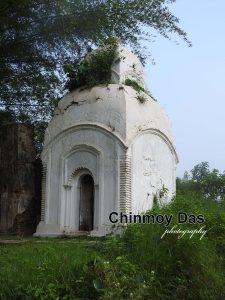
একই দৃষ্টান্ত দেখা যায় দাসপুর থানাতেও। দুটি উদাহরণ দেওয়া যাক-- ১. এই থানার পলাশপাই খাল (প্রকৃতপক্ষে সেটি কংসাবতী নদীর পূর্ববাহিনী শাখা) সংস্কারের সময়, গ্রামের মাইতি বংশের অনিন্দসুন্দর বিষ্ণু মন্দিরটির সিংহভাগ মাটির নিচে চাপা পড়ে গিয়েছে। টেরাকোটা ফলকে মোড়া ছিল সেই দ্বিতল মন্দিরের সর্বাঙ্গ। ২. দ্বিতীয় উদাহরণ, মোহনখালী খালের পাড়ে স্থাপিত পার্বতীনাথ নামের একটি শিব মন্দির। মাটির তলায় ঢাকা পড়ে গিয়েছে এই মন্দিরের অর্ধেকের বেশি অংশ। এই মন্দিরটি নিয়েই আমাদের আজকের প্রতিবেদন।
একটি প্রতিষ্ঠা লিপি আছে মন্দিরে-- " শ্রীশ্রী ভুবনেস্বর / দেবাদিদেব মহাদেব / সকাব্দা ১৭৭২ সন ১২৫৭ সাল / তাং ২১ ভাদ্র মিস্ত্রি / শ্রী আনন্দরাম দাস / সাকিম দাসপুর "। (বানান হুবহু) অর্থাৎ মন্দিরটি প্রায় পৌনে দু'শ বছর পূর্বে, ইং ১৮৫০ সালে প্রতিষ্ঠিত হয়েছিল।
প্রতিষ্ঠার সময়কাল জানা গেলেও, ফলক থেকে মন্দিরের প্রতিষ্ঠাতার নামটি জানা যায় না। স্থানীয় প্রবীণদের কেউ বলেন, মন্দিরটি নির্মাণ করেছিলেন চেতুয়া-বরদা পরগণার রাজা শোভা সিংহ। তবে, এটি মান্য করা যায় না। কারণ, শোভা সিংহ ১৮০০ সালের পূর্বেই মারা গিয়েছিলেন। দ্বিতীয় অভিমতটি হোল, শোভার সহোদর ভাই হিম্মত সিংহ রাজস্ব জমা করতে অসমর্থ হলে, তাঁকে উচ্ছেদ করে, বাংলার নবাব বর্ধমানের রাজাকে এলাকাটির ভার দিয়েছিলেন। বলা হয়, প্রজাবর্গের ধর্মাচরণের জন্য, বর্ধমানের রাজাই মন্দিরটি নির্মাণ করে দিয়েছিলেন। আমরা এই দ্বিতীয় মতটিকে গ্রহণ করতে পারি।
মন্দির প্রতিষ্ঠা করে, সেবাপূজা পরিচালনার জন্য দেবোত্তর সম্পত্তি এবং পুরোহিত, পরিচারক, মালাকার, ঢাকি, নাপিত ইত্যাদি কর্মীদের জন্য জায়গীর-জমি দেওয়া হয়েছিল। কর্মীরা সম্পত্তিগুলি অধিকার করে নিয়েছেন, কিন্তু পুরোহিত এবং পরিচারক (এখানে এই পদের নাম-- ব্যোছাতি) ছাড়া, অন্যেরা পূজার কাজে যুক্ত থাকেননি। গ্রামবাসীগণই একটি কমিটি গড়ে, সেবাপূজার ধারাটি টিকিয়ে রেখেছেন।
নিত্যপূজা ছাড়া, ভক্তেরাও প্রায়ই আসেন মানত ইত্যাদির পূজা নিয়ে। মন্দিরটি ' সাত ভাগের মাড়ো ' নামে পরিচিত। চৈত্র সংক্রান্তিতে ৯ দিনের গাজন উৎসব হয় বিপুল আড়ম্বরে। মাটির তলায় অর্ধের বেশি অংশ চাপা পড়ে গেলেও, মন্দিরটি যে এখনও পরিত্যক্ত বা বিলুপ্ত হয়ে যায়নি, তার একমাত্র কারণ, এই পূজা এবং উৎসবের ধারাটি টিকে থাকা।
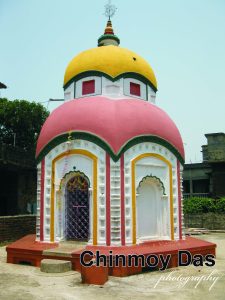
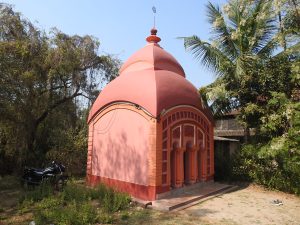
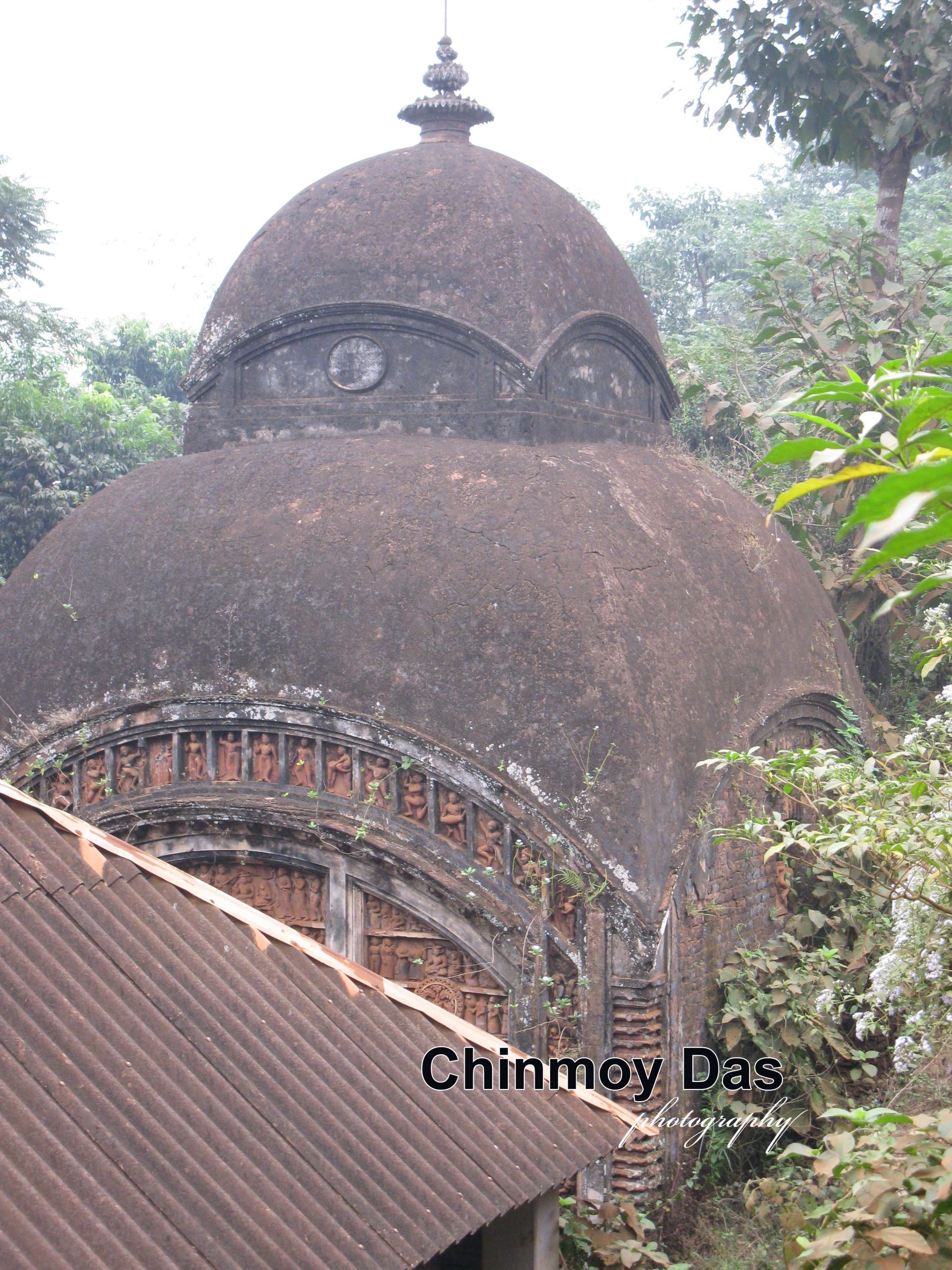
ইটের তৈরী, পশ্চিমমুখী, " আট-চালা" রীতির মন্দির। সাড়ে ১৭ ফুট দৈর্ঘ্য-প্রস্থের বর্গাকার সৌধ, উচ্চতা প্রায় ৩৫ ফুট। সামনে খিলান-রীতির তিনটি দ্বারপথ যুক্ত অলিন্দ, পিছনে এক-দ্বারী গর্ভগৃহ। মন্দিরের ছাউনির চালাগুলির নিচের প্রান্ত বা কার্ণিশের বঙ্কিমভাবটি বেশ মনোরম। শীর্ষক অংশে বেঁকিটি একটু প্রলম্বিত। তার উপর আমলক, কলস, ত্রিশূল-দণ্ড স্থাপিত।
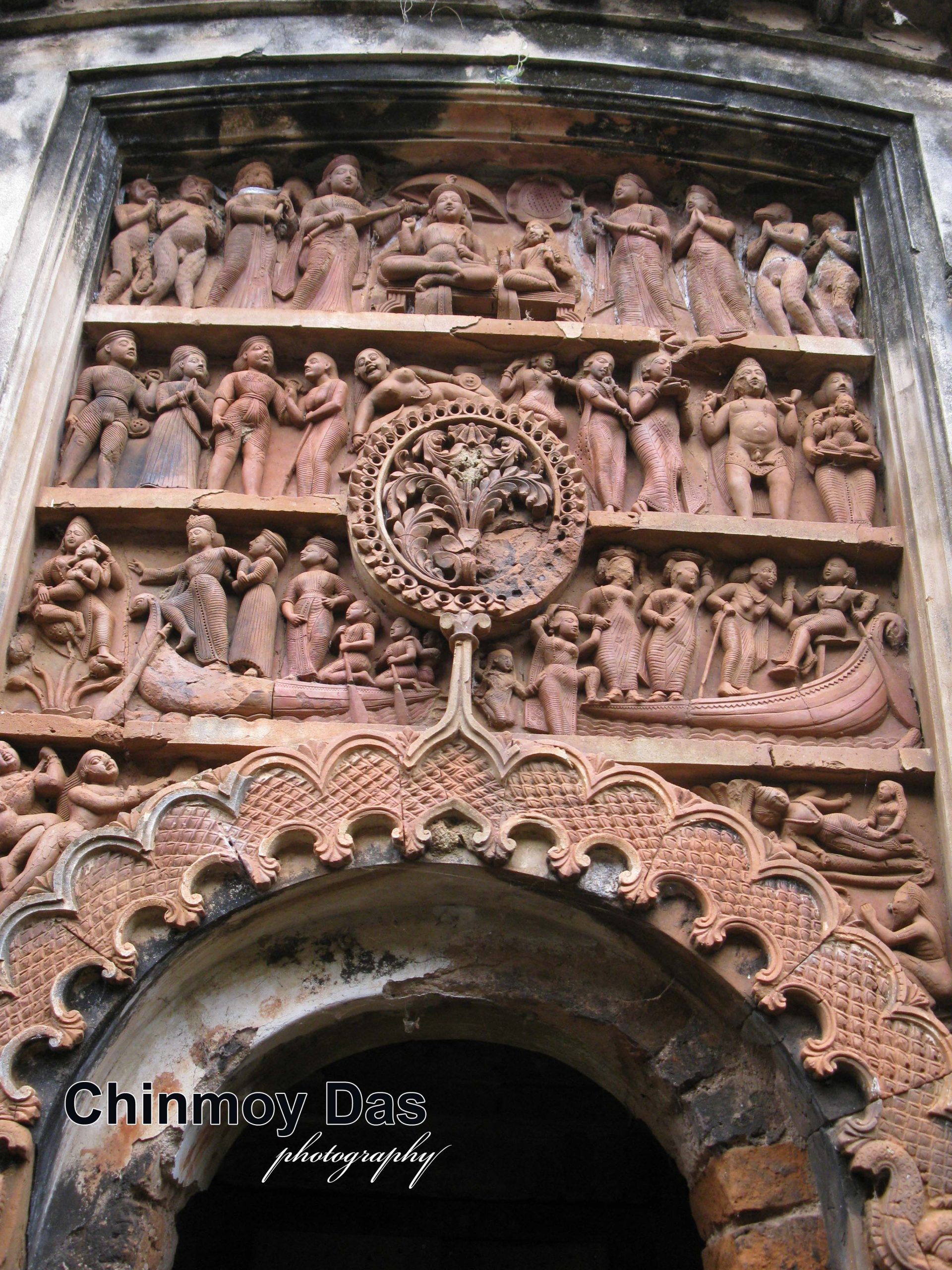
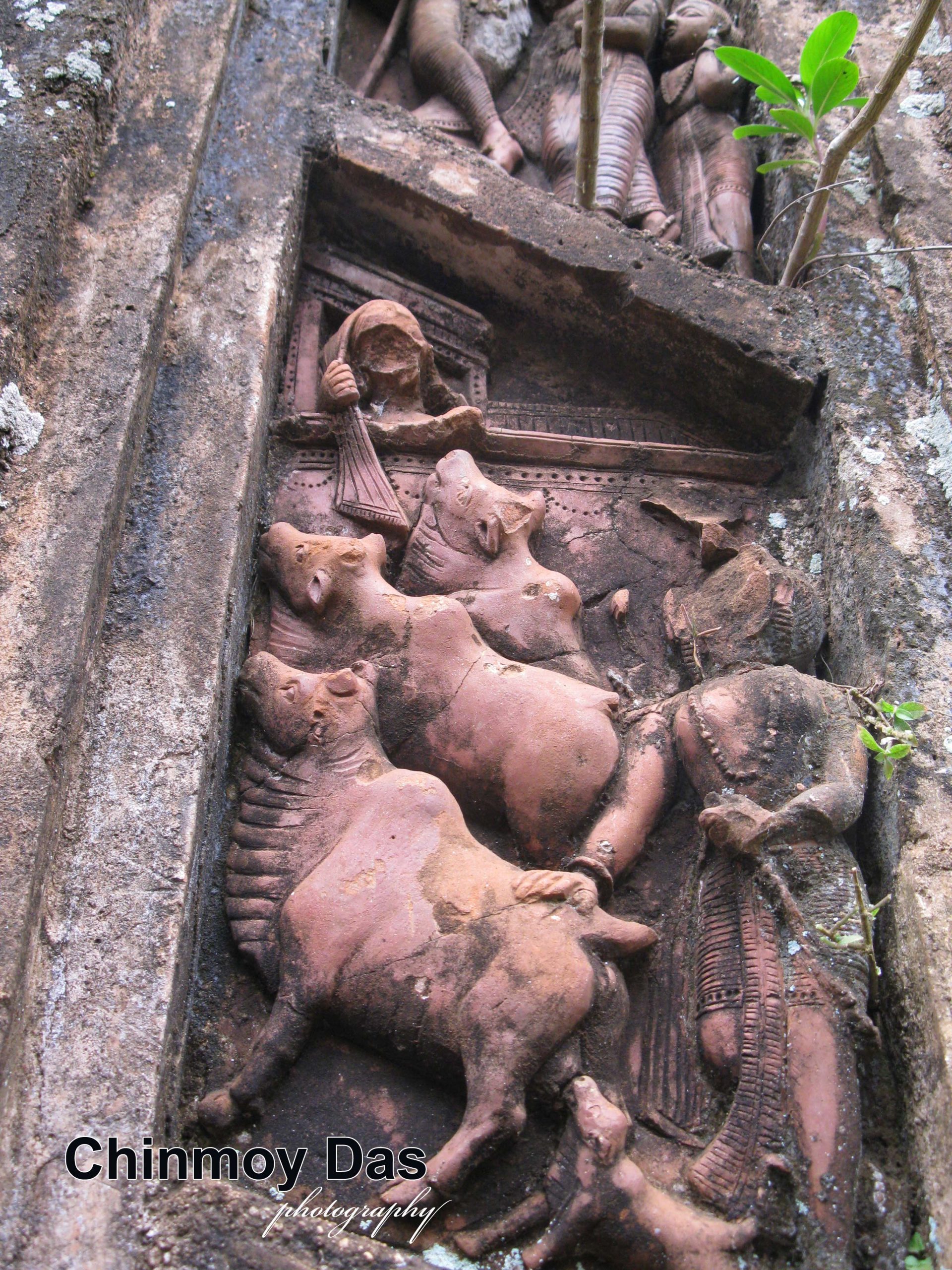
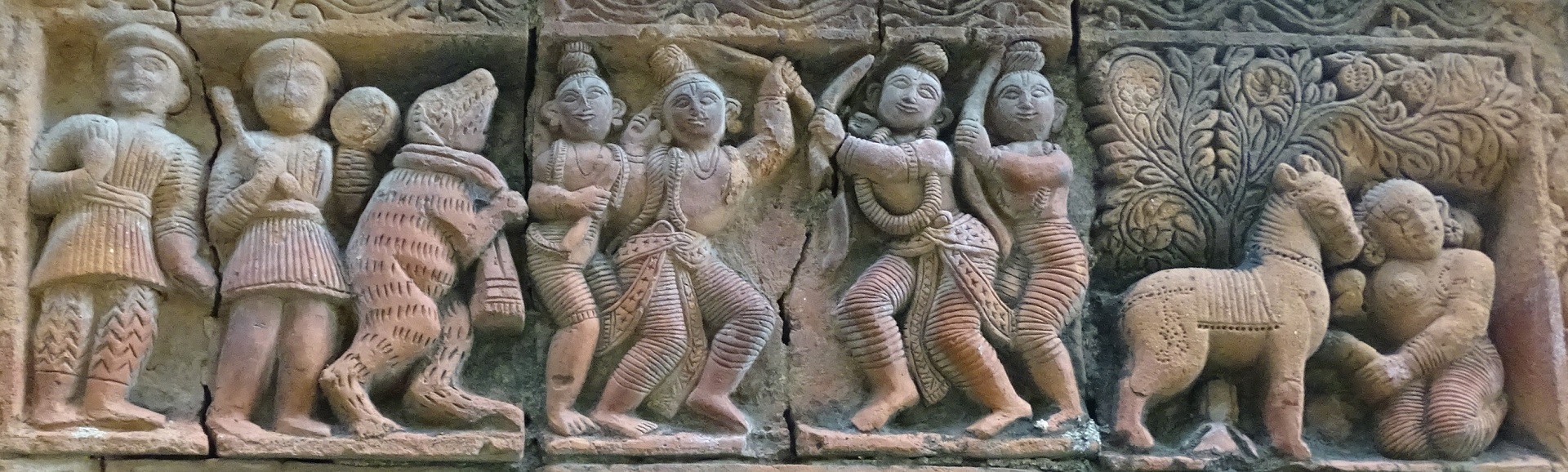
বহুসংখ্যক টেরাকোটা ফলক দিয়ে মন্দিরটি সাজানো হয়েছিল। তিনটি দ্বারপথের মাথার উপর তিনটি বড় প্রস্থে, কার্নিশের নিচে সমান্তরাল একটি সারিতে এবং দুই কোনাচ বরাবর দুটি খাড়া সারিতে ফলকের বিন্যাস হয়েছে। সবই পূরাণ-কথা নির্ভর।
মোটিফগুলিকে মুখ্যত ৪টি ভাগে ভাগ করে দেখা যায়-- ১. রামায়ণ-কাহিনী থেকে-- লক্ষণের শক্তিশেল, রামের কোলে অচৈতন্য লক্ষণ, হনুমানের গন্ধমাদন আনয়ন, রাবণের সীতাহরণ, অশোক কাননে বন্দিনী সীতা ইত্যাদি।
২. শিব-কথা থেকে-- মহাদেবের মন্দির, সেকারণে, কেন্দ্রীয় দ্বারপথের মাথার উপর বড় প্রস্থটি জুড়ে শিবেরই রাজত্ব। গণেশ-জননী, সিংহাসনে উপবিষ্ট হর-পার্বতী, স্খলিত-বসন শিঙ্গাধারী মহাদেব মূর্তি ইত্যাদি অনেকগুলি ফলক।
৩. কৃষ্ণ-লীলা থেকে-- কৃষ্ণ অদর্শনে অচৈতন্য রাধারানী, শ্রীকৃষ্ণ এবং রাধিকার যুগলমূর্তি, ললিতা সখী, শ্রীকৃষ্ণ কর্তৃক গোপিনীগণের বস্ত্রহরণ ইত্যাদি।
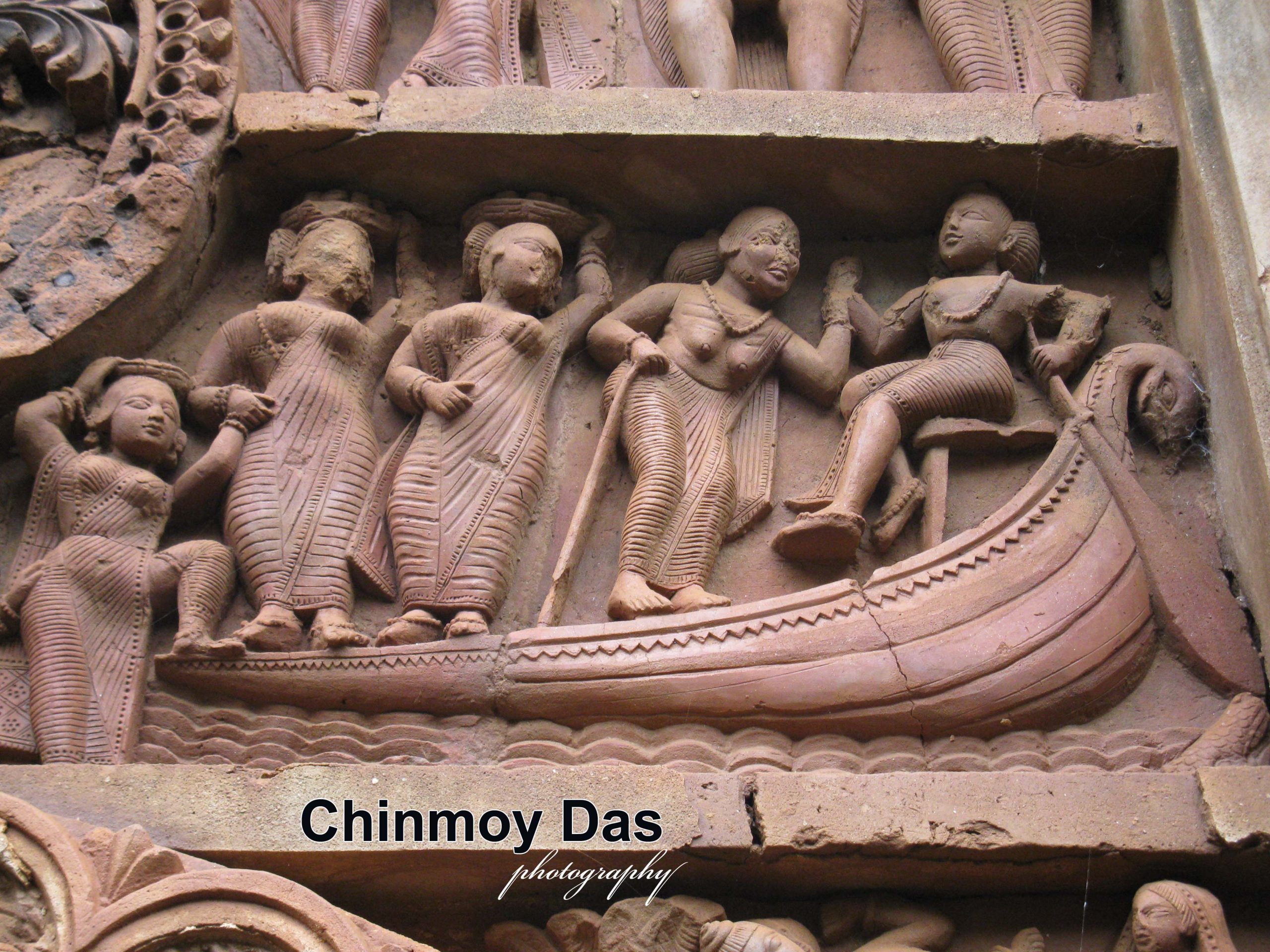
৪. মঙ্গলকাব্য থেকে-- চন্ডীমঙ্গলকেই উপজীব্য করা হয়েছে এখানে। ধনপতি এবং শ্রীপতির সিংহল অভিমুখে বাণিজ্যযাত্রা, সমুদ্রবক্ষে কমলে-কামিনী দর্শন ফলক দুটি উল্লেখযোগ্য।
দুটি দ্বারপাল মূর্তি আছে গর্ভগৃহের দ্বারপথের দু'পাশে। মন্দিরের গা-লাগোয়া সামনে, টিনের ছাউনি দেওয়া একটি নাটমন্দির আছে, ছবি তুলবার পক্ষে ভারী প্রতিবন্ধক সেটি।
Parvatinath Shiva Temple, North Govindnagar (Thana-Daspur, Midnapore)
Chinmoy Das
There are many small and big rivers in the district. It also has some wide canals. Once upon a time, these rivers and canals were important means of transportation and irrigation. The role of canals in drainage was particularly significant. After the independence of the country, emphasis was laid on the improvement of canals in order to improve the provision of agriculture and to prevent erosion.
Due to the basin of several rivers, the entire area of Daspur Thana is a fertile agricultural area. From the 17th to 19th centuries, the economic prosperity of this thana was marked by the production of agricultural products, indigo-cultivation and especially the silk industry. A large number of landlords and rich families were born in this police station. Along with him, like Sohag in Son, many temple-building Sutradhar families also settled in Daspur. Rich families and skilled artisans - one after another, many temples were built in villages. The gathering of such a large number of temples in one police station, perhaps, will not be seen anywhere else in Bengal.
There is a reason for such a long introduction in the context of a Shiva temple. Since independence, during the renovation of rivers and canals, many temples have been destroyed. During the renovation of the river embankment, the main example of the destruction of the temple is seen in the village of Pathra in the Kotwali thana of Midnapore Sadar. A number of ancient temples have been completely or partially destroyed.
A similar case was also registered at Daspur police station. Let's look at two examples: 1. During the renovation of the Palashpai canal (actually the eastern arm of the Kangsabati River) in this thana, a large part of the Anindasundara Vishnu temple of the Maity clan of the village was buried under the soil. The entire temple complex was covered with terracotta. 2. The second example is the Parvatinath temple on the banks of the Mohankhali canal. More than half of the temple is covered with mud. Today's article is about this temple.
There is an inscription in the temple - "Sri Sri Bhuvaneshwara / Devidev Mahadev / Sakabda 1772 AD 1257 / Tang 21 Bhadra Mistri / Sri Anundoram Das / Sakim Daspur." (Spelling Exactly) That is, the temple was established about two hundred and fifty years ago, in 1850.
Although the date of the foundation is known, the name of the founder of the temple is not known from the plaque. According to some local elders, the temple was built by Raja Sobha Singh of Chetua-Barda Pargana. However, this cannot be countenanced. Because Shobha Singh died before 1800. The second view is that Shobha's brother-in-law Himmat Singh, unable to collect the revenue, evicted her and gave the charge of the area to the Raja of Burdwan, the Nawab of Bengal. It is said that the temple was built by the king of Burdwan for the worship of the people. We can take the second approach.
After establishing the temple, the property of the deity and jagir-land were given to the priests, attendants, malakars, dhakis, barbers, etc. for conducting sevapooja. The workers have taken possession of the properties, but except the priests and the attendants (here the name of the post is - Vyochati), others have not been engaged in worship. The villagers have formed a committee to look into the matter.
Apart from the regular worship, devotees also often come with the worship of vows, etc. The temple is known as the 'Seven Parted Marrow'. Chaitra Sankranti is a 9-day long festival. Although more than half of the temple is buried under the ground, the only reason the temple has not yet been abandoned or destroyed is that this form of worship and celebration has survived.
Built of brick, facing west, the temple of 'At-Chala' style. It is 17 feet long and 35 feet high. At the front, there are three entrances, and at the rear, there is a single entrance. The lower end of the chalas of the temple canopy or the bend of the cornice is very beautiful. At the top, the tail is slightly curved. On it are placed amlok, kalash, trishul-danda.
The temple was decorated with numerous terracotta plaques. Plaques are arranged in three large widths at the heads of the three doorways, in a row parallel below the cornice, and in two steep rows along the two corners. It all depends.
Motifs are mainly divided into 4 categories - 1. From the story of the Ramayana - Shaktishela of the symptoms, Achaitanya symptom in Rama's lap, Hanuman's bringing of the fragrance, Ravana's bringing of Sita, Sita's captive in Ashoka's ear, etc.
2. From Shiva-katha - Mahadeva's temple, therefore, the great width over the head of the central doorway is occupied by Shiva's kingdom. There are many idols of Lord Ganesha, Goddess Parvati and Lord Shiva.
3. From Krishna-lila - Achaitanya Radharani in Krishna Adarshana, the couple idols of Krishna and Radha, Lalita Sakhi, the stripping of the gopinis by Krishna, etc.
4. From Mangalakavya - Chandimangal has been made alive here. Dhanapati and Sripati's trade journey to Sinhala, the Kamale-Kamini darshan plaques on the seashore are noteworthy.
There are two doorways on either side of the entrance. Adjacent to the temple, there is a tin-roofed Natamandira, which is a heavy barrier to photography.