নারায়ণ মন্দির, পশ্চিম পুরুষোত্তমপুর (কাঁথি)
চিন্ময় দাশ
‘তিল থেকে তাল’—এই প্রবাদের জ্বলন্ত উদাহরণ নিয়ে এবারের জার্ণাল। সেই ঘটনার অভিঘাতে, অনিন্দসুন্দর একটি দেবালয় কীভাবে একটু একটু করে ধ্বংসস্তুপে পরিণত হতে পারে, তার দৃষ্টান্তই এই নিবন্ধের প্রতিপাদ্য।
বিষ্ণু উপাসক একটি পরিবারের বাস ছিল মাজনামুঠা পরগণার পশ্চিম পুরুষোত্তমপুর গ্রামে। বর্তমান কাঁথি শহরের সামান্য পূর্বদিকে, হাতের মুঠোয় ধরা যায়, এমনই ছোট্ট মাপের গ্রাম। সেই গ্রামেই বাস ছিল স্বচ্ছল নায়কবংশের।
নায়করা চৈতন্যদেবের গৌড়ীয় বৈষ্ণব ধর্মে প্রভাবিত হয়ে, বাস্তুর ভিতরেই গড়েছিলেন কুলদেবতা নারায়ণের মন্দিরটি। একটি কুলগাছ ছিল মন্দিরের লাগোয়া। একবার পার্শ্ববর্তী আদাবেড়িয়া গ্রামের একটি বালক এসে, গাছের কুল চুরি করে খেয়েছিল। তাই থেকে বিবাদের সূত্রপাত।
কিশোরের পরিবার আদালত পর্যন্ত নিয়ে গিয়েছিল বিবাদটিকে। আদালতের দীর্ঘসূত্রিতা সকলের জানা। কয়েক দশক ধরে চলেছিল মোকদ্দমাটি।
মামলার দিন গড়িয়েছে যত, তার সাথে তাল মিলিয়ে, একটু একটু করে নিঃস্ব হয়েছে নায়কবংশ। কৃষ্ণপ্রসাদ নায়ক যখন পরিবারের কর্তা, তাঁর জীবদ্দশাতে মামলার নিঃষ্পত্তি হয়েছিল। কিন্তু ততদিনে কাঠাখানিক জমির উপর বসতবাড়ী আর মন্দিরটুকু ছাড়া, বাকি প্রায় দু’শ বিঘা সম্পত্তি বিক্রি হয়ে গিয়েছিল মামলার খরচ সামলাতে।
এমন একদিন এলো, যেদিন মন্দিরের পুরোহিতের দক্ষিণাটুকু দেওয়ার সাধ্যও আর রইল না। তখন চোখের জলে বুক ভাসিয়ে, দেবতার বিগ্রহ দুটি তুলে দিতে হয়েছিল ব্রাহ্মণের হাতে। অশ্রুরূদ্ধ কন্ঠে একটিমাত্র আবেদন ছিল কৃষ্ণপ্রসাদের-- ঠাকুরমশাই, আমি তো পারলাম না। আপনার ঘরে জল-তুলসীটুকু যেন বজায় থাকে আমার দেবতার।
সেদিন হাহাকারে বুক ফেটে যাচ্ছিল নায়কবংশের। শালগ্রাম শিলা নয়। শঙ্খ, চক্র, গদা, পদ্ম ধারী নারায়ণ। প্রস্ফুটিত পদ্মের উপর দণ্ডায়মান চতুর্ভূজ মূর্তি দেবতা, চলে গিয়েছিলেন বাস্তুভিটে ছেড়ে। সেদিন থেকে, পাশেই ব্রাহ্মণবসান গ্রামে, পুরোহিতবাড়িতে পূজিত হচ্ছেন নারায়ণ।
নায়কবাড়ির মন্দিরে আর ধূপ-দীপ জ্বলে না। শঙ্খ-ঘন্টা- কাঁসরের শব্দে মুখরিত হয় না গ্রামের বাতাস। পূর্ব কালে বারো মাসে তেরো পার্বণের আয়োজন হোত ঘটা করে। সেসব এখন বেদনা বিধুর স্মৃতি মাত্র।
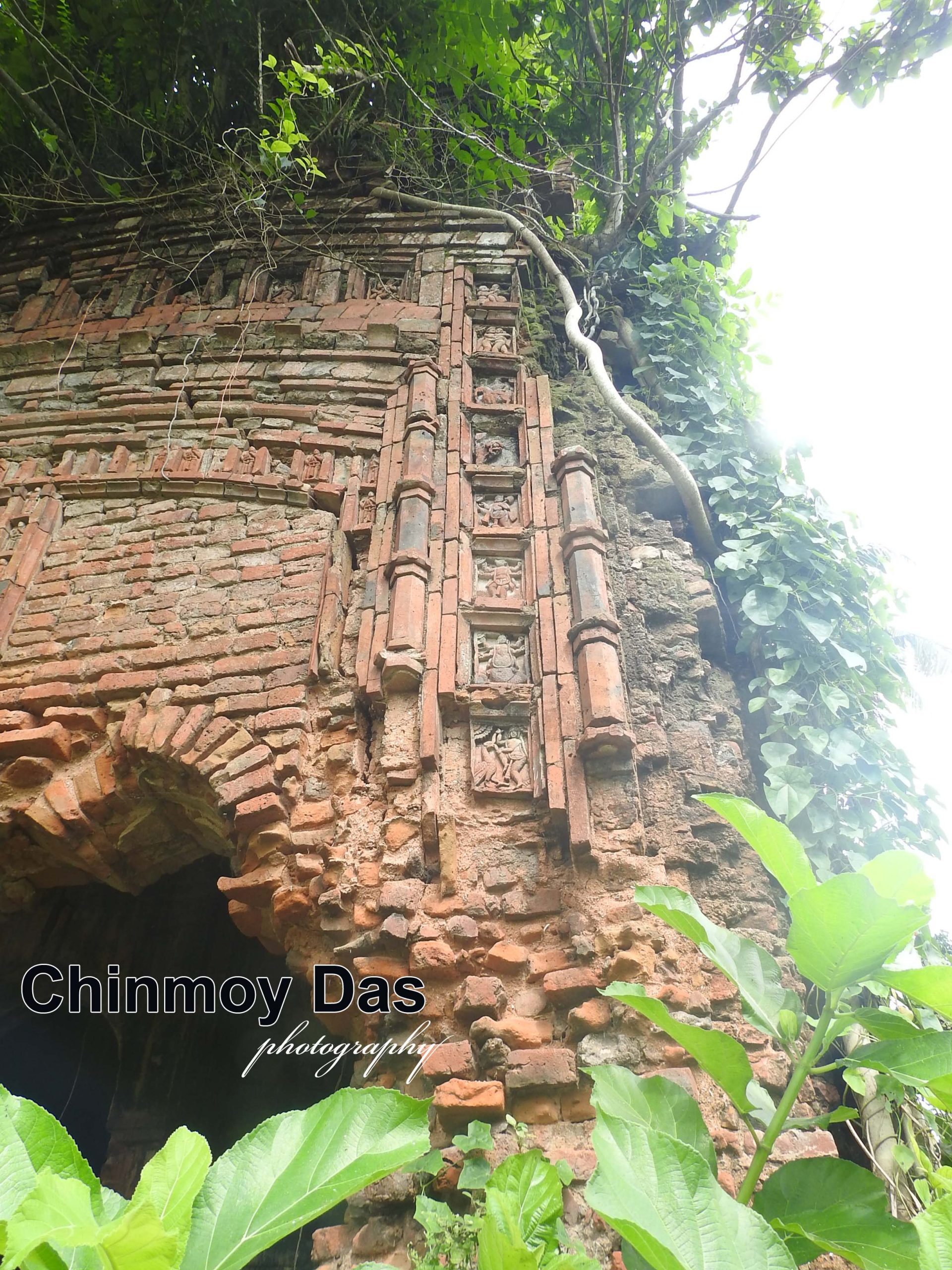
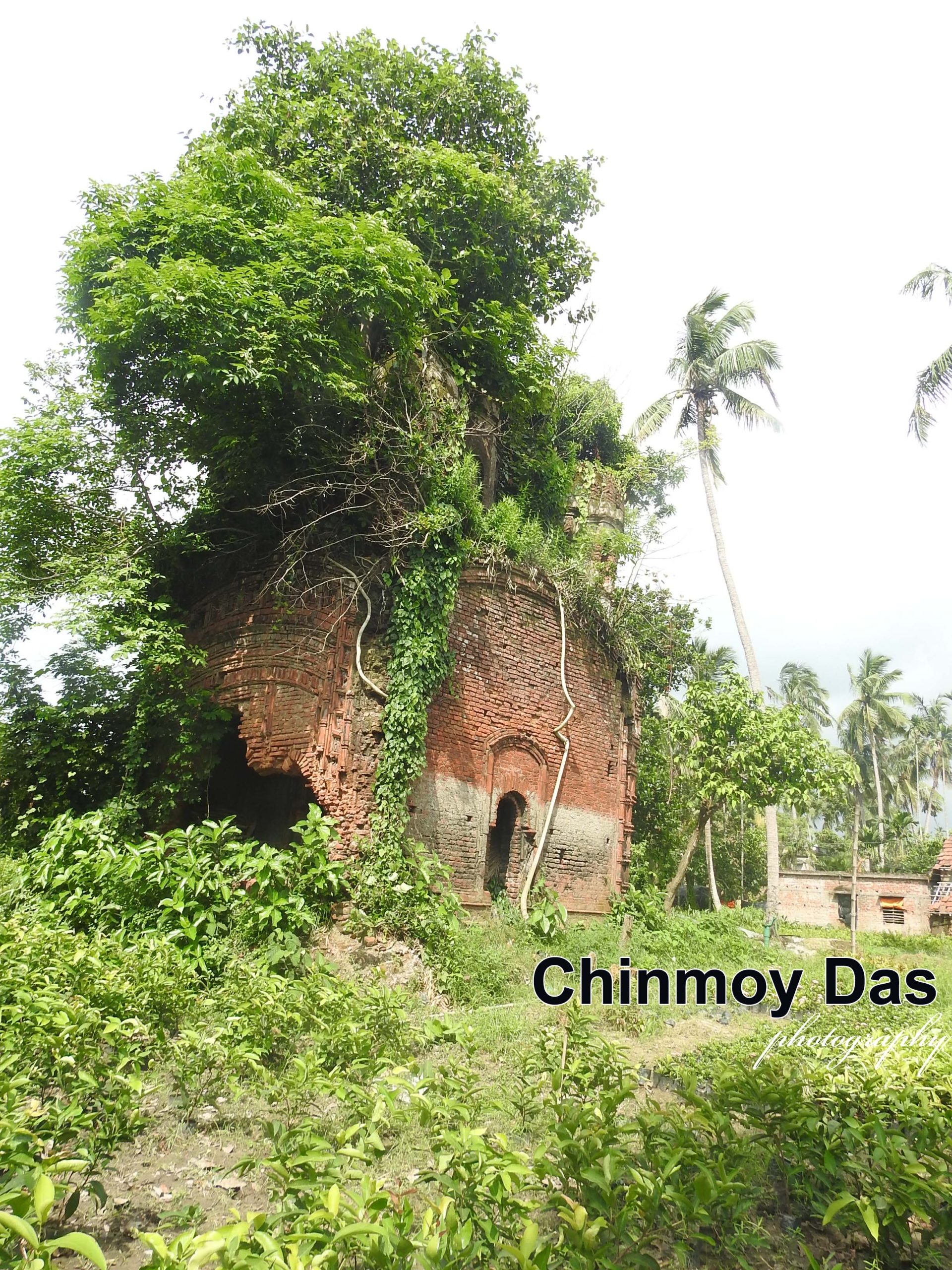
পুরুষোত্তমপুরের অদূরেই সমুদ্র। সমুদ্রের বুক থেকে নোনা বাতাস উঠে আসে। বারো মাস কুরে কুরে খায় পরিত্যক্ত দেবালয়টিকে। বড় বড় গাছপালার শেকড়-বাকড়ে আষ্টে-পৃষ্ঠে বাঁধা পড়ে যাচ্ছে দেবালয়টি।
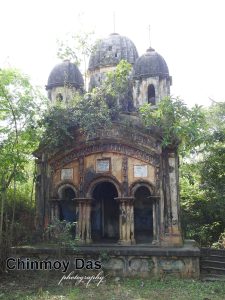
জীর্ণ পরিত্যক্ত এই মন্দিরের পাদপীঠ এখনও ফুট দুয়েক উঁচু। চারদিক ঘিরে একটি প্রদক্ষিণ-পথ ছিল, তার চিহ্ন দেখা যায়। ইট-চুন-সুরকির উপাদানে গড়া পূর্বমুখী পঞ্চ-রত্ন মন্দির। চার দিকে চারটি অলিন্দ গর্ভগৃহকে বেষ্টন করে আছে।
সামনের অলিন্দে খিলান-রীতির তিনটি দ্বারপথ। একটি করে দ্বারপথ আছে উত্তর এবং দক্ষিণেও। পশ্চিমেরটি ‘চাপা-অলিন্দ’। গর্ভগৃহে অতিরিক্ত একটি দ্বার আছে, উত্তরের অলিন্দের সাথে যুক্ত সেটি। এই অলিন্দ থেকে একটি সিঁড়ি রচিত আছে দ্বিতল পর্যন্ত।
সামনের অলিন্দের দুটি অর্ধ-স্তম্ভের কঙ্কাল থেকে অনুমান করা যায়, সেগুলি ‘ইমারতি-রীতি’তে নির্মিত হয়েছিল। অলিন্দগুলির সিলিং ‘টানা-খিলান’ রীতির। গর্ভগৃহের সিলিং হয়েছিল পর পর চারটি খিলানের মাথায় গোলাকার ভল্টের সাহায্যে।
পাঁচটি রত্নেই রথ বিভাজন করা। তবে, ছাউনির চালায় পীঢ়-ভাগ করা হয়নি। সবগুলি রত্নেরই শীর্ষক অংশ সম্পূর্ণ বিলুপ্ত। সেগুলিতে বেঁকি, খাপুরী, আমলক, ঘন্টা, কলস, বিষ্ণুচক্র ইত্যাদি কীভাবে রচিত হয়েছিল, সে সম্পর্কে কিছু বলা যায় না।
বর্তমানে মন্দিরে অলিন্দের সামনের দেওয়ালটি নাই বললেই চলে। যেটুকু আছে, তাতেই টেরাকোটা ফলক ব্যবহারের নিদর্শন দেখা যায়। মন্দিরের সর্বাঙ্গে ইটের কঙ্কাল ছাড়া, পলেস্তারার চিহ্নমাত্র নাই। ১০০ বছর তো বড় কম সময় নয় !
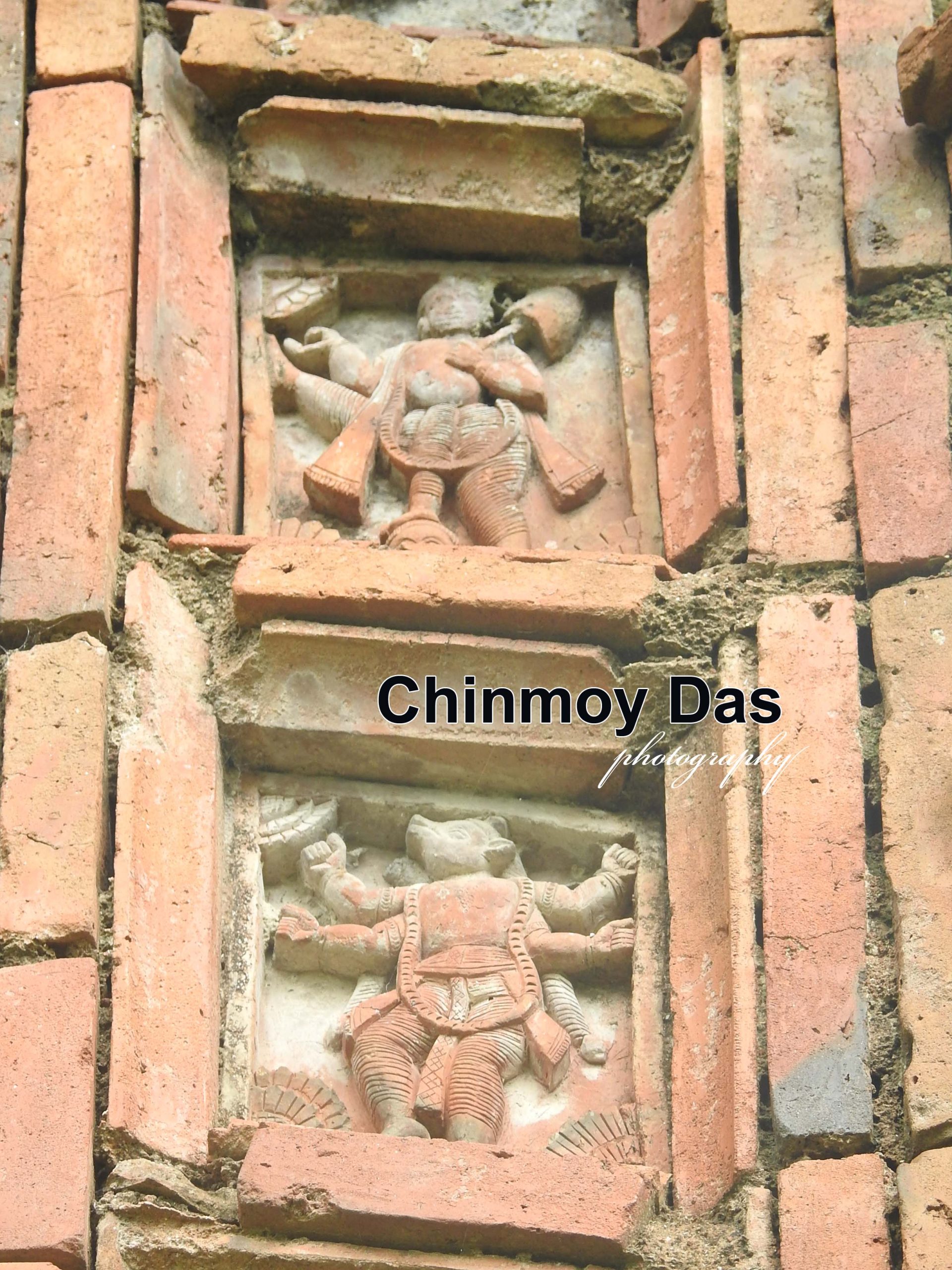
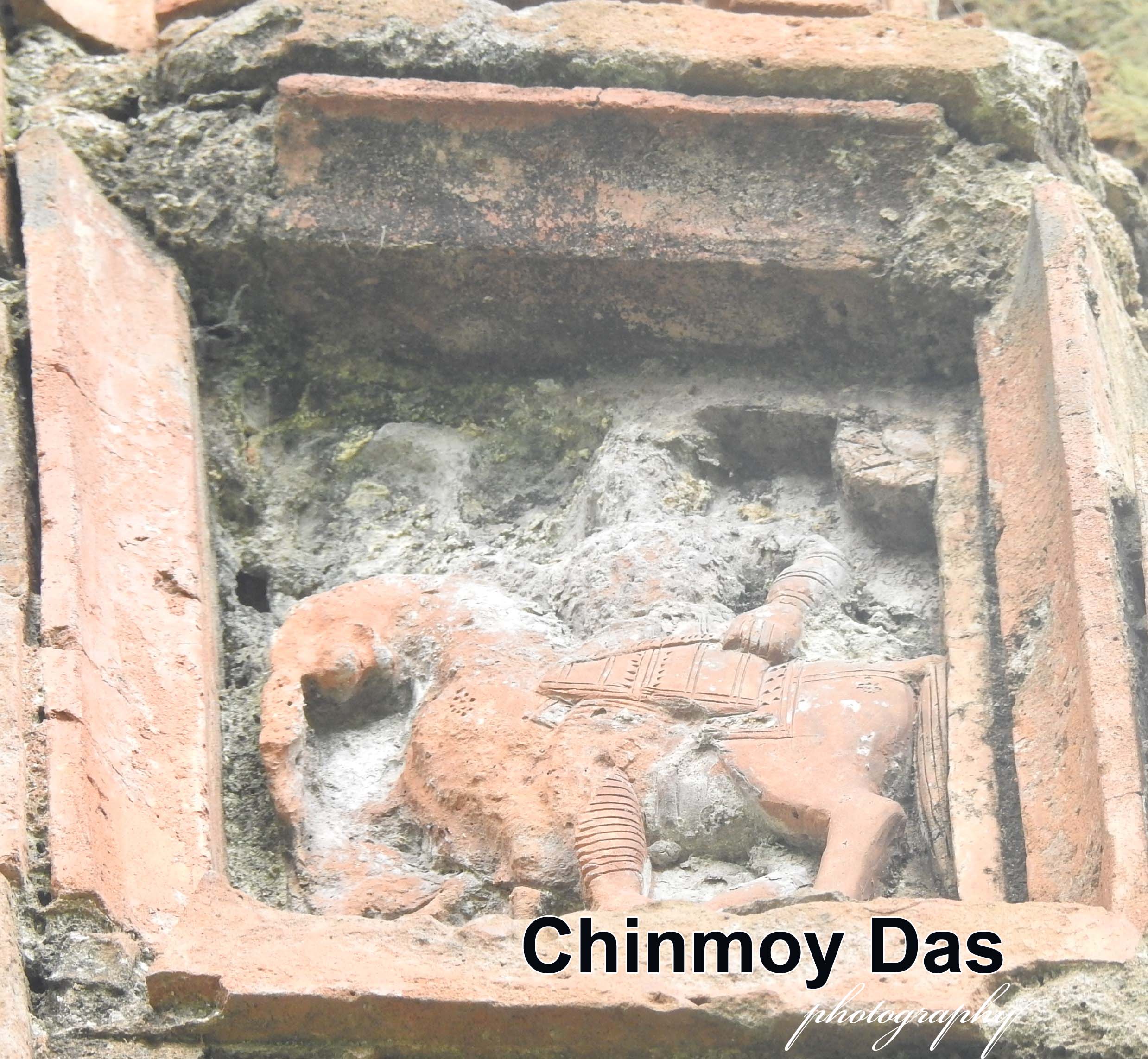
তিনটি দ্বারপথের মাথার বড় প্রস্থগুলিতে ফলক বিন্যাস কেমন ছিল, তা আর জানা যাবে না কোনদিন। তবে, প্রস্থগুলির বিভাজক সারিগুলি ফলকমণ্ডিত ছিল, তার নমুনা আছে। এছাড়া, কার্ণিশের নীচ বরাবর এক সারি এবং দু’দিকের দুই কোণাচের গায়ের খাড়া দুটি সারিতে ফলক ছিল, তারও দুটি-একটি নমুনা দেখা যায়।
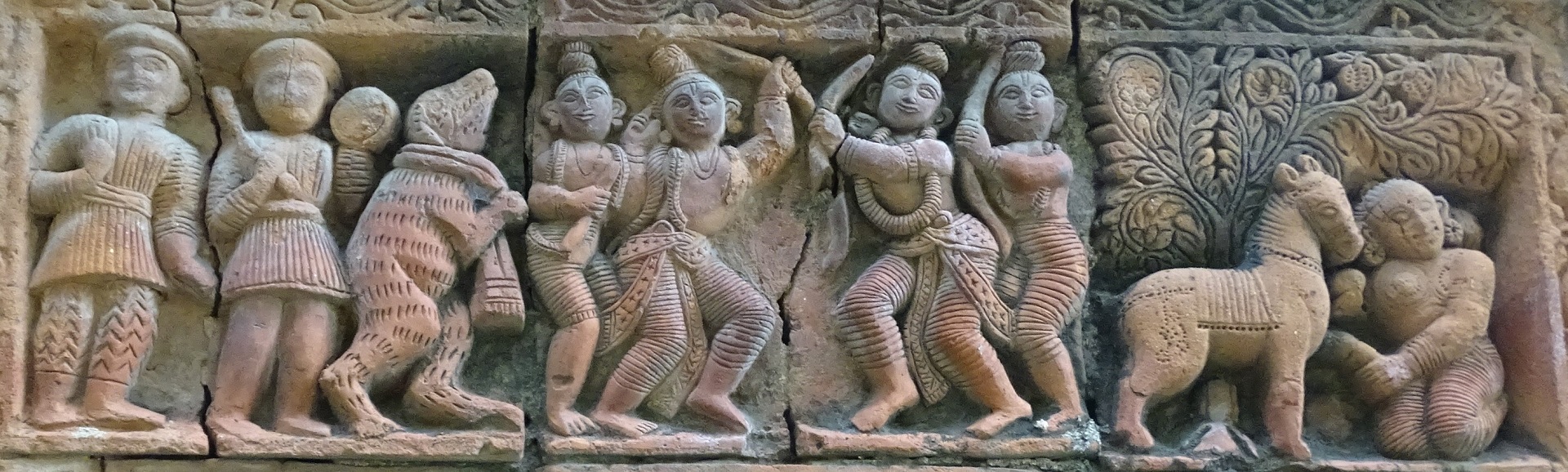
মোটিফ হিসাবে দেখা যায়—বিষ্ণুর দশাবতার, অশ্বারোহী সৈনিক, কয়েকটি নর-নারী মূর্তি ইত্যাদি। দুটি মিথুন মূর্তিও টিকে আছে এখনও। এককালে মন্দিরটি যে টেরাকোটা মণ্ডিত হয়ে অপরূপ দর্শন ছিল, বুঝতে অসুবিধা হয় না।
একটি অহঙ্কারী বনেদী পরিবারের জেদ আর দম্ভের কারণে, এমন একটি সাংস্কৃতিক ঐতিহ্য ধ্বংস হয়েছে, দেখলে বেদনায় বুক ভারী হয়ে আসে।
Narayan Temple, Paschim Purushottampur (Contai)
Chinmoy Das
This journal entry presents a striking example of the Bengali proverb “making a palm tree out of a sesame seed”—turning a trivial matter into a major one. It illustrates how the impact of such an incident can gradually reduce a remarkably beautiful temple into a ruin.
A Vaishnava family once lived in Paschim Purushottampur village of the Majnamutha Pargana. The village lies just east of present-day Contai town and is so small that it could almost fit in the palm of one’s hand. It was here that the prosperous Nayak family resided.
Influenced by the Gaudiya Vaishnava faith propagated by Chaitanyadeva, the Nayaks built a temple dedicated to their family deity, Narayan, within their homestead. Beside the temple stood a jujube tree (kul tree). One day, a boy from the neighboring village of Adaberia came and stole some fruits from the tree. From this seemingly minor incident began a bitter dispute.
The boy’s family eventually took the matter to court. Everyone knows how prolonged court proceedings can be. The litigation continued for several decades.
As the years of the lawsuit passed, the fortunes of the Nayak family steadily declined. By the time Krishnaprasad Nayak became the head of the family, the case was finally settled during his lifetime. But by then, except for their residence and the temple standing on a few kathas of land, nearly two hundred bighas of property had been sold to meet the legal expenses.
Eventually, a day came when the family could no longer afford even the modest honorarium for the temple priest. With tears in their eyes, they had to hand over the two sacred images to the Brahmin priest. Choking back his emotions, Krishnaprasad made only one request:
“Revered priest, I could not fulfill my duty. Please ensure that my deity at least continues to receive water and sacred tulsi leaves in your home.”
That day, the Nayak family was overwhelmed with grief. This was not merely a Shalagram stone. It was Narayan himself, bearing the conch, discus, mace, and lotus—a four-armed deity standing upon a fully blossomed lotus. The image left the ancestral homestead forever. Since that day, Narayan has been worshipped in the priest’s house in the nearby village of Brahmanbasan.
No incense or lamps are lit anymore in the temple of the Nayaks. The air of the village no longer resonates with the sounds of conch shells, bells, and brass cymbals. In former times, festivals and celebrations were held throughout the year with great enthusiasm. Today, they survive only as painful memories.
The sea lies not far from Purushottampur. Salty winds rise from the ocean and relentlessly erode the abandoned temple throughout the year. Large trees and their roots have gradually wrapped themselves around the structure.
The plinth of this dilapidated and deserted temple still stands about two feet high. Traces of a circumambulatory passage can be seen around it. The east-facing pancha-ratna (five-towered) temple was built of brick, lime, and mortar. Four verandahs surround the sanctum.
The front verandah contains three arched entrances. There is one entrance each on the north and south sides as well. The western side consists of a recessed or “hidden” verandah. The sanctum has an additional doorway connecting it to the northern verandah. From this verandah, a staircase leads to the upper floor.
The skeletal remains of the two half-columns in the front verandah suggest that they were constructed in the imarati style. The ceilings of the verandahs are built in the tana-khilan (continuous arch) style. The ceiling of the sanctum was formed by a circular vault resting upon four successive arches.
All five towers (ratnas) are divided into ratha projections. However, the roof was not divided into pidha tiers. The upper portions of all the towers have completely disappeared. It is therefore impossible to determine how architectural elements such as the benki, khapuri, amalaka, bell, finial pot, and Vishnu-chakra were originally arranged.
Today, the front wall of the verandah has almost vanished. Whatever remains still bears evidence of terracotta ornamentation. Apart from the exposed brick framework, there is virtually no trace of the original plaster on the temple. After all, a hundred years is no short period of time.
How the large terracotta compositions above the three entrances were originally arranged can never be known. However, examples survive showing that the dividing bands between these panels were decorated with terracotta plaques. A few specimens also remain from a row beneath the cornice and from the two vertical rows that once adorned the corner sections on either side.
The surviving motifs include the Dashavatara (Ten Incarnations of Vishnu), mounted soldiers, and several male and female figures. Two erotic (mithuna) figures also remain intact. It is not difficult to imagine that the temple was once richly adorned with terracotta work and must have been a magnificent sight.
Seeing such a valuable cultural heritage destroyed because of the stubbornness and arrogance of a proud aristocratic family fills one’s heart with sorrow.