রাধাগোবিন্দ মন্দির, দক্ষিণ ময়নাডাল (থানা-- পাঁশকুড়া, মেদিনীপুর)
চিন্ময় দাশ
আড়াই শ' তিনশ' বছর আগের কথা। একটা সময়কাল জুড়ে অনেকগুলি সম্প্রদায়ের মঠ গড়ে উঠেছিল মেদিনীপুর জেলায়। রামানুজ সম্প্রদায়, নিম্বার্ক সম্প্রদায়, গৌড়ীয় বৈষ্ণব সম্প্রদায় তাদের অন্যতম। মন্দিরও নির্মাণ করেছিল এরা প্রত্যেকেই। এই তালিকায় ছিল মধ্বাচার্য্য সম্প্রদায়ও। সারা ভারতবর্ষ জুড়ে, বহু মঠ-মন্দির ছিল এদের। মেদিনীপুর জেলাতেও একটি মঠ গড়েছিল মধ্বাচার্য্য সম্প্রদায়। সেই প্রাচীন মঠ আর মন্দিরের ইতিহাস ভূগোল নিয়ে আমাদের আজকের জার্নাল।
প্রথমে আমরা এই সম্প্রদায়ের প্রতিষ্ঠাতা মধ্বাচার্য্য সম্পর্কে কয়েকটি কথা বলে নিই। দক্ষিণাপথের অন্তর্গত তুলুব-এর অধিবাসী মধিজী ভট্টের পুত্র ছিলেন মধ্বাচার্য্য। বলা হয়, ভগবান নারায়ণের আদেশে, স্বয়ং বায়ু দেশে ধর্ম স্থাপনের জন্য মানবদেহে আবির্ভুত হয়ে, মধ্বাচার্য্য নামে প্রসিদ্ধ হয়েছিলেন। ১১২১ শকাব্দ তাঁর আবির্ভাব কাল। বাল্যকালে মাত্র ৯ বছর বয়সে, অনন্তেশ্বর মঠে বিদ্যালাভের কালেই জনৈক প্রেক্ষাচার্যের কাছে দীক্ষা গ্রহণ করেছিলেন। সেসময়ই বৈরাগ্যের উদয় হওয়ায়, সংসার ত্যাগ করেন। তাঁর গুরুর দেওয়া নাম-- পূর্ণপ্রজ্ঞ। এছাড়াও, আনন্দতীর্থ, আনন্দজ্ঞান, জ্ঞানানন্দ, আনন্দগিরি প্রভৃতি নামেও তিনি খ্যাত হয়েছিলেন।
মধ্বাচার্য্য 'গীতাভাষ্য' রচনা করে বদ্রিকাশ্রমে যান এবং ব্যাসদেবকে উপহার দেন। প্রীত হয়ে তাঁকে ৩টি শালগ্রাম উপহার দিয়েছিলেন ব্যাসদেব। সুব্রহ্মণ্য, উদিপী এবং মধ্যতল-- এই ৩ স্থানের তিনটি মঠে শিলাগুলি প্রতিষ্ঠা করেন তিনি। উদিপী ছিল মধ্বাচারীদের প্রধান তীর্থ। সেখানে তিনি এক বণিকের জলমগ্ন জাহাজ থেকে একটি কৃষ্ণমূর্তি উদ্ধার করে প্রতিষ্ঠা করেছিলেন।
উদিপীতে অবস্থানকালে মধ্বাচার্য্য ৩৭টি মূলগ্রন্থ এবং কয়েকটি ভাষ্য রচনা করেছিলেন বলে, জানা যায়। তাঁর মত হল, সকলের আগে একমাত্র অদ্বিতীয় আনন্দস্বরূপ ভগবান নারায়ণ-ই বিরাজিত ছিলেন। সেই নারায়ন বা বিষ্ণুর কায়া থেকেই সমূহ জগতের উৎপত্তি। মধ্বাচার্য্য ঋষি ঈশ্বর ও জীবের পৃথক স্বত্ত্বা স্বীকার করতেন। সেকারনে, তাঁর মত 'দ্বৈতবাদ' নামে প্রসিদ্ধ হয়েছিল। বদরিকাশ্রমে তাঁর তিরোধান ঘটে।
বহুসংখ্যক শিষ্য ছিল তাঁর। ৮টি মঠ প্রতিষ্ঠা করে, ৮ জন ব্রাহ্মণ সন্ন্যাসীকে অধ্যক্ষ হিসাবে নিযুক্ত করেছিলেন। শিষ্য পরম্পরায় অধ্যক্ষ নিয়োগের রীতি বা নির্দেশও দিয়ে গিয়েছিলেন তিনি। তাঁর প্রিয় শিষ্য ছিলেন পদ্মনাভতীর্থ। তিনি ৪টি মঠ প্রতিষ্ঠা করেছিলেন। এইভাবে শিষ্য পরম্পরায় সারা দেশে বহু মঠ এবং মন্দির প্রতিষ্ঠিত হয়েছিল। আমাদের বর্তমান আলোচ্য মন্দিরটি তেমনই একটি।
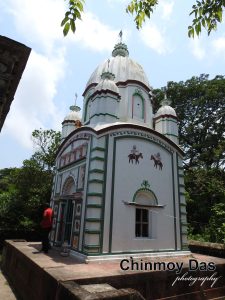
মেদিনীপুর জেলায় পাঁশকুড়া থানার ময়নাডাল গ্রামে মন্দিরটি স্থাপিত। ৪টি ফলকে বিভক্ত একটি প্রতিষ্ঠালিপি আছে এই মন্দিরে। টেরাকোটা, অর্থাৎ মাটির ফলকে খোদাই করে পোড়ানো, লিপি। বানান ও যতিচিহ্ন অপরিবর্তিত রেখে, ক্রমান্বয়ে লিপির বয়ানটি এরকম : " সন ১১৪৫ সাল / মাহ বৈসাখ। শ্রী প্রাণবল্বভ / গোস্বামীর সেবক। সেবক শ্রীবি / ক্রম দে । শ্রী কৃষ্ণচরন / দাস রাজা। " পূর্ববর্তী পুরাবিদ অধ্যাপক প্রণব রায়-এর বিবরণ এবং আমাদের সমীক্ষাকালে মন্দিরের পরিচালক-পুরোহিতের সাথে সাক্ষাৎকারে সংগ্রহ করা বিবরণ থেকে বলা যেতে পারে-- এই মঠের মোহান্ত প্রাণবল্লভ গোস্বামীর সময়কালে, বাংলা ১১৪৫ সন কিংবা ইং ১৭৩৮ সালে এই দেবালয়টি প্রতিষ্ঠিত হয়েছিল।
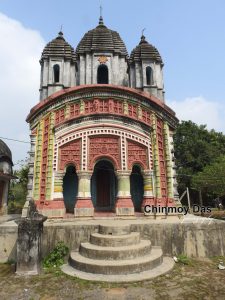
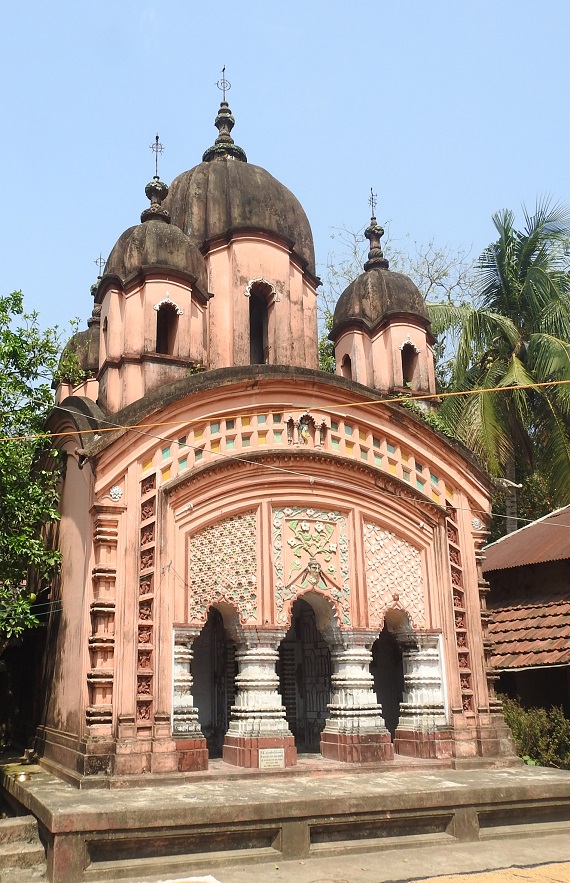
পঞ্চ-রত্ন রীতির দক্ষিণমুখী মন্দির। ইট-চুন-সুরকির উপাদানে নির্মিত। সাড়ে ১৮ ফুট দৈর্ঘ্য-প্রস্থের সম্পূর্ণ বর্গাকার সৌধটির উচ্চতা ৩৫ ফুট। পাদপীঠ তেমন উঁচু নয়। তবে একটি প্রদক্ষিণ-পথ আছে পাদপীঠের উপরে।
সামনে খিলান-রীতির তিনটি দ্বারপথ যুক্ত অলিন্দ। গর্ভগৃহে অতিরিক্ত একটি দ্বারপথ আছে, পুরোহিতের প্রবেশের জন্য। একটি সিঁড়িও আছে উপরে ওঠার। পাঁচটি রত্নেই 'রথ- বিভাজন' করা। কোণের রত্নগুলিতে 'ত্রি-রথ' এবং কেন্দ্রীয় রত্নটিতে 'পঞ্চ-রথ' বিভাজন করা হয়েছে। রত্নগুলির মাথায় বেঁকি, আমলক, কলস এবং চক্র স্থাপিত।
অলিন্দের ভিতরের ছাদ হয়েছে 'টানা-খিলান করে। গর্ভগৃহের ছাদ প্রথমে দুদিকে দুটি বড় খিলান গড়ে, তার মাথায় ছোট গম্বুজ স্থাপন করে নির্মিত হয়েছে।
পরবর্তীকালে একটি ঝুলন মন্দির এবং একটি নাটমন্দির নির্মিত হয়েছিল এখানে। ঝুলন মন্দিরটি 'দালান-রীতি'র, নির্মিত হয় ১২৫৫ বঙ্গাব্দ বা ইং ১৮৪৮ সালে। কারিগর ছিলেন দাসপুরের বৃন্দাবনচন্দ্র মিস্ত্রী। আর নাটমন্দিরটি নির্মিত হয় ১৩২৬ বঙ্গাব্দ বা ইং ১৯২০ সালে। এই সবগুলি নিয়ে মন্দির-চত্ত্বরটি 'অস্থল' নামে পরিচিত।
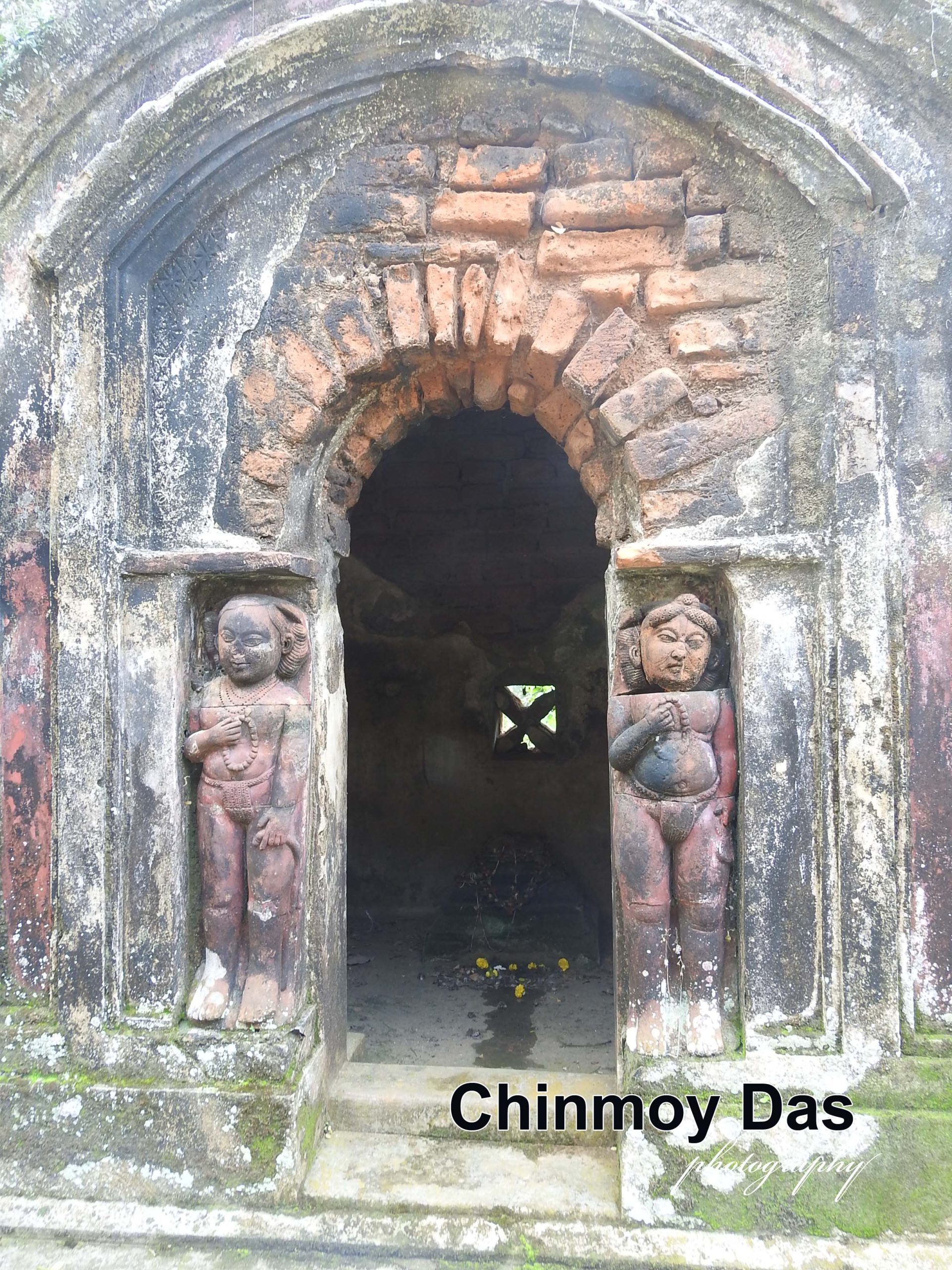
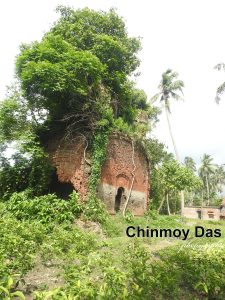
প্রয়াত মোহান্তদের চার-চালা রীতির কয়েকটি সমাধি-মন্দির আছে এখানে, একই চত্ত্বরে। তার ভিতর প্রধান হল, অস্থলের আদিপুরুষ প্রাণবল্লভ গোস্বামীর সমাধিটি। কিন্তু বর্তমানে ভারী জীর্ণ অবস্থা সৌধটির। ভিতরে উঁকি মেরে দেখবার মত অবস্থাও নাই। তবে, বাইরে দেখা যায়, সামনের দেওয়ালটি বর্গাকার সুদৃশ্য টেরাকোটা ফলকে মুড়ে দেওয়া হয়েছিল। কিন্তু ফলকগুলিরও আজ ভারী জীর্ণ দশা। নাটমন্দিরের সামনে, অন্য দুটি সমাধি-মন্দিরের দ্বারপথের দু'দিকে, দুটি করে দ্বারপালমূর্তি স্থাপিত আছে।
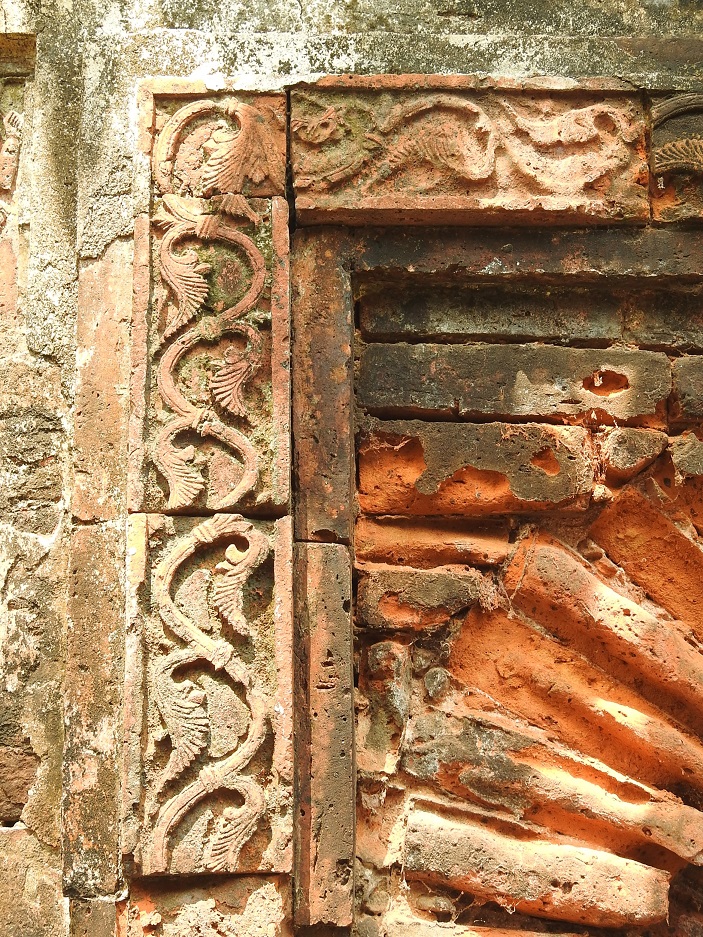
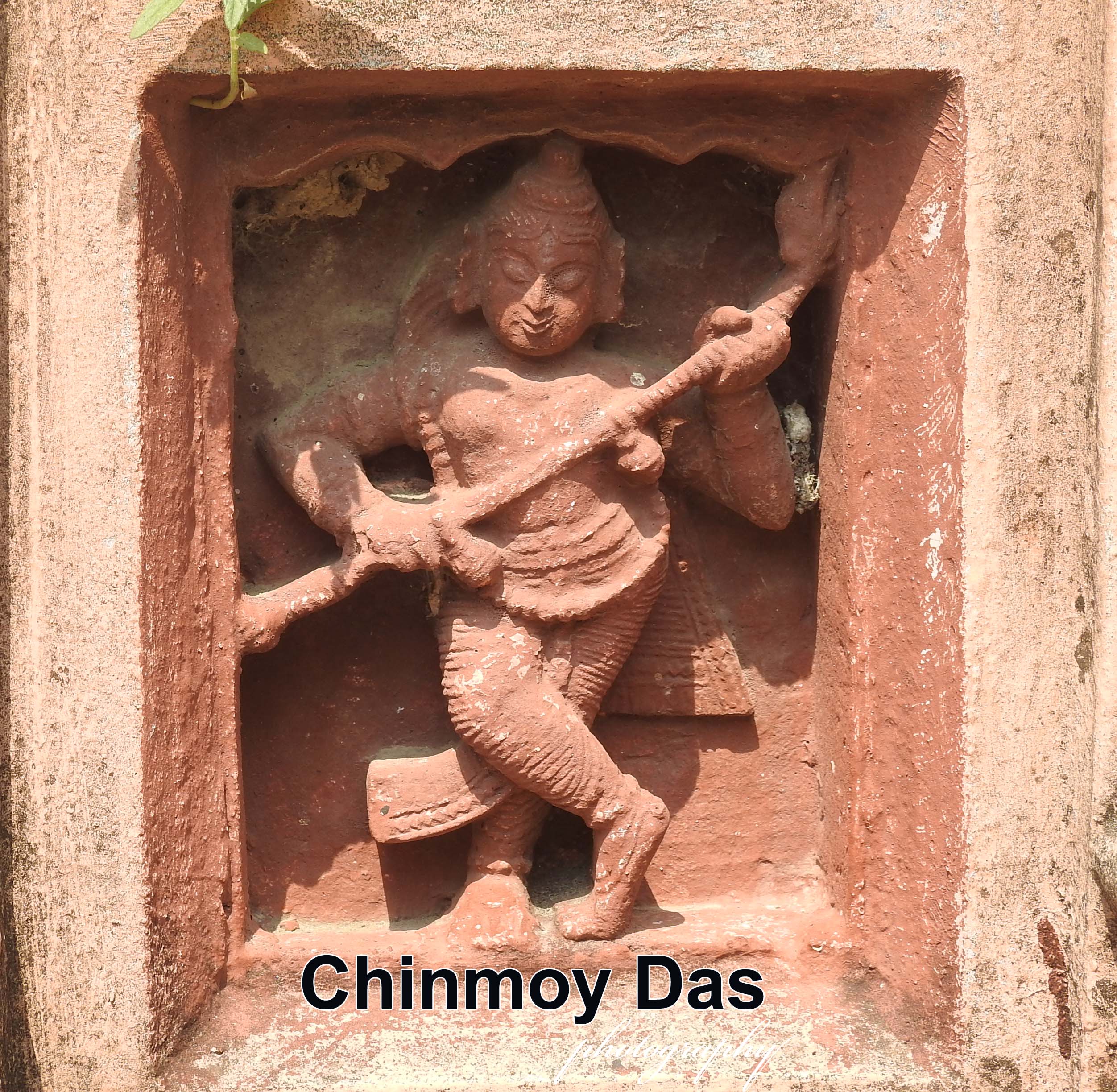
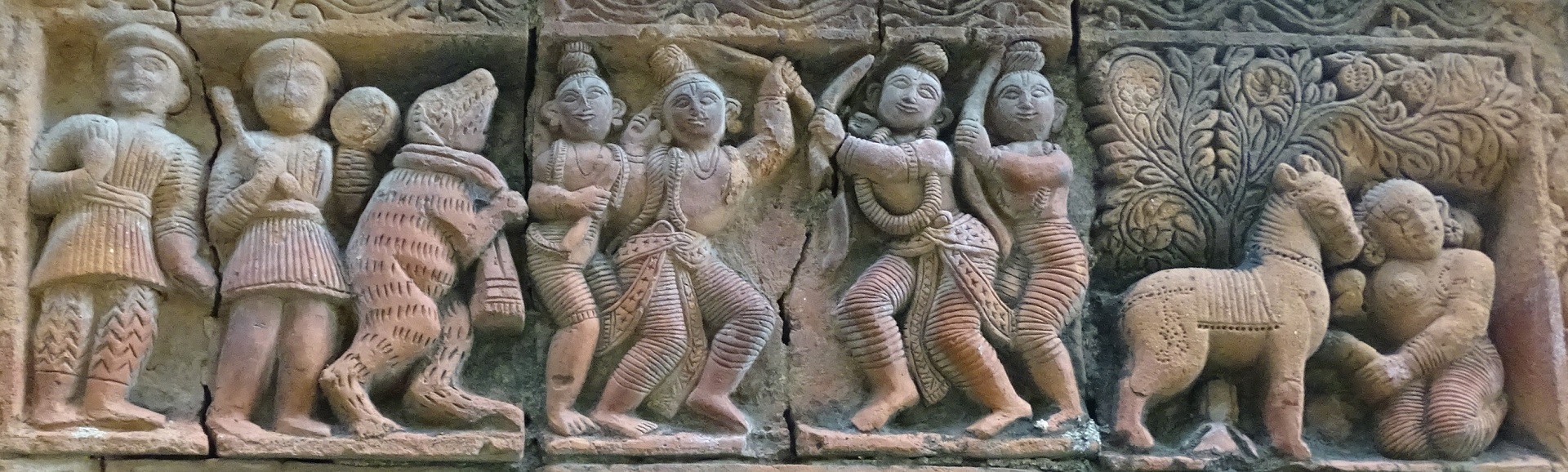
মূল মন্দিরটিও টেরাকোটা ফলকে সাজানো হয়েছিল। তিনটি দ্বারপথের মাথার উপরের তিনটি বড় প্রস্থে, কার্নিশের নীচে একটি সারিতে এবং দু'দিকের কোনাচ অংশের লাগোয়া দুটি সারিতে ছিল ফলকগুলি। ১৯৫০ সালে মন্দিরের সংস্কার কাজের সময়, কেবল কোনাচের দুটি সারি ছাড়া, অধিকাংশই মুছে ফেলা হয়েছে।
ফলকগুলির মোটিফ হিসাবে দেখা যায়-- চতুর্মুখ ব্রহ্মা, ডমরুধারী মহাদেব, কার্তিক, গণেশ, লক্ষ্মী, সরস্বতী ইত্যাদি দেবদেবীর মূর্তি। মানবমূর্তি হিসাবে দেখা যায়-- মৃদঙ্গ বাদনরত কীর্তনিয়া, জটাধারী সন্ন্যাসী, গোঁসাই ঠাকুর ইত্যাদি।
Radhagovinda Temple, Dakshin Mainadal(Police Station: Panskura, Medinipur
Chinmoy Das
The story dates back some two hundred and fifty to three hundred years. Over a certain period, numerous monastic orders established their monasteries across the district of Midnapore. The Ramanuja, Nimbarka, and Gaudiya Vaishnava traditions were among the most prominent of these sects; indeed, each of them constructed temples as well. The Madhvacharya tradition also featured on this list. They possessed a vast network of monasteries and temples spanning the entire length and breadth of India. The Madhvacharya tradition, too, established a monastery within the district of Midnapore. Our journal entry today explores the history and geography of that ancient monastery and temple.
First, let us briefly speak about the founder of this tradition, Madhvacharya. Madhvacharya was the son of Madhiji Bhatta, a native of Tuluva in the southern region. It is said that, acting upon the command of Lord Narayana, Vayu himself—the God of Wind—incarnated in human form to re-establish righteousness in the land, thereby becoming renowned as Madhvacharya. The year of his advent was 1121 Saka. During his childhood—at the tender age of just nine—while still pursuing his studies at the Ananteshwara Matha, he received initiation from a certain Prekshacharya. It was at that very time that, overcome by a spirit of renunciation, he renounced worldly life. The name bestowed upon him by his Guru was Purnaprajna. Additionally, he became renowned by various other names, such as Anandatirtha, Anandajnana, Jnanananda, and Anandagiri.After composing the *Gitabhashya*, Madhvacharya traveled to Badrikashrama and presented the work to Vyasadeva. Pleased with the offering, Vyasadeva gifted him three Shaligram stones. He subsequently consecrated these stones in the three monasteries located at the sites of Subrahmanya, Udupi, and Madhyatala. Udupi served as the principal pilgrimage site for the followers of Madhvacharya. There, he recovered an idol of Lord Krishna from a merchant's submerged ship and subsequently consecrated it.It is recorded that during his stay in Udupi, Madhvacharya authored thirty-seven original treatises as well as several commentaries. According to his philosophy, prior to all else, only the singular, unique, and blissful Lord Narayana existed. The entire universe originated from the very body of this Narayana—or Vishnu. Madhvacharya acknowledged the distinct and separate entities of God and the individual soul. Consequently, his philosophical system became renowned as 'Dvaitavada' (Dualism). He attained *Mahasamadhi* at Badrikashram.He had a vast number of disciples. He established eight monasteries (*maths*) and appointed eight Brahmin ascetics as their heads. He also laid down the tradition—or issued directives—regarding the appointment of future heads through the lineage of disciples. His favorite disciple was Padmanabhatirtha, who went on to establish four monasteries. In this manner, through the succession of disciples, numerous monasteries and temples were established across the entire country. The temple currently under discussion is one such institution. The temple is situated in the village of Moynadal, under the jurisdiction of Panskura Police Station in the district of Medinipur. This temple features a foundation inscription divided into four panels. The inscription is rendered in terracotta—that is, carved into clay plaques and subsequently fired. Preserving the original spelling and punctuation, the text of the inscription reads as follows:" Sana 1145 sāla/ māha baisākha. Śrī prāṇabalbabha/ gōsbāmīra sēbaka. Sēbaka śrībi/ krama dē. Śrī kr̥ṣṇacarana/ dāsa rājā” Based on the accounts of the late archaeologist Professor Pranab Roy, as well as information gathered during our survey through an interview with the temple's officiating priest, it can be stated that this shrine was established during the tenure of the monastery's Mahant, Pranaballabh Goswami—specifically in the Bengali year 1145, or 1738 AD.A south-facing temple built in the *Pancha-ratna* (five-pinnacle) style. It is constructed using brick, lime, and surki mortar. The structure is perfectly square in plan, measuring 18.5 feet in both length and width, and stands 35 feet tall. The plinth is not particularly high; however, a circumambulatory passage runs atop it.At the front lies a portico featuring three arched doorways. The sanctum sanctorum contains an additional doorway, intended for the priest's entry. There is also a staircase providing access to the upper levels. All five pinnacles feature *ratha* (vertical offset) divisions; specifically, the corner pinnacles exhibit a *Tri-ratha* division, while the central pinnacle features a *Pancha-ratha* division.Crowning the *ratnas* are the *beki*, *amalaka*, *kalasha*, and *chakra*.The inner ceiling of the portico is constructed using the 'continuous-arch' technique. The ceiling of the *garbhagriha* (sanctum sanctorum) was constructed by first raising two large arches on opposing sides, upon which a small dome was subsequently placed.Subsequently, a *Jhulan Mandir* and a *Natmandir* were constructed on the premises. The *Jhulan Mandir* follows the 'Dalan' architectural style and was built in the Bengali year 1255 (1848 AD). The master craftsman responsible for its construction was Brindabanchandra Mistri of Daspur. The *Natmandir*, on the other hand, was built in the Bengali year 1326 (1920 AD). Collectively, this entire temple complex is known as 'Asthal'.Located within the same precinct are several *Char-chala* style memorial temples dedicated to the late Mahants. Foremost among them is the tomb of Pranballabh Goswami, the founding patriarch of the *Asthal*. However, the monument currently stands in a severely dilapidated state—so much so that it is not even fit to be peered into. Nevertheless, from the exterior, it is evident that the front wall was once adorned with exquisite, square-shaped terracotta plaques; yet, these plaques, too, have now fallen into a state of extreme decay. Situated in front of the *Namandir*—and flanking the doorways of two other memorial temples—stand pairs of guardian figures.The main temple itself was adorned with terracotta plaques. These plaques were positioned on the three large lintels above the three doorways, in a single row beneath the cornice, and in two adjacent rows along the corner sections on both sides. During the temple's renovation in 1950, the majority of these plaques were removed, with the exception of the two rows located in the corner sections.The motifs depicted on the plaques feature images of various deities, including the four-faced Brahma, Mahadev (holding a *damaru*), Kartik, Ganesh, Lakshmi, and Saraswati. The human figures depicted include a Kirtaniya playing the mridanga, a matted-haired ascetic (Sannyasi), a Gosai Thakur, and others.