চিন্ময় দাশ
টেরাকোটা ফলক, স্টাকোর মূর্তি আর পঙ্খের অলংকরণ-- তিনটি রীতিই প্রয়োগ করা হয়েছে এই মন্দিরে। এছাড়াও, কেবল সামনের দেওয়ালই নয়, মন্দিরের চারটি দেওয়ালই সাজিয়ে তোলা হয়েছে তিনটি মাধ্যমে-- যেমনটা বড় একটা দেখা যায় না। এমনই এক মন্দির আছে মেদিনীপুর জেলার পিংলা থানায়। যে মন্দিরের প্রতিষ্ঠার কাহিনীটি ভারী মনোগ্রাহী।
পূর্বকালে রীতি ছিল, সাধু-সন্ন্যাসীরা দল বেঁধে তীর্থ পরিক্রমায় বের হতেন। মাঝে মাঝে কোনও রাজা বা জমিদার বাড়িতে বিশ্রাম নিতেন, যাত্রা বিরতি ঘটিয়ে। তেমনই একবারের ঘটনা। অযোধ্যা নগরী থেকে একদল সাধু পুরী দর্শন সেরে, এসে হাজির হয়েছিলেন পিংলার তিলন্তপাড়ার জমিদার বাড়িতে। সেখানে থাকতেই দলের প্রধান সাধু অসুস্থ হয়ে পড়েন। সেসময় জমিদার বাড়ির এক বয়স্কা বিধবা মহিলা তাঁর সেবা করে সুস্থ্য করে তুলেছিলেন।
খুশি হয়ে সাধুজী তাঁকে উপহার হিসাবে কিছু চেয়ে নিতে বলেন। মহিলা বলেছিলেন-- দেবেন যদি, আপনার শালগ্রামটি আমাকে দিয়ে যান।
সাধু পড়লেন ফাঁপরে। বিগ্রহটি যে তাঁর বুকের ধন। হাত ছাড়া করেন কী করে?
মুখে কিছু না বলে, অন্য একটি শিলা তুলে দিলেন মহিলার হাতে। মহিলাও আনন্দিত হয়ে বিদায় নিলেন।
কিন্তু ঘটনা এখানে শেষ হল না। বরং বলা যায়, এক ইতিহাসের সূচনা হল তা থেকে। সেদিন রাতেই স্বয়ং ভগবান শ্রীকৃষ্ণ মহিলাকে দেখা দিলেন স্বপ্নযোগে। মহিলা জেনে গেলেন, আসল নয়, সাধু মহারাজ তাঁকে নকল বিগ্রহ দিয়েছেন।
পর দিন সকাল। হাতির পিঠে চেপে বসেছেন সাধুর দল। চোখের জলে ভাসতে ভাসতে সামনে এসে দাঁড়ালেন মহিলাটি-- আমার সাথে চাতুরী করলেন, মহারাজ? এ বিগ্রহ তো আসল নয়।
থমকে গিয়েছিলেন সাধু। লজ্জিতও হয়েছিলেন। সেই সাথে এটাও বুঝেছিলেন, দেবতাই চাইছেন না এখন থেকে যেতে। নিজের ঝোলা থেকে বের করে, নিজের প্রিয় বিগ্রহটি সেবাকারিনীর হাতে তুলে দিয়েছিলেন। দেবতার নাম-- জানকীবল্লভ।
দু'শ বছরেরও বেশি আগের ঘটনা এটি । সেদিন আনন্দের বন্যা বয়ে গিয়েছিল জমিদার বাড়িতে। শিলাটি প্রতিষ্ঠা করে, সেবাপূজার প্রচলন করা হয়েছিল।
মাইতি বংশের জমিদারী সঠিক কোন সময়কালে কিংবা কার হাতে প্রতিষ্ঠিত হয়েছিল, তা আর জানা যায় না। যে আদি পুরুষের নাম পাওয়া যায়, তিনি ছিলেন গঙ্গারাম মাইতি। তাঁর ২ পুত্র-- বৈষ্ণবচরণ এবং ভূজবল। পরবর্তীকালে পরম বিষ্ণুভক্ত বৈষ্ণবচরণ-এর পরিবারটি " দাস " পদবী গ্রহণ করে, ময়না থানায় উঠে গিয়েছেন। সেখানে নতুন করে ঠাকুরবাড়ি এবং উৎসবাদীর প্রচলন করেছেন তাঁরা।
ভূজবল-এর বংশধরগণই তিলন্তপাড়ায় বসবাস করেন। জানকীবল্লভ-এর বিগ্রহ প্রতিষ্ঠার পূর্বকাল থেকে, শিব এবং অন্যান্য দেবতাও ছিলেন পরিবারে। শরিকগণের একাংশ পূর্বের দেবদেবীর অধিকারী হয়েছেন। অপর অংশ জানকীবল্লভের সেবাইত হয়ে আছেন। বর্তমানে ত্রয়োদশ / চতুর্দশ পুরুষে পৌঁছেছে বংশটি।
যে অনিন্দ্য-সুন্দর মন্দির গড়া হয়েছিল দেবতার জন্য, সংক্ষিপ্ত একটি প্রতিষ্ঠা-ফলক আছে তার দেওয়ালে। টেরাকোটার ফলক। বানান এবং যতি-চিহ্ন হুবহু রেখে, বয়ানটি এরকম—
" শ্রীশ্রী জান / কি বল্লব / ষুভ মস্তু / সকাব্দা / ১৭৩২ / সন ১২ / ১৮ সাল "। অর্থাৎ ১৭৩২ শকাব্দ, বাংলা ১২১৮ সন, ইং ১৮১০ বা ১৮১১ সালে মন্দিরটি নির্মিত হয়েছিল।
লিপিতে সাল-তারিখ পাওয়া গেলেও, প্রতিষ্ঠাতার নামের উল্লেখ নাই। তাঁর নাম পাওয়া যায় একটি লোকশ্রুতি থেকে। পূর্বে ভূজবলের কথা বলা হয়েছে। তাঁর কনিষ্ঠ পুত্র বৃন্দাবন ছিলেন যেমন বিচক্ষণ, তেমনই প্রভাবশালী। একদিন গভীর রাতের ঘটনা। এক সালিশী সভায় বিচারকের কাজ সেরে ফেরার পথে, এক যক্ষ তাঁর পথ আগলে, সোনার মোহরে ভরা ৩টি কলস দিয়ে, শুভ কাজে ব্যয় করতে বলেছিল। (আমাদের অনুমান, হয়ত বা যক্ষ নয়, তিনি কোনও কৃপণ ব্যক্তি। তাঁর সারা জীবনের সঞ্চয় তুলে দিয়েছিলেন জমিদারবাবুর হাতে)।
তিন কলস মোহর দিয়ে তিনটি কাজ করেছিলেন বৃন্দাবন-- ১. দেবতার জন্য পঞ্চ-রত্ন রীতির সুদৃশ্য মন্দিরটি নির্মাণ। ২. অতিথিশালাটিকে বড় আকারে পুনর্নির্মাণ। এবং ৩. বিশেষ আড়ম্বরের সাথে রাস-উৎসবের প্রচলন।
বৃন্দাবন-এর নামেই উৎসবটির নাম হয়েছে-- "বৃন্দাবন মাইতির রাস"। এই নাম আজও প্রচলিত। আজও জাঁক-জমকের সাথে রাসের আয়োজন হয়। জায়গীর সম্পত্তি দিয়ে 'মিশ্র' পদবীর একটি ব্রাহ্মণ পরিবারকে পুরোহিত নিয়োগ করা হয়েছিল। তাঁরাই আজও মন্দিরে সেবাপূজায় নিযুক্ত আছেন।
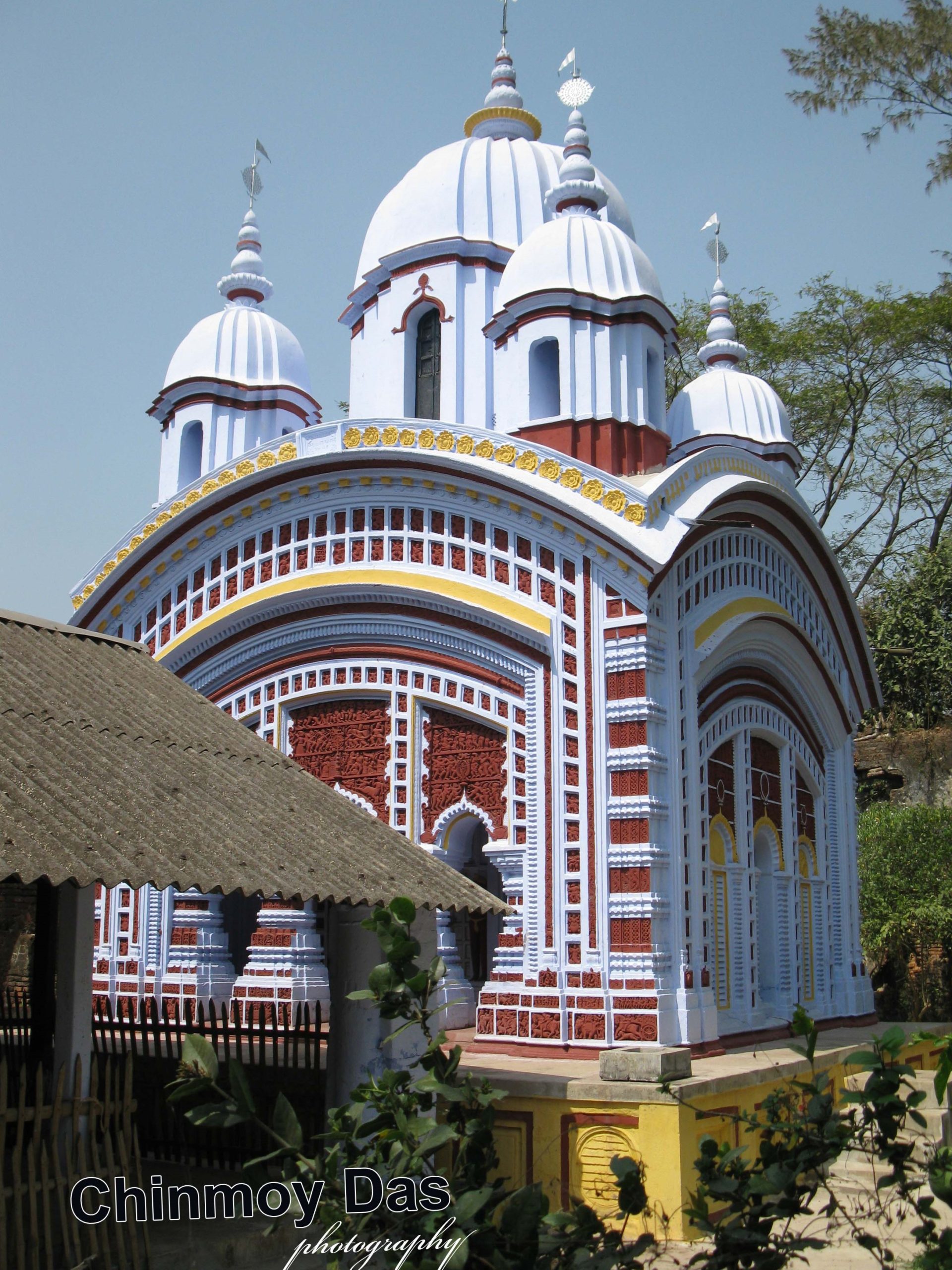
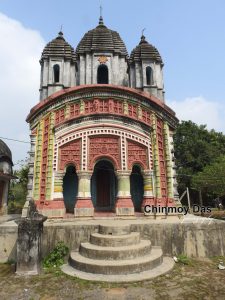
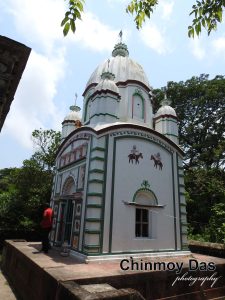
ইটের তৈরী দক্ষিণমুখী মন্দির। উঁচু পাদপীঠ। তার উপর প্রশস্ত একটি প্রদক্ষিণ-পথ মন্দিরকে বেষ্টন করে আছে। সামনে একটি অলিন্দ, তাতে প্রবেশের জন্য খিলান-রীতির তিনটি দ্বারপথ। থামগুলি ইমারতি রীতির। দক্ষিণেরটি ছাড়া, পূর্ব দিকেও একটি দ্বারপথ আছে গর্ভগৃহের।
মাথায় পাঁচটি রত্নেই কলিঙ্গশৈলীর রথ-বিভাজন করা।
জানকীবল্লভের এই মন্দিরের খ্যাতি এর অলংকরণের জন্য। এমন মন্দির সারা জেলায় আর দুটি নাই.।
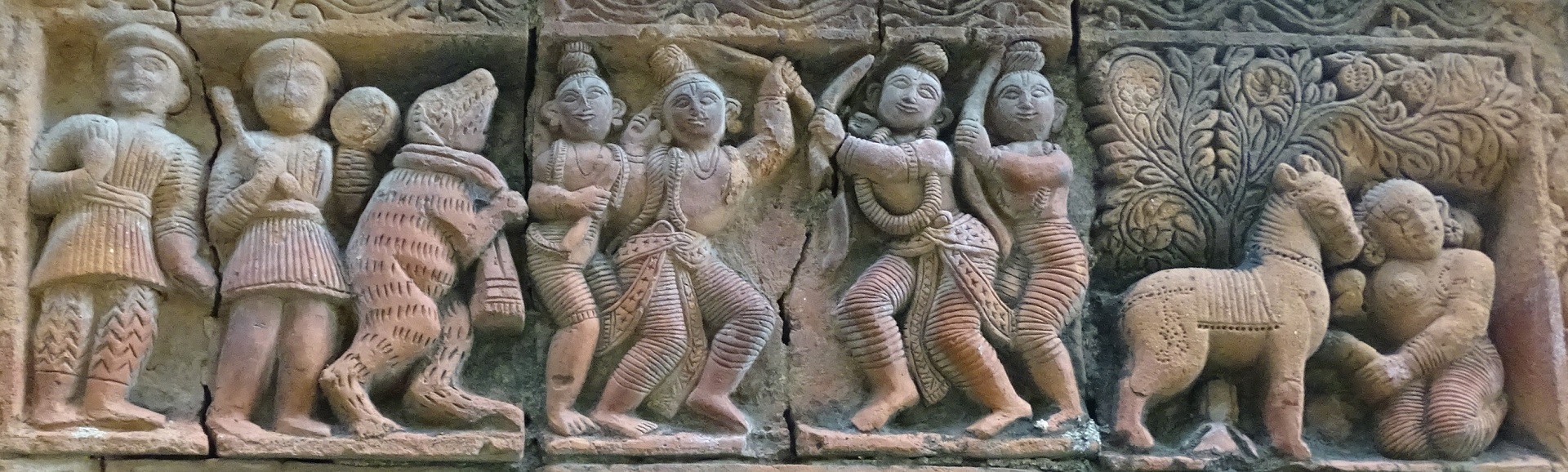
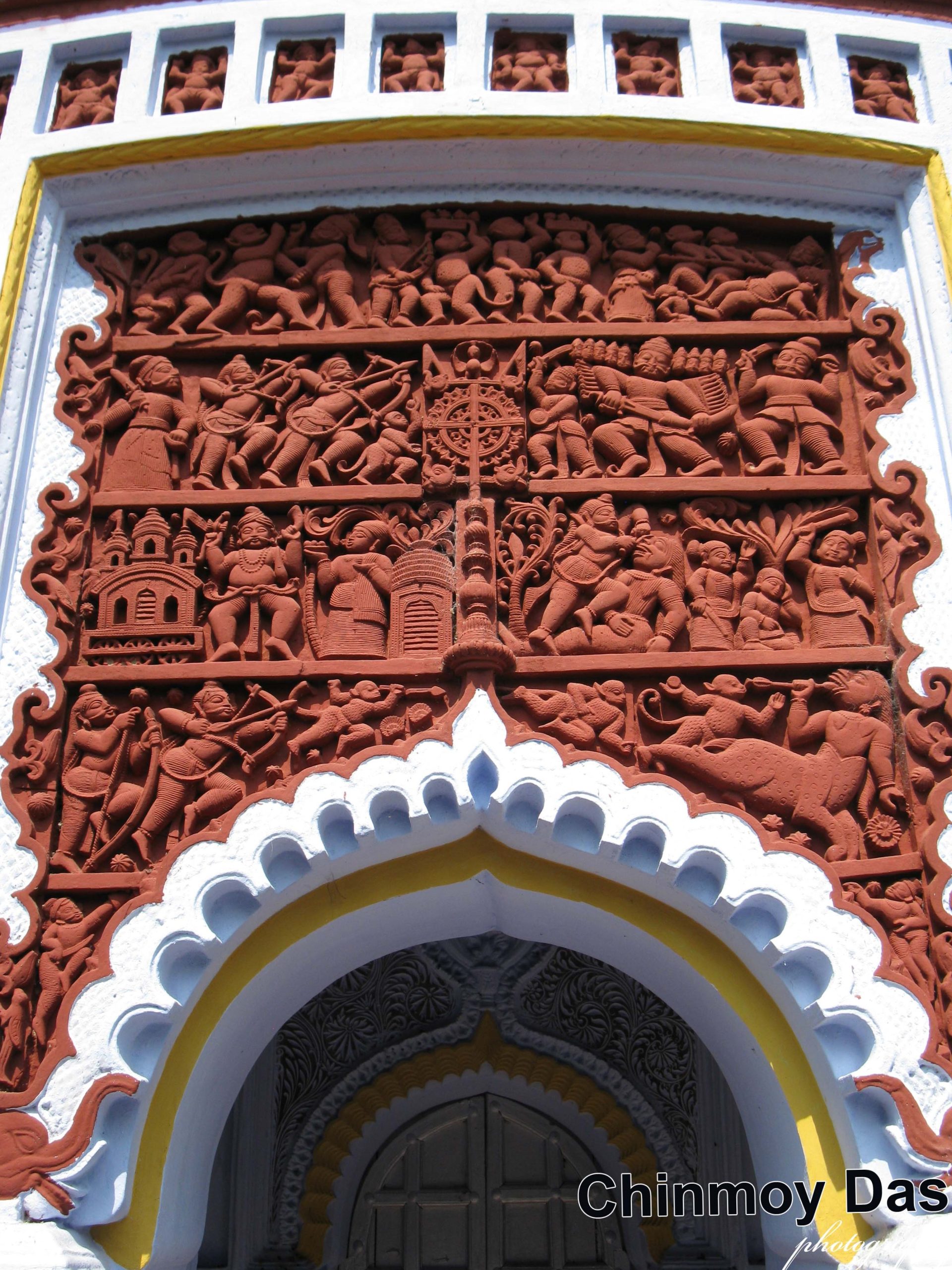
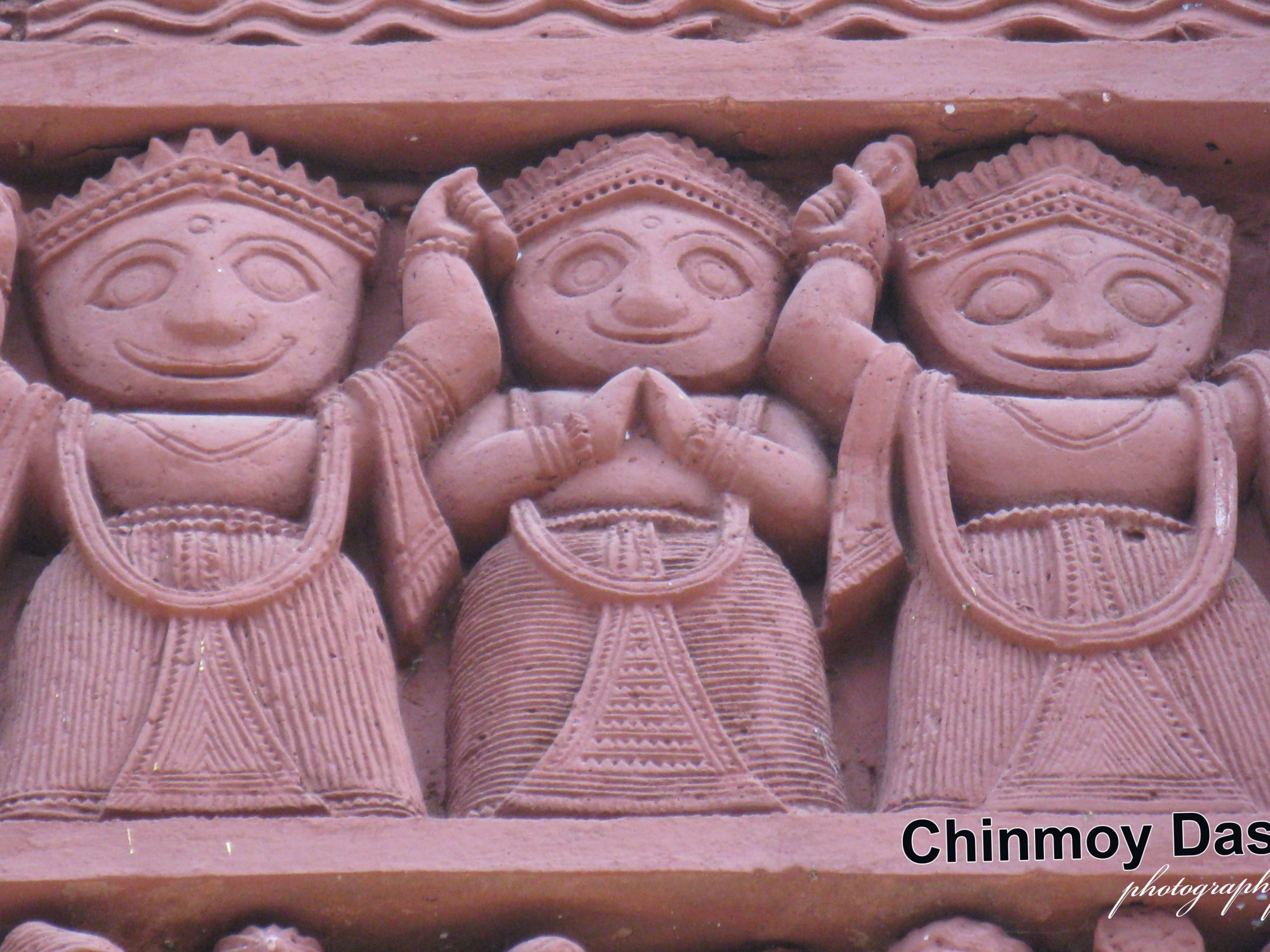
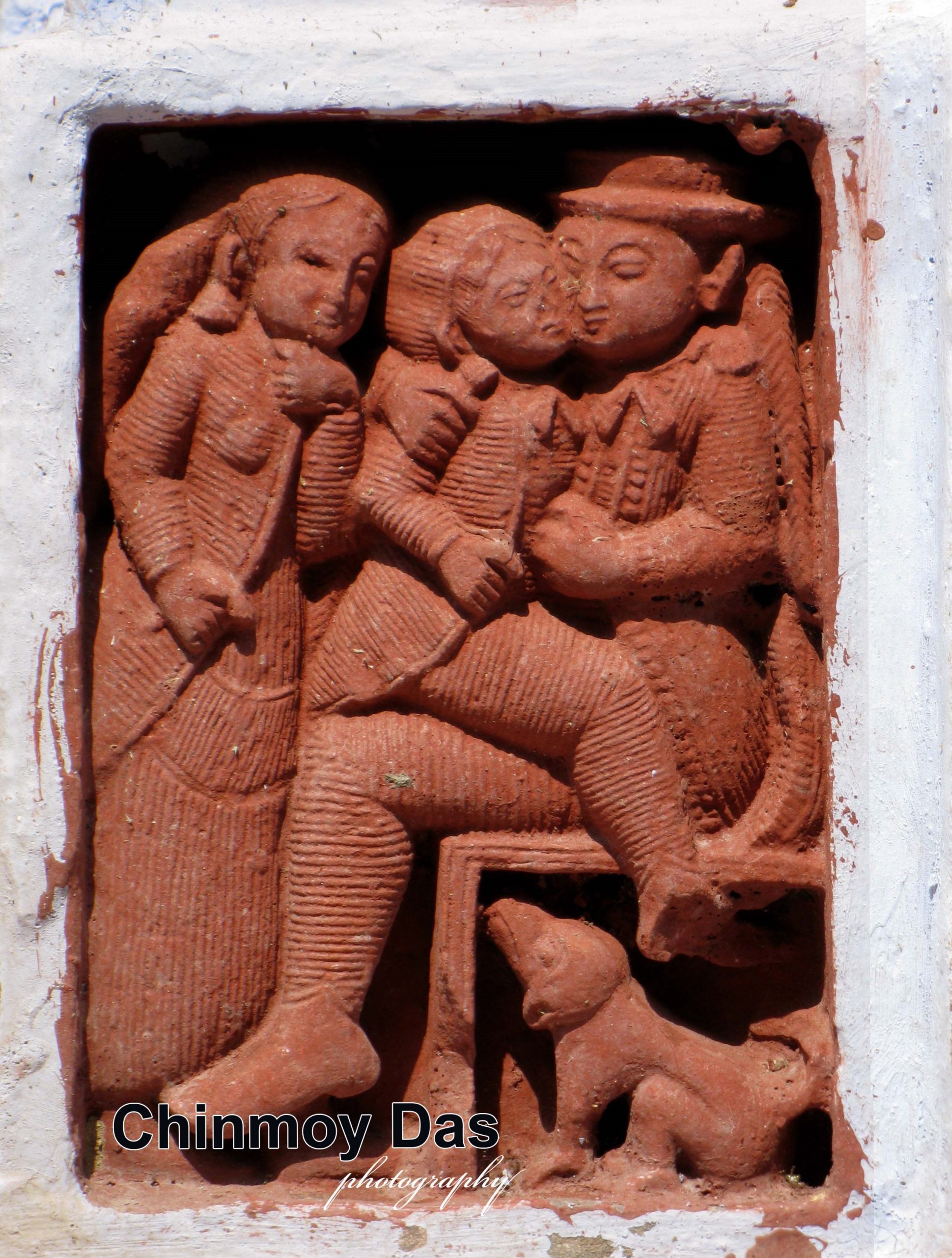
অলংকরণগুলির কিছু উল্লেখ করা যেতে পারে এখানে। ১. রামায়ণ কাহিনী থেকে-- সীতাহরণ, জটায়ুর যুদ্ধ, সুর্পণখার নাসিকা-কর্তন, রাম-রাবণের যুদ্ধ ইত্যাদি। ২. কৃষ্ণ-কথা থেকে-- জননী দেবকীর প্রসবকাল, কংসের মহামায়া হত্যার উদ্যোগ, শিশু কৃষ্ণকে নিয়ে বসুদেবের যমুনা অতিক্রম, বালক কৃষ্ণের পর্বতাসুর ( কৃষ্ণকে হত্যার জন্য কংসের নিযুক্ত দৈত্য) বধ, ঘোটকাসুর বধ ইত্যাদি। ৩. দেবী চন্ডীর উপাখ্যান থেকে-- মহিষাসুর বধ, রক্তবীজ বধ, শুম্ভ-নিশুম্ভ বধ ইত্যাদি। ৪. সামাজিক বিষয় থেকে-- পর্তুগিজ জলদস্যুর অত্যাচার, চেয়ারে উপবিষ্ট সাহেব-মেমের সম্ভোগ, সাহেবের হরিণ শিকার ইত্যাদি। ৫. বিবিধ বিষয়ক-- বহুতর গড়নের জলযান, নৌবহর সাজিয়ে সমুদ্রযাত্রা ইত্যাদি। হাতি, ঘোড়া, উটের সওয়ার। সিংহবাহিনী দশভুজা দূর্গা। চতুর্ভুজা কালিকামূর্তি। পশ্চিমের দেওয়ালে একটি বড় প্যানেলে-- জগন্নাথ, বলরাম আর সুভদ্রা মূর্তি। এছাড়া, অনেকগুলি ফলক আছে, সহজেই মিথুন পর্যায়ে ফেলা যায় যেগুলিকে। দ্বারপাল মূর্তি, প্রতিকৃতি দ্বারপথ--কী নাই এই মন্দিরে?
কয়েকটি মাত্র উল্লেখ করা হল। এমনই অসংখ্য ফলকে মোড়া দেবালয়টি। দেবতা যেন আদরের দুলাল । জমিদারী উজাড় করে অলংকারে মুড়ে দেওয়া হয়েছিল তাঁর আবাসখানি।
আজ জমিদারি নাই। বারো মাসের তেরো পার্বণে জৌলুষও নাই আগের মত। ম্লান হয়েছে জমিদারী বৈভব। বিশাল অট্টালিকা ধসে গিয়েছে একটু একটু করে। কয়েকটি জীর্ণ কোরিন্থিয়াম স্তম্ভ দাঁড়িয়ে আছে কাছারিবাড়ির নিদর্শন হয়ে। জীর্ণ দশা বিশাল অতিথিশালাটির। নৌকাঘাট, সাধু-সন্ত-অতিথি-অভাবীজনেদের জন্য সদাব্রত-- কিছুই নাই আজ আর, কিছুই।
আছে কেবল দেবালয়খানি। আপন গরিমায়, আপন মহিমায় আজও বিরাজমান। জমিদার মাইতি পরিবার বিন্দুমাত্র সৌন্দর্যহানি ঘটতে দেননি দেবালয়টির। সারা মেদিনীপুর জেলায় এই এক মন্দির, যা দর্শন করলে, তার স্মৃতি বহুকাল জাগরুক থাকবে।
Janakiballabh Temple, Tilantapara (Sabang)
Chinmoy Das
Terracotta plaques, stucco sculptures, and decorative pankh ornamentation—all three styles have been employed in this temple. Moreover, not just the front façade but all four walls of the temple have been adorned using these three mediums, something that is rarely seen. Such a temple stands in Pingla police station area of Medinipur district. The story of its establishment is especially captivating.
In earlier times, it was customary for groups of monks and ascetics to travel together on pilgrimages. Along the way, they would often halt and rest at the homes of kings or landlords. One such incident occurred when a group of monks from Ayodhya, returning after visiting Puri, arrived at the landlord's house in Tilantapara, Pingla. During their stay, the leader of the group fell seriously ill. An elderly widow from the landlord's household nursed him back to health.
Pleased, the holy man asked her to request any gift she desired. The woman replied, “If you truly wish to give me something, then leave your Shalagram stone with me.”
The monk found himself in a dilemma. The sacred idol was the treasure of his heart. How could he part with it?
Without saying anything, he picked up another stone and handed it to the woman. Delighted, she accepted it and took her leave.
But the story did not end there. Rather, it marked the beginning of a history.
That very night, Lord Shri Krishna appeared to the woman in a dream. She came to know that the monk had given her a fake idol instead of the real one.
The next morning, the monks had mounted their elephants and were preparing to depart. With tears in her eyes, the woman stood before them and said, “Why did you deceive me, Maharaj? This idol is not the genuine one.”
The monk stopped in his tracks. He felt ashamed. At the same time, he realized that the deity Himself no longer wished to leave. Taking out his beloved idol from his bag, he placed it in the hands of the woman who had cared for him. The deity's name was Janakiballabh
This happened more than two hundred years ago. Joy swept through the landlord's household that day. The sacred stone was ceremonially installed, and regular worship began.
It is no longer known exactly when or by whom the zamindari of the Maity family was established. The earliest known ancestor was Gangaram Maity. He had two sons—Vaishnabcharan and Bhujabal. Later, the deeply devout Vaishnabcharan's family adopted the surname “Das” and moved to Moyna police station area, where they established a new temple and introduced religious festivals.
The descendants of Bhujabal continue to reside in Tilantapara. Even before the installation of Janakiballabh, Shiva and other deities were worshipped in the family. One branch of the family inherited the earlier deities, while another became the hereditary custodians of Janakiballabh. Today, the lineage has reached the thirteenth or fourteenth generation.
The exquisitely beautiful temple built for the deity bears a brief dedicatory plaque on its wall. It is a terracotta plaque. Preserving the original spelling and punctuation, the inscription reads:
“Shri Shri Jan / ki Ballab / Shubha Mastu / Saka Era / 1732 / Year 12 / 18”
This means the temple was constructed in Saka Era 1732, Bengali year 1218, corresponding to 1810 or 1811 CE.
Although the inscription records the date, it does not mention the founder's name. His identity survives through local tradition. Earlier, Bhujabal was mentioned. His youngest son, Vrindaban, was both intelligent and influential. One night, while returning after presiding over an arbitration meeting, a Yaksha blocked his path and gave him three pots filled with gold coins, instructing him to spend them on noble works. (Our assumption is that perhaps it was not a Yaksha at all, but a miser who entrusted the landlord with the savings of his lifetime.)
With those three pots of gold coins, Vrindaban accomplished three things:
1. He built the beautiful five-spired (Pancha-ratna) temple for the deity.
2. He reconstructed the guest house on a much larger scale.
3. He introduced the Ras festival with great grandeur.
The festival came to be known as “Vrindaban Maity's Ras.” The name remains in use even today. The Ras festival is still celebrated with great pomp. A Brahmin family bearing the surname “Mishra” was appointed as hereditary priests through grants of jagir land, and they continue to conduct the temple's worship to this day.
The temple is brick-built and south-facing. It stands on a high plinth, around which runs a broad circumambulatory path. At the front is a porch with three arched entrances. The pillars follow a masonry style. Besides the southern entrance, there is another doorway to the sanctum on the eastern side.
All five spires on the roof are divided into chariot-like projections in the Kalinga architectural style.
The fame of Janakiballabh Temple rests upon its ornamentation. There is no other temple quite like it in the entire district.
Some of its decorative themes may be mentioned here:
1. From the Ramayana—the abduction of Sita, Jatayu's battle, the cutting of Surpanakha's nose, the battle between Rama and Ravana, etc.
2. From Krishna's life—Devaki giving birth, Kamsa's attempt to kill Mahamaya, Vasudeva carrying the infant Krishna across the Yamuna, the young Krishna slaying Parvatasura (the demon sent by Kamsa to kill him), the killing of Ghotakasura, etc.
3. From the legends of Goddess Chandi—the slaying of Mahishasura, Raktabija, Shumbha and Nishumbha, etc.
4. Social subjects—the atrocities of Portuguese pirates, intimate scenes of European gentlemen and ladies seated on chairs, a British sahib hunting deer, etc.
5. Miscellaneous subjects—various types of watercraft, naval fleets embarking on sea voyages, riders on elephants, horses, and camels, the ten-armed Durga riding a lion, the four-armed image of Kali, and on the western wall a large panel depicting Jagannath, Balarama, and Subhadra.
There are also numerous plaques that can easily be categorized as erotic (mithuna) sculptures. Guardian figures, portrait-like doorway decorations—what is not found in this temple?
Only a few examples have been mentioned here. The shrine is covered with countless such plaques. The deity seems like a cherished child. The entire wealth of the zamindari appears to have been poured into adorning His abode.
Today, the zamindari no longer exists. The splendor of the year-round festivals has faded. The grandeur of the estate has dimmed. The vast mansion has gradually crumbled away. A few weathered Corinthian columns still stand as reminders of the old administrative house. The great guest house is in ruins. The boat ghat, the charitable kitchen for monks, guests, and the needy—all have vanished.
Only the temple remains.
It still stands today in its own dignity and glory. The Maity zamindar family has not allowed the slightest loss of beauty to come to this shrine. It is the one temple in the whole of Medinipur district whose memory lingers long after one has seen it.
 Tilantapara Janakiballabh Temple (Sabang)


