দামোদর মন্দির, খেলাড় (থানা-- খড়গপুর, মেদিনীপুর)
চিন্ময় দাশ
কবিকঙ্কন মুকুন্দরাম চক্রবর্তীর বাস্তুভিটা ছিল বর্ধমানের দামিন্যা গ্রামে। বসু পদবীর কয়েকঘর কুলিন কায়স্থের বাসও ছিল দামিন্যায়। সেই বংশের এক উদ্যমী যুবক ভাগ্যান্বেষণে বেরিয়ে এসেছিলেন দামিন্যা থেকে।
সেকালের রাজপথ 'বাদশাহী সড়ক' ধরে মেদিনীপুর নগরীতে কংসাবতী নদী পার হয়েছিলেন। আর খানিক দক্ষিণে এগিয়ে, উপস্থিত হয়েছিলেন নারায়ণগড়ে। পরমানন্দ পাল (১৭৪০-৫৯) তখন নারায়নগড়ের রাজা। রাজার সেনাবাহিনীতে নিযুক্ত হয়েছিলেন বসুমশাই, সেই যুবকটি।
পরমানন্দের পুত্র পরীক্ষিত পাল (১৭৫৯-৬৭) রাজা হয়েছিলেন ইস্ট ইন্ডিয়া কোম্পানির শাসনের একেবারে সূচনার লগ্নে।সেসময় মেদিনীপুর জেলায় বর্গী আক্রমণ ছিল নিয়মিত ঘটনা। বর্গীদের সাথে যুদ্ধের সময়, ইংরেজ বাহিনীর সেনাপতি মেজর চ্যাপম্যানকে, সৈন্য দিয়ে সাহায্য করেছিলেন পরীক্ষিত। সেইযুদ্ধে, রাজার সৈন্য হিসাবে, প্রবল পরাক্রম দেখিয়েছিলেন বসুমশাই।
রাজা পরীক্ষিত পাল বিপুল সম্পত্তি দিয়ে পুরস্কৃত করেছিলেন তাঁর সৈনিকটিকে। সেই সম্পত্তি পেয়ে, একটি জমিদারী প্রতিষ্ঠা করেছিলেন বসুমশাই। নিজের স্থায়ী বসত গড়ে তুলেছিলেন রাজার বাড়ী থেকে অদূরে। মৌজা খেলাড়, পরগণা কিসমত নারায়ণগড়।
বসু পরিবারের রঘুনাথ মন্দির নিয়ে আমাদের বর্তমান আলোচনা। তবে, জমিদারি প্রতিষ্ঠার সময়ে সেটি তৈরী হয়নি।মন্দিরটি স্থাপিত হয়েছে জমিদারি প্রতিষ্ঠার শ'খানিকবছর পরে। মন্দির প্রতিষ্ঠার প্রসঙ্গে এক'ই কিংবদন্তি প্রচলিত আছে। খেলাড় গ্রামে 'মহান্তি' পদবীর একটি ব্রাহ্মণ পরিবারে ৫১টি শালগ্রাম শিলা পূজিত হতো। একবার পুকুরঘাটে শিলাগুলি ধোয়ার সময়, ৩টি শিলা ঝুড়ি থেকে জলে পড়ে গিয়েছিল। সেসময় জমিদার ছিলেন লক্ষ্মীনারায়ণ বসু।
তাঁর তৃতীয় পুত্র দর্পনারায়ণ বসু সেদিনই দেবতার স্বপ্নাদেশ পান-- শিলাগুলি উদ্ধার করে, পূজার্চনা শুরু করবার জন্য।দেবাদেশমত, দর্পনারায়ণ শিলাগুলি উদ্ধার করেছিলেন। শালগ্রাম শিলা চেনা যায় সেটির গড়ন এবং শিলার গায়ে আঁকা বিভিন্ন চিহ্ন দিয়ে। ব্রাহ্মণ-পন্ডিতরা বিচার করে, শিলা ৩টির নাম জানিয়েছিলেন-- লক্ষ্মীজনার্দন, দামোদর এবং রঘুনাথ।
শিলা ৩টির জন্য, পূজার্চনা প্রচলন এবং একটি মন্দির নির্মাণ করেছিলেন দর্পনারায়ণ। পরে, মন্দিরের সামনে একটি নাটমন্দিরও স্থাপিত হয়েছে। বিগত দেড়শ' বছরেরও বেশি কাল ধরে সেই মন্দিরে শিলাগুলির সেবাপূজা হয়ে চলেছে।
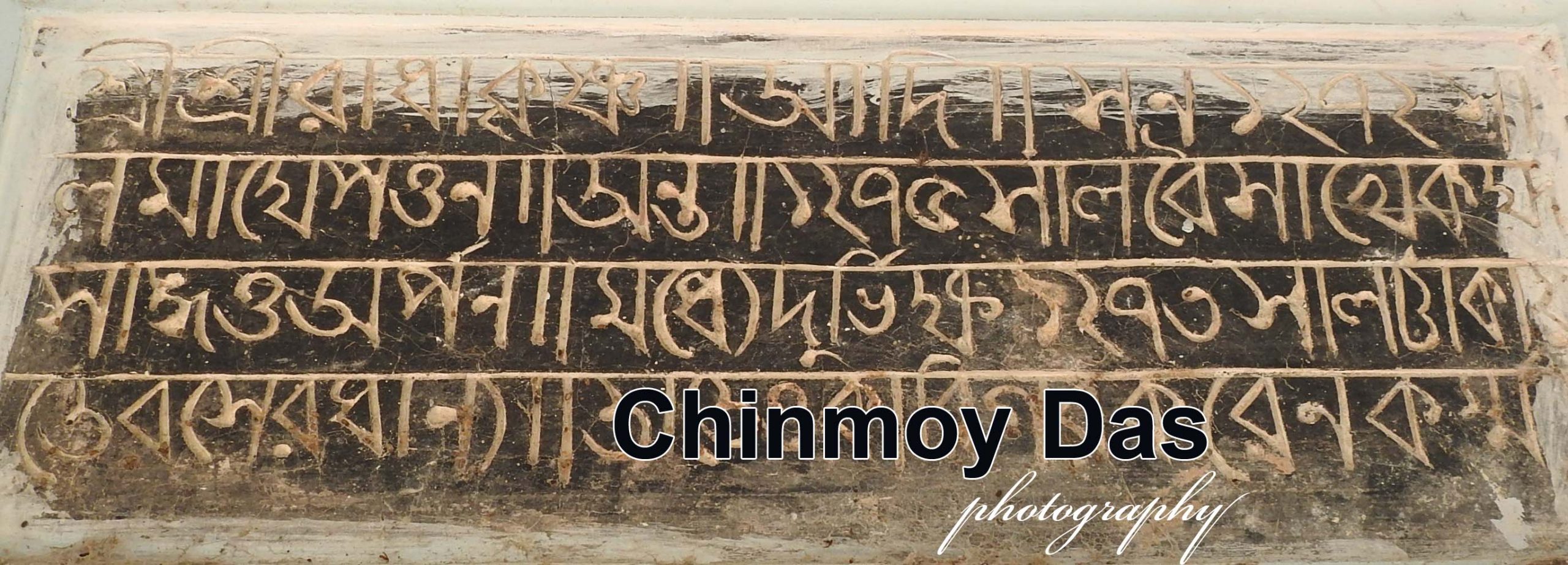
উল্লেখ করবার মত বিষয় হল, একটি-দুটি নয়, চার-চারটি লিপি আছে এই মন্দিরে। লিপিগুলি বেশ বৈশিষ্টপূর্ণ। মন্দির নির্মাণ সূচনার এবং সমাপ্তির সাল-তারিখ লিখিত আছে লিপিতে। সেসময় যে দুর্ভিক্ষের উদয় হয়েছিল মেদিনীপুর জেলায়, উল্লেখ আছে সেই বিষয়টিও। দুর্ভিক্ষের কারণে, খাদ্যশস্যের অতিরিক্ত মূল্যবৃদ্ধি, তা স্বত্বেও, কারিগর চুক্তি মত অর্থেই নির্মাণ কাজ শেষ করেছিলেন, তাও জানা যায় লিপি থেকে। লিপি থেকে জমিদারবংশের পরম্পরার হদিশও পাওয়া যায়।
এই সকল কারণে, কৌতূহলী পাঠকের জন্য, চারটি লিপিই এখানে উল্লেখ করলাম আমরা।
লিপি-- ১. " বলদেবশ্রীদামোদ / র জয়তি সেবাইত শ্রীদর্পনারা / য়ণ বসু দাস শ্রীমন্দির গঠনকা / রি শ্রীমাধব শ্রীদাম দাস সন / ১২৭৫সাল" ।
লিপি-- ২. " শ্রীশ্রীরাধাকৃষ্ণ। আদি। সন১২৭২সা / ল মাঘে পত্তন। অন্ত। ১২৭৫ সাল বৈশাখে কম্ম / সাঙ্গ ও অর্পন।মধ্যে দুর্ভিক্ষ ১২৭৩ সাল টাকায় / তের সের ধান্য। তাতেও কারিগর করেন কর্ম্ম। "
লিপি-- ৩. " শ্রীগুরুকৃষ্ণবৈষ্ণবচরণপরায়ণ লক্ষীচরণ বসুর পুত্র সুন্দরনারায়ণ রামনারায়ণ দর্পনারায়ণ উদয়নারায়ণ পুণ্যানন্দ এই ৫ পৌত্র বলরাম কানাইলাল রমানাথ বিষ্ণুহরি জগন্নাথ (১ম লাইন ) /গৌরহরি ৬ গোপীনাথ একুনে ৭ প্রপৌত্র দীননাথ কৃষ্ণকেশব শ্রীপতি উপেন্দ্র বেণীমাধব শ্রীহরি শ্রীধরশ্রীনাথ যদুনাথ সিতানাথ রতীনাথ ইত্যাদি পত্নী গঙ্গাহরি দাস পুত্রবধূ গান্ধারি তিলোত্তমা অন্ন (২য় লাইন ) / পুন্না গান্ধারি সুমিত্রা এই ৫ পৌত্রবধূ হিরা উদয়মণি সাবিত্রী সুলক্ষণা মহেশ্বরী একুনে ৫ সন ১২৭৫ সাল ৯ আশ্বিন সুঙ্গা ভূত বর্তমান ভবিশ্বত শ্রীশ্রী রাধাকৃষ্ণের সেবায় রত মধুসূদন গোলকনাথ " (৩য় লাইন )।
লিপি-- ৪. " শ্রীশ্রীদামোদরচন্দ্রজীউ / শ্রীশ্রীদামোদরচন্দ্রজীউর এই / লাটমন্দিরটি সেবায়েতগণের / মধ্যে শ্রীরতিনাথ বসু ও ভ্রাতা / শ্রীঅযোধ্যানাথ বসু উভয়ের ব্যয়ে / ও অনুমতি অনুসারে মিস্ত্রী মন / মোহন ও অতুলচন্দ্র দেবনাথ / ও সহকারী মিস্ত্রী গৌরাঙ্গ ও / গোপাল চন্দ্র দেবনাথ গঠন / করেন কাজ আরম্ভ ১৩৫৮ / সাল ১৫ চৈত্র কাজ শেষ / ১৩৫৯ সাল ৪ঠা আশ্বিন। / মোট ব্যয় ৪১২৫ টাকা। / টাকায় তের পুয়া ধান্য। / শ্রীরতিনাথ বসু বয়স ৮৭ / পুত্র শ্রীপরেশনাথ বসু / পৌত্র শ্রীবৈদ্যনাথ ও / বিশ্বনাথ ও ভোলানাথ বসু / ৪ঠা আশ্বিন দাসানুদাস (লেখক) / রাত্রি ৯টা শ্রীদুর্গারাম সাঁতরা / লিখা শেষ "।
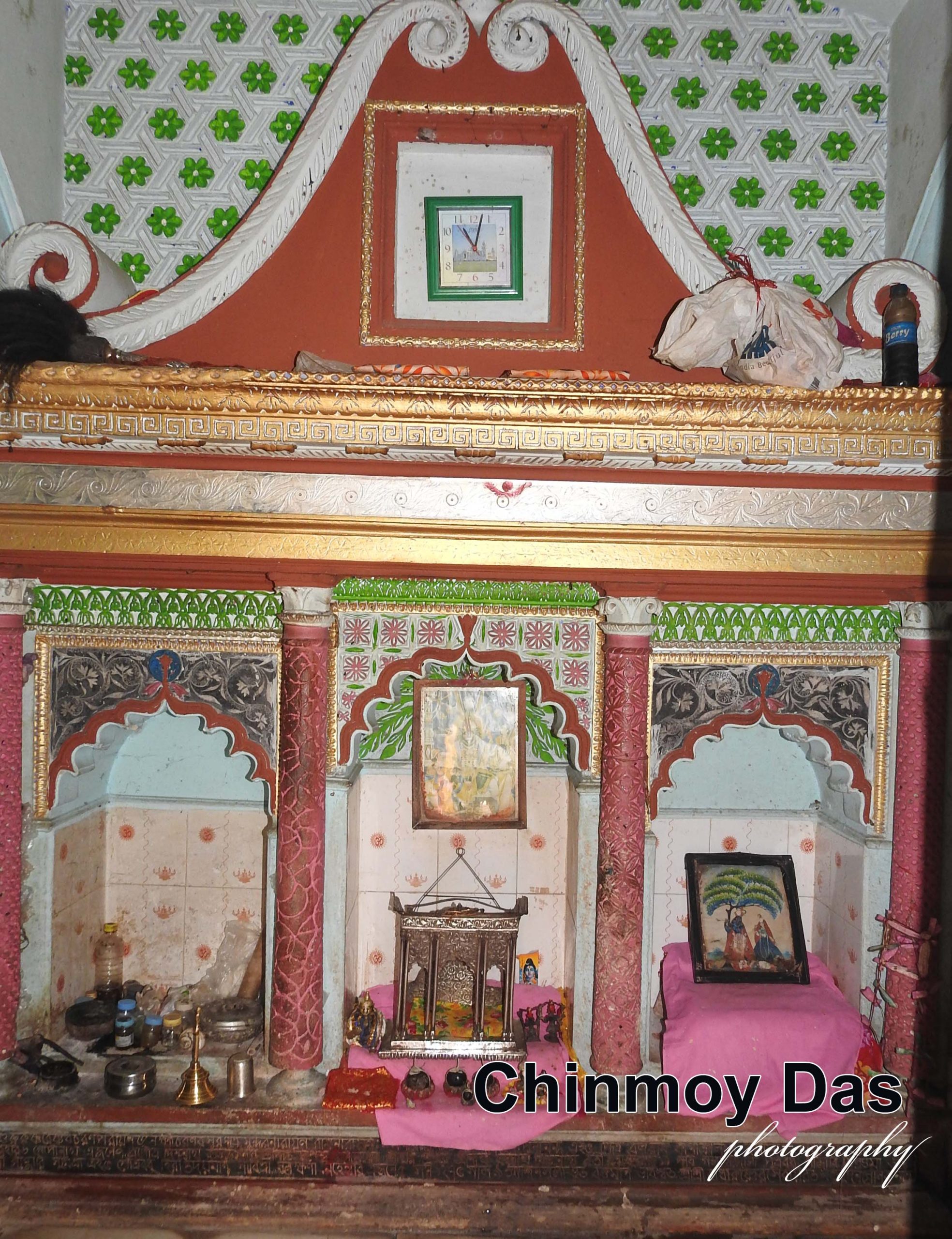
লিপিগুলির বানান, যতিচিহ্ন রাখা হয়েছে। কোনও সংশোধন বা পরিবর্তন করা হয়নি. । ৩য় লিপিটি গর্ভগৃহে শিলাগুলির আসন-বেদীর গায়ে, সুদীর্ঘ ৩টি লম্বা লাইনে, খোদাই করে লিখিত আছে।
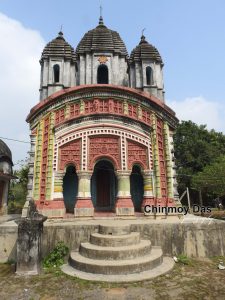
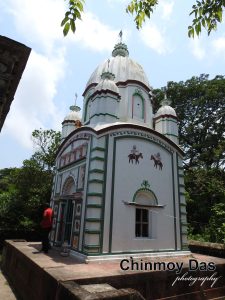
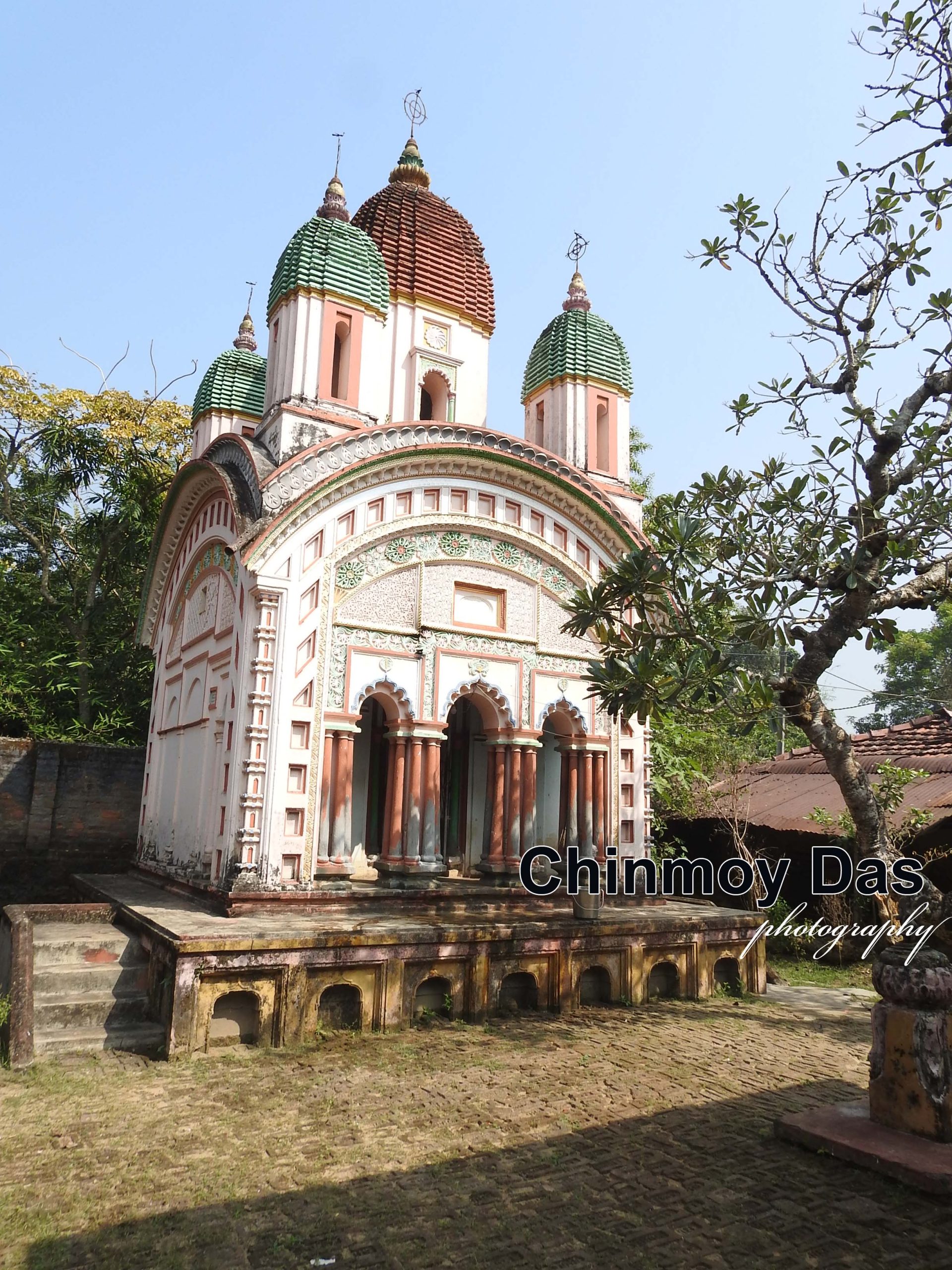
আঠারো ফুট দৈর্ঘ্য-প্রস্থ আর ত্রিশ ফুট উঁচু এই দক্ষিণমুখী পঞ্চ-রত্ন মন্দিরটি, ইটের তৈরী। ভিত্তিবেদীটি ফুট দুয়েক উঁচু।সামনের অলিন্দে গোলাকার গুচ্ছ-রীতির থাম আর খিলান-রীতির তিনটি দ্বারপথ। অলিন্দের সিলিং হয়েছে টানা-খিলান রীতিতে।
গর্ভগৃহটি এক-দ্বারী। সেটির সিলিং হয়েছে চার দেওয়ালে চারটি চাপা-খিলানের মাথায় ছোট গম্বুজ রচনা করে।মন্দিরের উচ্চতা বেশি না হলেও, অলিন্দের বাম কোণ থেকে একটি সিঁড়ি আছে উপরে উঠবার জন্য।
এবার পাঁচটি রত্নের কথা। গর্ভগৃহের মাথার ছাউনি হয়েছে বাংলার চালা-রীতিতে। ফলে, কার্নিশের বঙ্কিম ভাবটি হয়েছে সুন্দরী রমণীর আয়ত আঁখি-পল্লবের মত স্নিগ্ধ আর মনোরম।
ছাউনি বাংলার চালা-রীতির হলেও, রত্নগুলিতে কলিঙ্গ গঠনশৈলীর গভীর প্রভাব। রত্নগুলির বাঢ় আর গন্ডী অংশ জুড়ে পঞ্চ-রথ বিন্যাস করা হয়েছে। তার সাথে, গন্ডী অংশে থাক কাটা হয়েছে পীঢ়-রীতি প্রয়োগ করে। এছাড়া, পাঁচটি রত্নই বেঁকি, আমলক, কলস, বিষ্ণুচক্রে শোভিত।
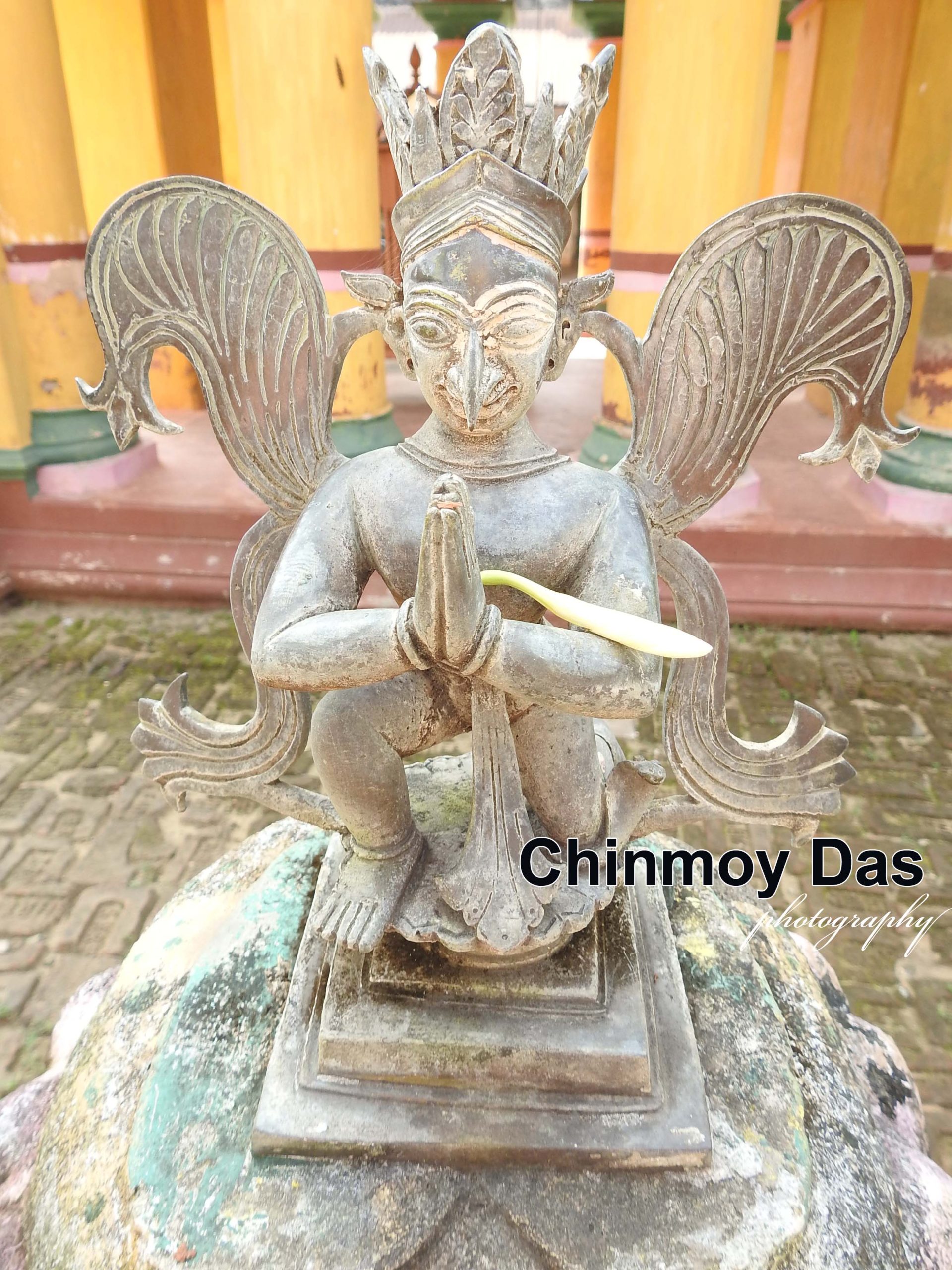
মন্দিরের সামনের অঙ্গনে একটি গরুড়-স্তম্ভ আর দ্বাদশ-দ্বারী একটি নাটমন্দির নির্মিত আছে।
কোনও টেরাকোটা ফলক নাই মন্দিরে। কিন্তু আছে সমৃদ্ধ পঙ্খের কাজ। সামনের দেওয়াল আর গর্ভগৃহের অভ্যন্তরে কাজগুলি দেখা যায়।
Damodar Temple, Khelar (Kharagpur Police Station, Medinipur)
Chinmoy Das
The ancestral home of Kavikankan Mukundaram Chakrabarti was in the village of Daminya in Bardhaman. A few families of Kulin Kayasthas bearing the surname Basu also lived there. One enterprising young man from that lineage left Daminya in search of fortune.
Travelling along the royal highway of those days, the Badshahi Road, he crossed the Kangsabati River and arrived in Medinipur town. Proceeding a little farther south, he reached Narayangarh. At that time, Parmananda Pal (1740–1759) was the ruler of Narayangarh. The young Basu entered the king's service and was appointed to the royal army.
Parmananda's son, Parikshit Pal (1759–1767), became king at the very beginning of the rule of the East India Company. During that period, Maratha (Bargi) raids were a regular occurrence in Medinipur district. When the English commander Major Chapman fought against the Bargis, Parikshit assisted him with troops. In that war, the young Basu displayed remarkable bravery as one of the king's soldiers.
In recognition of his valor, King Parikshit Pal rewarded him with extensive landed property. With this grant, Basu established a zamindari estate and built his permanent residence not far from the royal palace, in Mouza Khelar, within Pargana Kismat Narayangarh.
Our present discussion concerns the Raghunath Temple of the Basu family. However, the temple was not built when the zamindari was first established. It was founded about a century later. A local legend is associated with its establishment.
A Brahmin family bearing the surname Mahanti in Khelar village worshipped 51 Shalagram stones. On one occasion, while the sacred stones were being washed at a pond ghat, three of them accidentally fell into the water. At that time, Lakshminarayan Basu was the zamindar.
On that very day, his third son, Darpanarayan Basu, received a divine command in a dream instructing him to recover the stones and begin their worship. Obeying the command, Darpanarayan retrieved them. Shalagram stones are identified by their shape and the sacred markings on their surfaces. Learned Brahmin scholars examined the stones and identified them as Lakshmi-Janardan, Damodar, and Raghunath.
Darpanarayan initiated regular worship for these three sacred stones and built a temple for them. Later, a Natmandir (assembly hall) was also constructed in front of the temple. For more than one hundred and fifty years, the stones have continued to receive daily worship there.
A particularly noteworthy feature of this temple is the presence of four inscriptions. These inscriptions are highly distinctive. They record the commencement and completion dates of the temple's construction. They also mention the famine that struck Medinipur district during that period. From the inscriptions we learn that, despite the sharp rise in food prices caused by the famine, the craftsmen completed the work for the originally agreed payment. The inscriptions also provide valuable information about the genealogy of the zamindar family.
For the benefit of interested readers, all four inscriptions are reproduced below.
Lipi–1
"Baladeba-Śrī-Dāmodar / ra jayati. Sebāyita Śrī-Darpanārā / yaṇ Basu Dās. Śrī-mandira gaṭhanakā / ri Śrī-Mādhab Śrī-Dām Dās. San / 1275 sāl."
Lipi–2
"Śrī-Śrī-Rādhā-Kṛṣṇa. Ādi. San 1272 sā / l Māghe pattan. Anta. 1275 sāl Baiśākhe karma / sāṅga o arpaṇ. Madhye durbhikṣa 1273 sāl ṭākāy / tera ser dhānya. Tāteo kārigar karen karma."
Lipi–3
"Śrī-Guru-Kṛṣṇa-Vaiṣṇaba-caraṇa-parāyaṇa Lakṣīcaraṇ Basur putra Sundaranārāyaṇ, Rāmanārāyaṇ, Darpanārāyaṇ, Udayanārāyaṇ, Puṇyānanda—ei 5 pautra; Balarām, Kanāilāl, Rāmnāth, Viṣṇuhari, Jagannāth (1ma line) / Gaurahari 6, Gopīnāth ekune 7 prapautra; Dīnanāth, Kṛṣṇakeśab, Śrīpati, Upendra, Beṇīmādhav, Śrīhari, Śrīdhar, Śrīnāth, Jadunāth, Sitānāth, Ratīnāth ityādi. Patnī Gaṅgāhari Dās; putrabadhu Gāndhārī, Tilottomā, Anna (2ya line) / Punnā, Gāndhārī, Sumitrā—ei 5 pautrabadhu. Hirā, Udayamaṇi, Sāvitrī, Sulakṣaṇā, Maheśvarī ekune 5. San 1275 sāl, 9 Āśvin. Suṅgā bhūta vartamān bhaviśvat Śrī-Śrī-Rādhā-Kṛṣṇer sebāy rata Madhusūdan Golakanāth." (3ya line)
Lipi–4
"Śrī-Śrī-Dāmodaracandra Jiu / Śrī-Śrī-Dāmodaracandra Jiur ei / lāṭ-mandiraṭi sebāyetgaṇer / madhye Śrī-Ratīnāth Basu o bhrātā / Śrī-Ayodhyānāth Basu ubhayer byaye / o anumati anusāre mistrī Man / Mohan o Atulacandra Debnāth / o sahakārī mistrī Gaurāṅga o / Gopālacandra Debnāth gaṭhan / karen. Kāj ārambha 1358 / sāl 15 Caitra, kāj śeṣ / 1359 sāl 4ṭhā Āśvin. / Moṭ byay 4125 ṭākā. / Ṭākāy tera puyā dhānya. / Śrī-Ratīnāth Basu bayas 87 / putra Śrī-Pareśanāth Basu / pautra Śrī-Baidyanāth o / Biśvanāth o Bholānāth Basu. / 4ṭhā Āśvin dāsānudās (lekhak) / rātri 9ṭā Śrī-Durgārām Sāṅtrā / likhā śeṣ."
The spelling and punctuation of the inscriptions have been preserved exactly as they appear, without any correction or alteration. The third inscription is engraved in three long lines on the pedestal supporting the sacred stones within the sanctum.
The temple is a south-facing Pancha-Ratna structure, measuring about 18 feet square and 30 feet high, and is built of brick. The plinth is approximately two feet high. The front veranda features clustered circular columns and three arched entrances. The ceiling of the veranda is constructed in the barrel-vaulted arch style.
The sanctum (garbhagriha) has a single entrance. Its ceiling is formed by a small dome resting upon four depressed arches rising from the four walls. Although the temple is not exceptionally tall, a staircase in the left corner of the veranda leads to the upper level.
Now a few words about the five towers (ratnas). The roof over the sanctum follows the traditional Bengal chala style, giving the cornice a graceful curve resembling the elongated eyelids of a beautiful woman.
While the roof is Bengali in form, the towers show a strong influence of Kalinga architecture. Their bada and gandi sections are arranged in the pancha-ratha pattern. The gandi portions are further articulated with pidha-style tiers. Each of the five towers is crowned with a beki, amalaka, kalasa, and Vishnu chakra.
In front of the temple stands a Garuda pillar and a twelve-doored Natmandir.
The temple contains no terracotta plaques, but it possesses rich stucco ornamentation. These decorative works can be seen on the front wall and within the sanctum.