
লক্ষীজনার্দন মন্দির, পাইকপাড়ি (থানা-- ডেবরা, মেদিনীপুর)
চিন্ময় দাশ
পাইকপাড়ি-- শ্যামল ছায়ায় ঢাকা একটি গ্রাম। পাইকদের বসতি ছিল, তাতেই এমন নাম হয়েছিল গ্রামটির। কোন রাজার পাইক, রাজ্য বা রাজধানীটাই বা ছিল কোথায়? দু'-চার কথায়, প্রথমে সে খবর জেনে নেওয়া যাক।
বর্তমানে যে এলাকা 'ডেবরা থানা' নামে পরিচিত, পূর্বে তা ছিল সাহাপুর আর কুতুবপুর পরগণা। এছাড়া, কেদারকুণ্ড, কিসমত কাশীজোড়া, গাগনাপুর পরগণার কিছু অংশও আছে তার ভিতর। সে যাই হোক, এই থানার একেবারে কেন্দ্রীয়ভাগে একটি গ্রাম-- গড়কিল্লা, জে. এল. নং-- ২২৮।
লোকশ্রুতি আছে, সুদূর রাজপুতানা থেকে জনৈক মুকুট নারায়ন রায় শ্রীক্ষেত্র পুরীধামে এসেছিলেন জগন্নাথ দর্শনে। দেবী বাসুলীর আরাধনা করতেন তিনি। প্রাচীন 'নন্দ কাপাসিয়ার জাঙ্গাল' ধরে ফিরবার সময়, দেবীর আদেশ পেয়ে, কেদারকুণ্ড পরগনায় থেকে গিয়েছিলেন তিনি। সেখানে নিজের একটি রাজ্য প্রতিষ্ঠা করেছিলেন। রাজধানী স্থাপন করেছিলেন যেখানে, সেটিই পরে 'গড়কিল্লা' নামে পরিচিত হয়েছিল। আজও তার উঁচু ধ্বংসাবশেষ দেখা যায়। পরে, কাশীজোড়ার রাজা জনৈক রাজনারায়ণ রায় কেদারকুণ্ড অধিকার করে নিয়েছিলেন।
যাইহোক, গড়কিল্লার অদূরেই নতুন একটি জনপদ গড়ে উঠেছিল, যেখানে বসত করানো হয়েছিল এইসব রাজাদের সেনাবাহিনীর লোকজনকে। সেটিই পরে 'পাইকপাড়ি' নামে গ্রাম (জে. এল. নং-- ২৬১) হিসাবে স্বীকৃতি পেয়েছে।
নদীবিধৌত ডেবরা থানা উর্বর কৃষিভূমির সুবাদে, পূর্বকাল থেকেই কৃষিজ সম্পদে সমৃদ্ধ ছিল। তার সাথে ছিল গ্রামীণ হস্তশিল্প। এই এলাকার দুটি শিল্প ছিল উল্লেখ করবার মত-- রেশম উৎপাদন এবং কাঁসা-পিতলের সামগ্রী নির্মাণ। অষ্টাদশ শতাব্দীর গোড়ার দিকে, কাঁসা-পিতলের কাজে পাইকপাড়ি গ্রামের কয়েকটি পরিবার বেশ অর্থবান হয়ে উঠেছিল। একসময় কংসকারদের মধ্যে, বিশেষ উল্লেখযোগ্য ছিলেন জনৈক জ্যোতীন্দ্রনাথ প্রামাণিক। ১৬৯২ শকাব্দ বা সন ১১৭৭ সালে (অর্থাৎ ইং ১৭৭০ সালে) তিনি দেবী সিংহবাহিনী-র জন্য একটি মন্দির প্রতিষ্ঠা করেছিলেন।
৫০ বছর পরে, বাংলা ১২২৮ সনে, সিংহবাহিনী মন্দিরের সামনেই 'জোড়-বাংলা' শৈলীতে একটি কালী মন্দির গড়েছিল প্রামাণিক পরিবার। পরে পরে গড়া হয়েছিল দুটি শিবমন্দিরও।
বর্তমান আলোচ্য মন্দিরটি নির্মিত হয়েছে বাংলা ১৩১৪ সনে। সেসময় মেদিনীপুর জেলা সহ সমগ্র দক্ষিণ বাংলা চৈতন্যদেবের গৌড়ীয় প্রেমধর্মে সম্পূর্ণ প্লাবিত। এবার আর পূর্বের মত, শৈব কিংবা শাক্ত ধারায় দেবার্চনা নয়। সম্পূর্ণ বৈষ্ণবীয় রীতিতে দেবার্চনার জন্য, বিষ্ণু মন্দির প্রতিষ্ঠা করা হল। লক্ষ্মীজনার্দন নামিত একটি শালগ্রাম শিলা প্রতিষ্ঠা করা হল উপাস্য হিসাবে। সমীক্ষায় জানা যায়, মন্দিরটি প্রতিষ্ঠা করেছিলেন প্রামাণিক বংশের জনৈক ত্রৈলোক্যনাথ প্রামানিক।
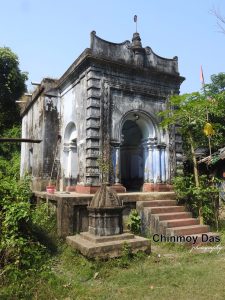
ত্রৈলোক্যনাথ মন্দিরটি নির্মাণ করেছিলেন দালান-রীতিতে। ইটের তৈরী পূর্বমুখী মন্দির। পাদপীঠ বা ভিত্তিবেদী অংশটি এখনও বেশ উঁচু, ছ'ধাপ সিঁড়ি যুক্ত। চার দিকের বেদীই খিলান-রীতিতে খোপ কেটে ছোট ছোট ভাগে বিভক্ত করা।
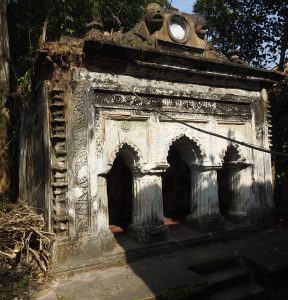
মন্দিরের কারিগরীটি একটু বিশিষ্ট রীতির। গর্ভগৃহের সামনে টানা একটি অলিন্দ অনেক মন্দিরেই দেখা যায়। কিন্তু এই মন্দিরে সামনের অলিন্দ তিনটি ভাগে বিভক্ত। তিনটি ভাগে প্রবেশের জন্য তিনটি দ্বারপথ। সবগুলিই খিলান-রীতির। মাঝখানের দ্বারটি দু'পাশের দুটির তুলনায় বেশি প্রশস্ত।
এই দুটি দ্বারপথে নির্মাণের বৈশিষ্ট দেখা যায়। দ্বারপথ দুটিকে, দুটি ভাগে ভাগ করা হয়েছে-- মাঝখানে একটি করে স্তম্ভ রচনা কর। ফলে, মাথার বড় খিলানের নিচে সৃষ্টি হয়েছে আরও দুটি খিলান। একান্তই একটি বিশিষ্ট রীতি এটি। সমগ্র মেদিনীপুর জেলায় এমন রীতি আর দেখা যায়নি।
গর্ভগৃহের দ্বারপথ একটিই। ভিতরে একটি দারু সিংহাসনে বিগ্রহের অবস্থান। গর্ভগৃহ এবং অলিন্দের ভিতরের ছাদ বা সিলিং নির্মিত হয়েছে খিলান-রীতিতে। তবে, মন্দির দালান-রীতির। সেকারণে, উপরের ছাদ সমতল। মন্দিরের দক্ষিণ দিকের অংশটি প্রায় বিধ্বস্ত।
সাধারণভাবে দালান মন্দিরে একটিই শীর্ষক বা চুড়া দেখা যায়। কেন্দ্রীয় দ্বদ্বারপথের মাথা বরাবর সেটি নির্মিত হয়। কিন্তু এই মন্দিরের অপর একটি বৈশিষ্ট হল, তিনটি দ্বারপথের মাথা বরাবর, তিনটি চূড়া নির্মাণ করা হয়েছে।
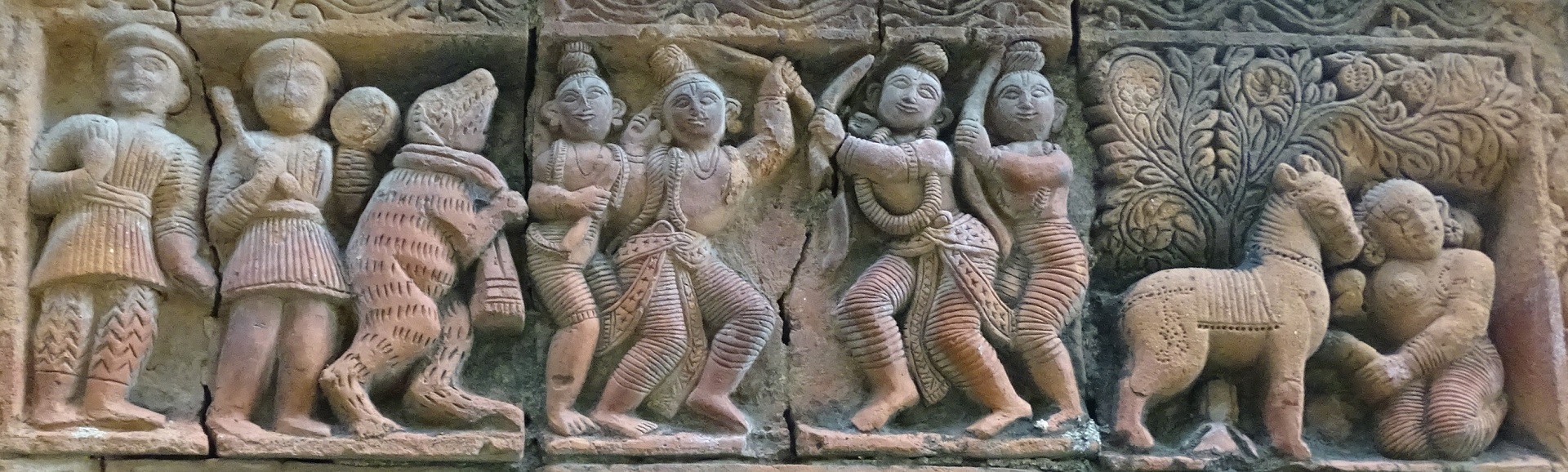
ভিত্তি থেকে একেবারে শীর্ষক বা চূড়া পর্যন্ত সম্পূর্ণ সৌধটি বেশ অলঙ্কৃত করে গড়া হয়েছিল। সবই পঙ্খের কাজ। অলঙ্করণের প্রকরণটিও সচরাচর দেখা যায় না, বেশ অভিনব। কয়েকটি ছবি দেওয়া হল। পাঠক-পাঠিকা নিজেরাই প্রত্যক্ষ করতে পারবেন।
Lakshmijanardan Temple, Paikpari (Debra Police Station, Medinipur)
Chinmoy Das
Paikpari is a village shaded by lush greenery. Its name derives from the settlement of paiks (traditional soldiers) who once lived there. But whose soldiers were they, and where was the kingdom or capital they served? To answer that, a little historical background is necessary.
The area now known as Debra Police Station was formerly part of the Sahapur and Kutubpur Parganas. It also included portions of the Kedarkunda, Kismat Kashijora, and Gaganapur parganas. Near the very center of this region lies the village of Garkilla (J.L. No. 228).
Local tradition relates that a certain Mukut Narayan Ray came from distant Rajputana to the holy city of Puri for the darshan of Lord Jagannath. He was a devotee of Goddess Basuli. While returning along the ancient route known as the Nanda Kapasiya Jangal, he received a divine command from the goddess and settled in the Kedarkunda Pargana. There he established his own kingdom and founded a capital, which later became known as Garkilla. The elevated ruins of that fort-like settlement can still be seen today. In later times, Raja Rajnarayan Ray of Kashijora conquered Kedarkunda.
Not far from Garkilla, a new settlement was established to house the soldiers of these rulers. Over time, this settlement came to be recognized as the village of Paikpari (J.L. No. 261).
Situated in the fertile riverine lands of Debra, the area had long been prosperous through agriculture. In addition, it was renowned for its rural handicrafts. Two industries were particularly important here: silk production and the manufacture of bell-metal and brassware. By the beginning of the eighteenth century, several families of Paikpari had become quite wealthy through the bell-metal and brass trade. Among the artisans, Jyotindranath Pramanik was especially notable. In Shaka 1692 (Bengali Year 1177 / 1770 CE), he established a temple dedicated to Goddess Singhabahini.
Fifty years later, in Bengali Year 1228, the Pramanik family built a Jor-Bangla style Kali Temple directly in front of the Singhabahini Temple. Two Shiva temples were added in subsequent years.
The temple under discussion was constructed in Bengali Year 1314. By that time, the entire region of Medinipur and southern Bengal had been deeply influenced by the Gaudiya Vaishnava movement initiated by Chaitanyadeva. Consequently, instead of Shaiva or Shakta worship, a Vaishnava shrine was established. A Shalagrama stone known as Lakshmijanardan was installed as the principal deity. Survey findings indicate that the temple was founded by Trailokyanath Pramanik of the Pramanik family.
Trailokyanath built the temple in the dalan style. It is an east-facing brick structure. The plinth remains quite high and is approached by a flight of six steps. The base platform on all four sides is divided into small recessed compartments formed by arches.
The temple's architectural design is somewhat unusual. Many temples have a continuous verandah in front of the sanctum, but in this temple the front verandah is divided into three separate sections, each accessed through its own arched doorway. The central doorway is noticeably wider than the two side entrances.
The two side entrances display a particularly distinctive feature. Each doorway is divided into two sections by a central pillar. As a result, beneath the larger outer arch are created two additional smaller arches. This is a highly unusual architectural arrangement. No other example of this style has yet been observed anywhere else in Medinipur district.
There is only one entrance to the sanctum (garbhagriha). Inside, the deity is placed upon a wooden throne. The ceilings of both the sanctum and the verandah are constructed in the arched style. However, since the temple itself belongs to the dalan type, the roof above is flat. The southern side of the temple is now almost completely ruined.
Ordinarily, a dalan temple possesses only a single pinnacle or finial positioned above the central entrance. Another remarkable feature of this temple, however, is that three pinnacles have been constructed—one above each of the three entranceways.
The entire structure, from its base to the pinnacles, was richly ornamented. All the decorative work is executed in stucco. The style of ornamentation is highly distinctive and rarely encountered elsewhere. Several photographs are provided, allowing readers to appreciate these features for themselves.