রঘুনাথ মন্দির, আনন্দপুর (থানা-- কেশপুর, মেদিনীপুর )
চিন্ময় দাশ
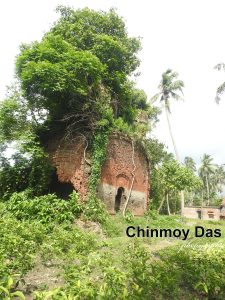
এককালে সমৃদ্ধ রেশম ও তসরশিল্পের সমৃদ্ধ জনপদ হিসাবে গডে় উঠেছিল আনন্দপুর। সেই সুবাদে কয়েকজন জমিদারের উদ্ভব হয়েছিল এই গ্রামে। বেশ কয়েকটি দেবমন্দির নির্মাণ করেছিলেন তাঁরা। এছাড়া অন্যভাবেও জমিদার হয়েছিল এখানের `সরকার' পদবীর একটি পরিবার। কর্ণগডে়র রাজা যশোবন্ত সিংহের দেওয়া সম্পত্তিতে জমিদারী হয়েছিল তাঁদের। পরে, রানি শিরোমণিও কিছু সম্পত্তি দান করেন। সেই সরকার পরিবারও একটি মন্দির গডে়ছিলেন। আজ সেই জীর্ণ মন্দিরের কথকথা।
প্রথমে জেনে নেওয়া যাক, জমিদারী অর্জন হল কীভাবে। অষ্টাদশ শতাব্দীর গোড়ার কথা। মেদিনীপুর কোতোয়ালি থানায় শিরোমণি গ্রামের বাসিন্দা জনৈক বৈদ্যনাথ সরকার ছিলেন কর্ণগড় রাজার প্রজা। জাতিতে সদগোপ। কর্ণগড়ে তখন রাজা ছিলেন খ্যাতকীর্তি যশোবন্ত সিংহ। তাঁর রাজত্বকাল ইং ১৭১১ থেকে ১৭৪৯ সাল পর্যন্ত।
বৈদ্যনাথের ঘরে ছিল অপরৃপ সুন্দরী দুই কন্যা– ভবানী এবং শিরোমণি। বংশমর্যাদার কথা ভাবেননি, সাধারণ প্রজার ঘর থেকে ভবানীকে নিজের পুত্রবধু করে রাজবাড়িতে তুলে এনেছিলেন যশোবন্ত সিংহ। কিন্তু দীর্ঘ সময়েও ভবানী সন্তানবতী না হওয়ায়, অসাধারণ সুন্দরী কনিষ্ঠা শিরোমণির সাথে অজিত সিংহের বিবাহ দেওয়া হয়। সেটা ১৭৪০ সাল।
রাজমর্যাদা রক্ষার তাগিদে, নিজের বৈবাহিক বৈদ্যনাথকে মোট ৮৩২ বিঘা `নিষ্কর' সম্পত্তি দিয়ে, একটি জমিদারীতে প্রতিষ্ঠা করেছিলেন যশোবন্ত সিংহ। মহাল ছিল– ভঞ্জভূম পরগণার সংগ্রামগড়, গঙ্গারামবাড়, ভগীরথবাড়, ধামসাই, আকন্দি, লাউড়িয়া প্রভৃতি মেৌজায়।
বৈদ্যনাথ সরকারের দুই পুত্রের নাম– রামচন্দ্র এবং রামকানাই। নিঃসন্তান অজিত সিংহের মৃত্যুতে, রানি শিরোমণি কর্ণগডে় শাসন ক্ষমতা পেয়েছিলেন। তিনি রামকানাই-এর কনিষ্ঠ পুত্র মোহনলালকে বাং ১১৯৮ (ইং ১৭৮৬) সনের ১৬ই বৈশাখ ৫৬ বিঘা জমির বন্দোবস্ত দেন। মোহনলালের পৌত্র শিবপ্রসাদ কর্ণগডে়র মায়া ত্যাগ করে আনন্দপুরে চলে আসেন। সম্ভবত ১২৫ বছরের আরো আগের কথা। শিবপ্রসাদের পুত্র প্রতাপচন্দ্র সরকার আনন্দপুরের একজন খ্যাতনামা জমিদার হয়ে উঠেছিলেন। প্রতাপচন্দ্রই বাংলা সন ১৩০৩ সালে সরকারদের বসতবাড়ি হিসাবে একটি অট্টালিকা নির্মাণ করেন। তবে, তার পূর্বে, সন ১৩০০ সালে, কুলদেবতা রঘুনাথ জীউর জন্য সুদৃশ্য একটি মন্দির নির্মাণ করেছিলেন তিনি।
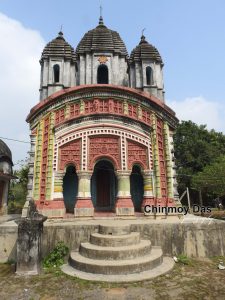
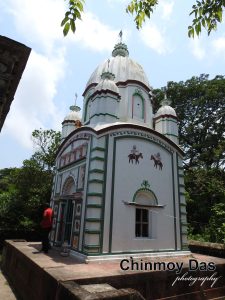
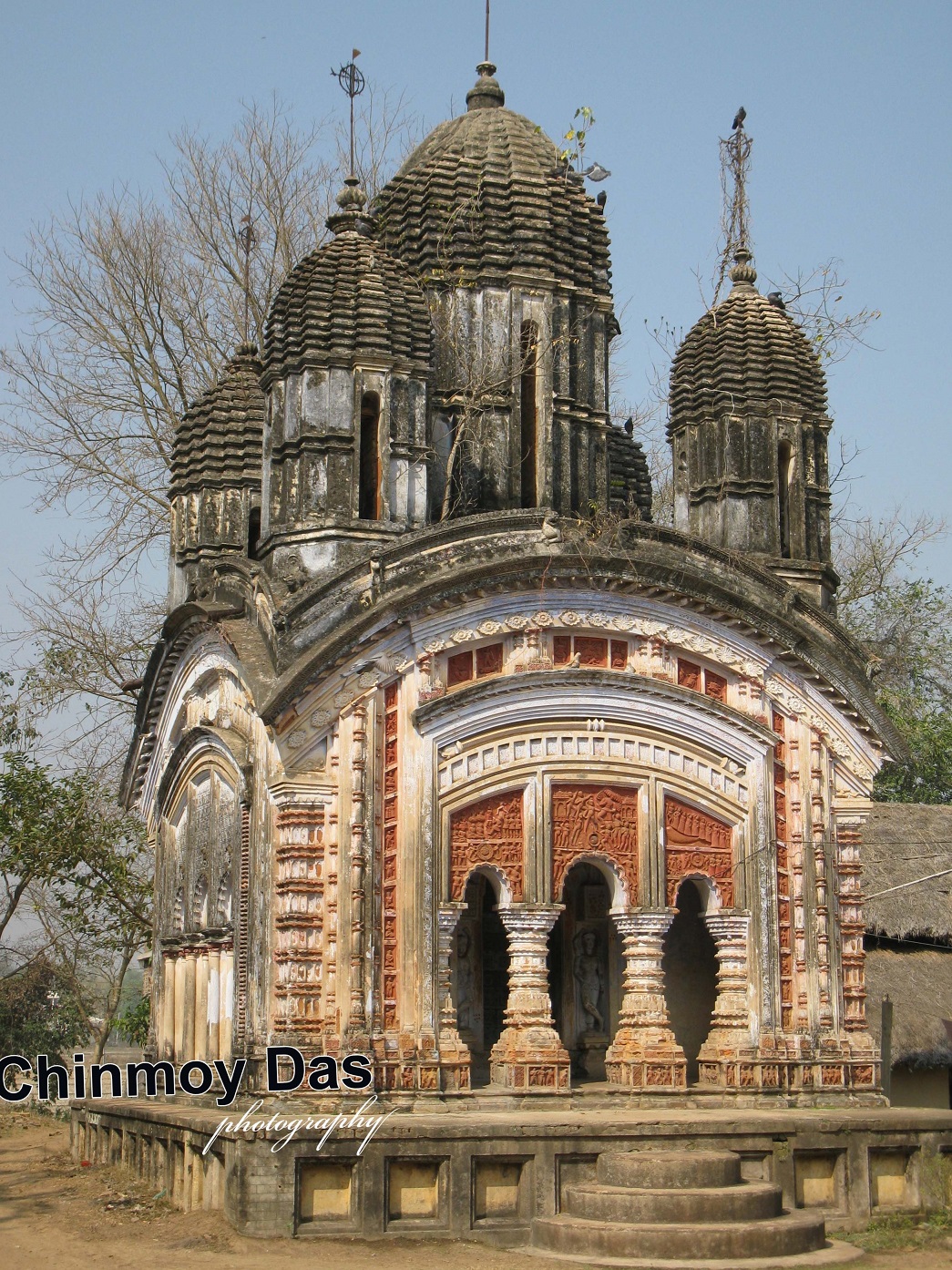
ইটের তৈরি পূর্বমুখী দেবালয়। মন্দির-সৌধটি সম্পূর্ণ বর্গাকার। দৈর্ঘ্য এবং প্রস্থ ১৮ ফুট ৬ ইঞ্চি। মাথার উচ্চতা ৪০ ফুট। মোট পাঁচটি চুড়া এই মন্দিরের। মন্দির-স্থাপত্যের পরিভাষায়, রঘুনাথের এই মন্দির হল `পঞ্চরত্ন'। উঁচু পাদপীঠ, পাঁচ ধাপ সিঁড়ি অতিক্রম করে মন্দিরে উঠতে হয়। পাদপীঠখানিরও বেশ সুন্দর গড়ন। অনেকগুলি প্যানেলে ভাগ করা।
প্রশস্ত `প্রদক্ষিণ পথ' আছে পাদপীঠের উপর, মন্দিরকে বেষ্টন করে। সামনে তিনটি দ্বারপথ। অতিক্রম করলে, একটি আয়তাকার অলিন্দ। গর্ভগৃহে প্রবেশের দ্বারপথ একটিই। দ্বারপথগুলি রচিত হয়েছে `খিলান রীতি'তে। সামনে দুটি পূর্ণ-স্তম্ভ (পিলার) এবং দুটি অর্ধ-স্তম্ভ (পিলাষ্টার)-এর সাহায্যে সামনের তিনটি দ্বারপথ রচিত হয়েছে। অলিন্দের ভিতরের ছাদ তৈরি করা হয়েছে টানা অর্ধ-খিলান রীতিতে। গর্ভগৃহের ভিতরের ছাদ নির্মাণ করা হয়েছে চারদিকে চারটি খিলান নির্মাণ করে, তার মাথায় গম্বুজের সাহায্যে। বাংলায় মুসলমানী শাসন প্রবর্তন হওয়ার পর থেকে ইসলামীয় স্থাপত্যের `গম্বুজ-রীতি'টি বাংলায় জনপ্রিয় এবং ব্যবহৃত হতে শুরু করেছিল। গর্ভগৃহে পিছনের দেওয়ালে বেশ রাজকীয় গড়নের স্থায়ী বেদী। তাতে তিন দেবতার অধিষ্ঠান।
গর্ভগৃহ বা মন্দিরের মূল কাঠামোর মাথার ছাদ `চালা-রীতি'তে ঢালু, গড়ানো। তার উপর পাঁচটি রত্ন নির্মিত। উঁচু বেদী নির্মাণ করে কোণের রত্নগুলি প্রতিষ্ঠা করা হয়েছে। প্রতিটি রত্ন এক একটি শিখর মন্দিরের আকৃতিবিশিষ্ট। নীচের বাঢ় অংশটি ঋজু ভঙিমার লম্বা গড়নের। তাতে চার দিকেই চারটি লম্বাকৃতি সঙ্কীর্ণ দ্বারপথ। ভিতরে শূণ্য গর্ভগৃহ। রত্নগুলির গণ্ডী অংশ (যেটি আসলে ছাউনি অংশ) দুটি ভাবে নির্মিত হতে পারে– শিখর-দেউল কিংবা চালা রীতিতে। এই মন্দিরের পাঁচটি রত্ন শিখর-দেউল রীতির। উড়িষ্যার বিখ্যাত `পীঢ়-রীতি'তে নির্মিত হয়েছে রত্নগুলির উপরের অংশ। খাঁজকাটা `থাক' ভাগ করা হয়েছে এই অংশে। এছাড়াও, `পঞ্চরথ বিন্যাস' দেখা যায় পাঁচটি রত্নেই। প্রতিটি রত্নের মাথায় বেঁকির উপর একটি করে আমলক, কলস এবং বিুষ্ণচক্র স্থাপিত।
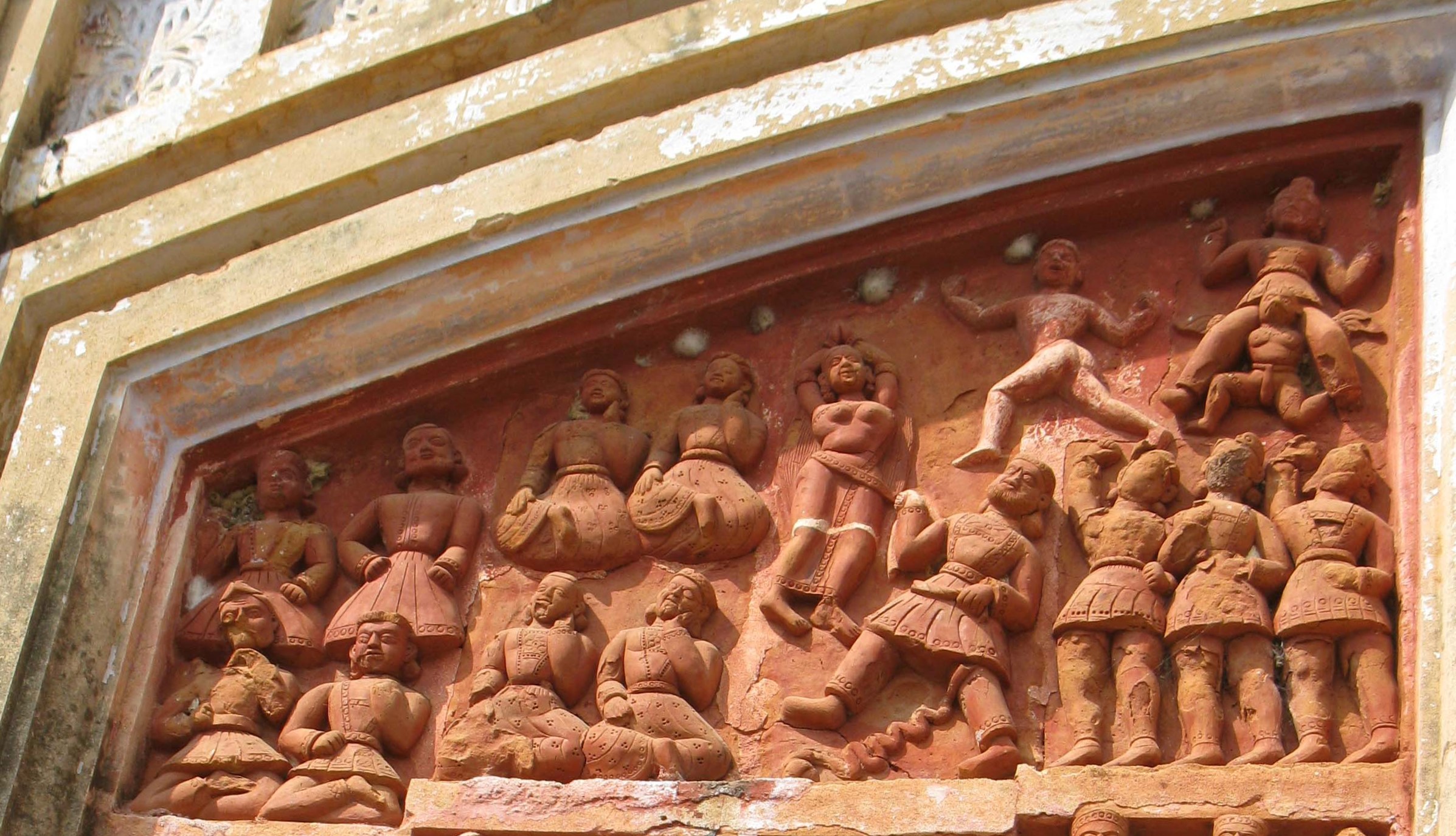
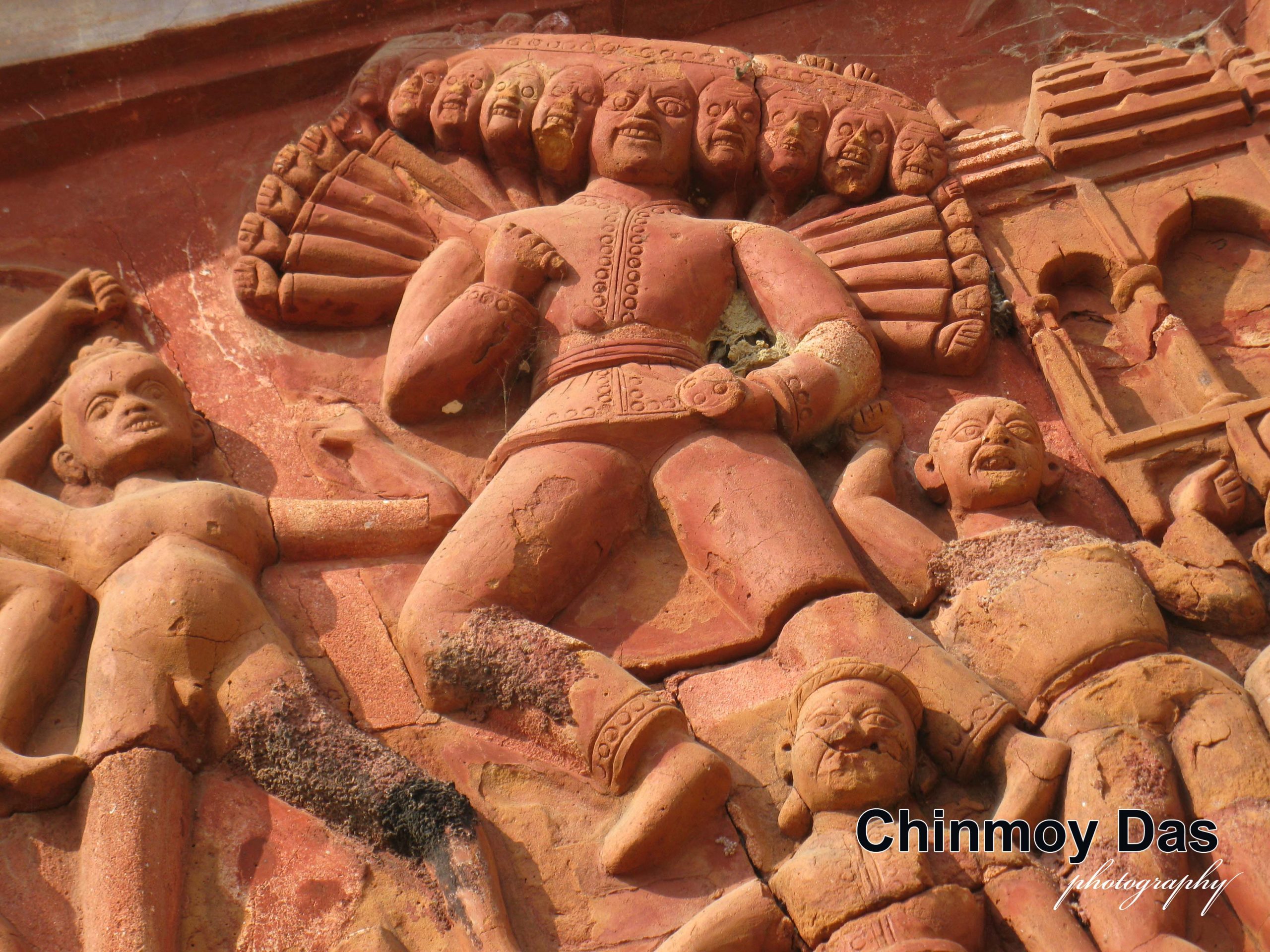
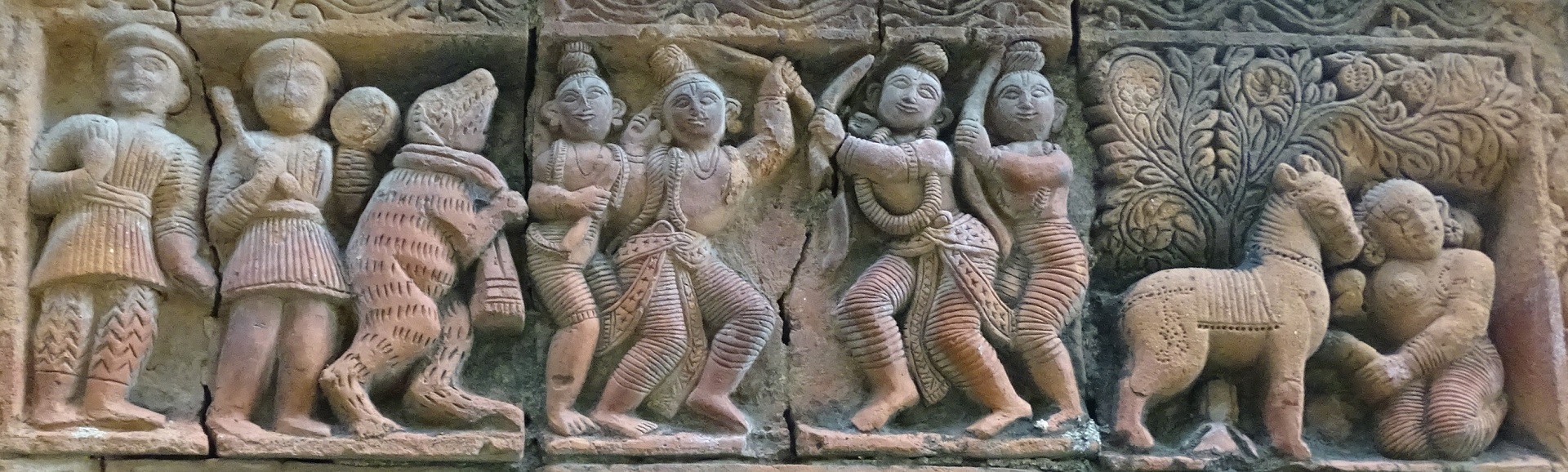
এই এক মন্দির, যাতে টেরাকোটা, স্টাকো এবং পঙ্খ– তিন রীতির কাজের সমাবেশ দেখা যায়। মোটিফ হিসাবে রামায়ণ, মহাভারত, পুরাণ ইত্যাদির কাহিনী দৃশ্যায়িত হয়েছে ফলকগুলিতে। রামায়ণের রাম-রাবণের যুদ্ধ প্রায়শই মন্দির গাত্রে দেখতে পাওয়া যায়। এই মন্দিরেও সেই দৃশ্য সন্নিবদ্ধ হয়েছে। মহাভারত থেকে আছে দ্রেৌপদীর বস্ত্রহরণ-এর বিরল দৃশ্যটি। কৃষ্ণলীলা বিষয়ক ফলকের প্রাধান্য দেখা যায় এই মন্দিরে। তার মধ্যে নৌকাবিলাস ফলকটি উল্লখযোগ্য। পৌরাণিক দেব-দেবীদেরও অনেক উপস্থিতি আছে দেওয়ালে।
ভগবান বিুষ্ণর মন্দির। সেকারণেই বোধ করি, বিুষ্ণর দশাবতারের মূর্তিগুলিকে বিশেষভাবে স্থান করে দেওয়া হয়েছে। এছাড়া, সপ্তমাতৃকা-র মূর্তিগুলি উৎকীর্ণ হয়েছে। সেকালের সমাজচিত্রও ফুটে আছে ফলকগুলিতে। সাহেবদের শিকারদৃশ্য কয়েকটি আছে। আছে বাইজী নাচের দৃশ্যও। এইসকল ফলকের স্থান হয়েছে পাদপীঠের ঠিক ওপরের অংশে।
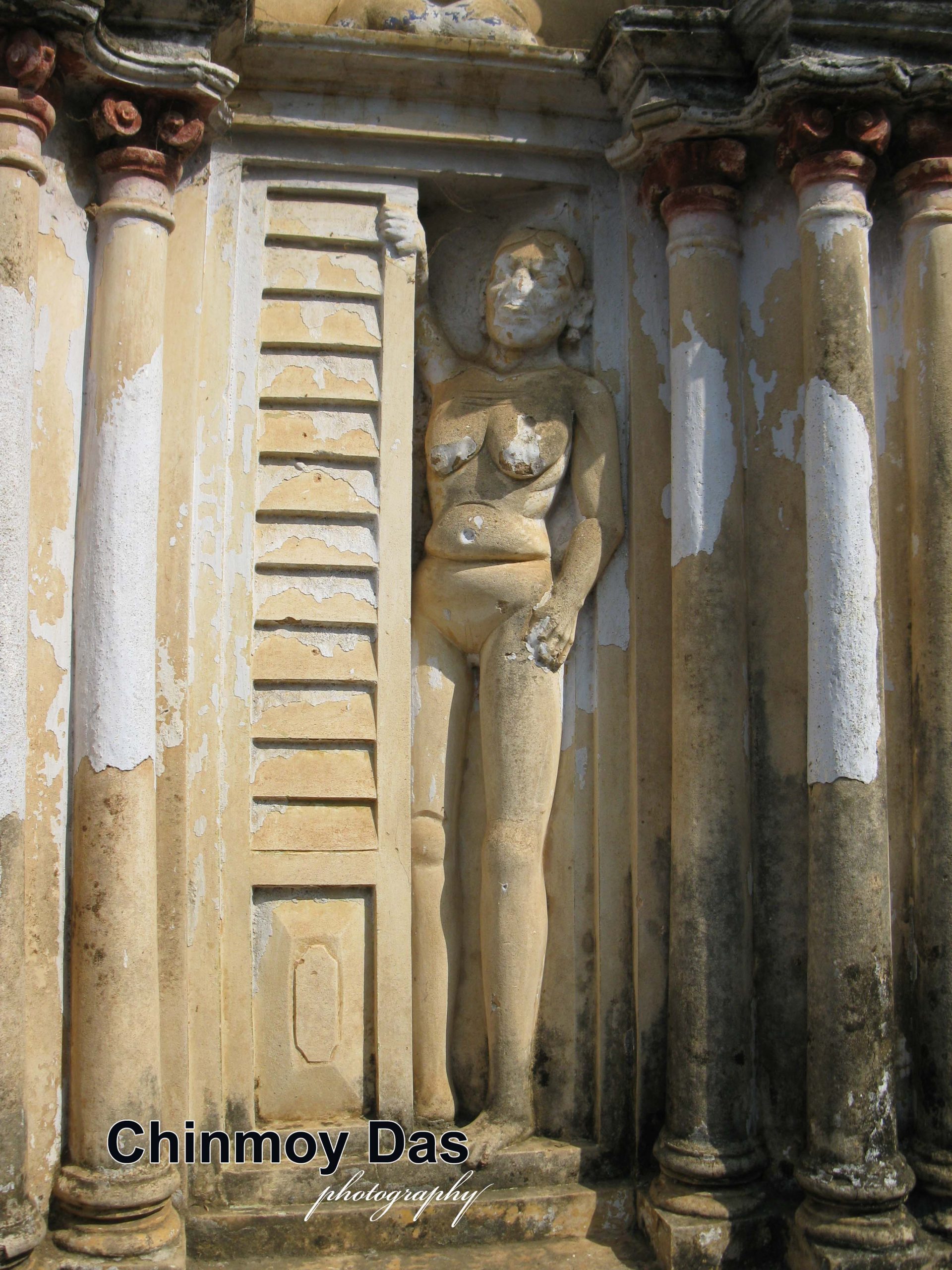
বিশিষ্ট ফলক আছ মন্দিরের উত্তর এবং দক্ষিণের দেওয়ালে। বাতায়নবর্তিনীর বদলে, দ্বারবর্তিনীর মূর্তি। অর্ধ উন্মুক্ত ভিনীশীয় রীতির দ্বারপ্রান্তে প্রতিক্ষারতা নারী। সচরাচর যা দেখা যায়, মূর্তিগুলি তেমন নয়। বিশেষত দক্ষিণের দেওয়ালের মূর্তি দুটি। সেখানে মুক্তবক্ষ দুটি প্রেৌঢ়া নারী– সচরাচর যা দেখা যায় না।
মন্দির জীর্ণ হলেও, দেবতা বিরাজিত আছেন মন্দিরে। নিত্য সেবাপূজাও হয় তাঁর। অনুষ্ঠিত হয় বছরের বড় উৎসবগুলিও।
তবে, সংস্কারের অভাবে জীর্ণতা গ্রাস করতে শুরু করেছে সুন্দর দেবালয়টিকে। মন্দির-মসজিদ চিরকালই কেবল ঐতিহ্যের বিষয় নয়, এগুলি আঞ্চলিক ইতিহাসের মূল্যবান উপাদানও। সেবাইত পরিবার কিংবা স্থানীয় পঞ্চায়েত কর্তাগণ ও সরকারি প্রশাসন এই প্রাচীন সৌধগুলির সংস্কার এবং সংরক্ষণে উদ্যোগী হলে, এগুলি সুরক্ষিত হতে পারে।
Raghunath Temple, Anandapur (Police Station: Keshpur, Medinipur)
Chinmoy Das
At one time, Anandapur emerged as a prosperous settlement renowned for its flourishing silk and Tussar industries. Consequently, several *Zamindars* (landlords) rose to prominence in this village. They constructed a number of temples dedicated to various deities. Additionally, a local family bearing the surname 'Sarkar' acquired *Zamindari* status through a different avenue; their estate was established upon property granted to them by Raja Yashowant Singh of Karnagarh. Later, Rani Shiromani also donated some property to them.
That Sarkar family, too, had built a temple. Today, we recount the story of that dilapidated shrine.First, let us understand how the *Zamindari* estate came to be acquired. The setting is the early eighteenth century. Baidyanath Sarkar—a resident of Shiromoni village within the Kotwali police jurisdiction of Midnapore—was a subject of the King of Karnagarh. By caste, he belonged to the Sadgop community. At that time, the renowned Yashowant Singh reigned as the King of Karnagarh. His reign spanned the period from 1711 to 1749 AD.Vaidyanath had two daughters of exquisite beauty—Bhavani and Shiromani. Disregarding considerations of lineage, Yashowant Singh had brought Bhavani into the royal palace as his daughter-in-law, taking her from the home of a common subject. However, as Bhavani remained childless even after a long period, Ajit Singh was married to her younger sister, the exceptionally beautiful Shiromani. That was the year 1740.
Driven by the imperative to uphold his royal dignity, Yashowant Singh established a *Zamindari* by granting a total of 832 *bighas* of 'tax-free' land to his kinsman by marriage, Baidyanath. The estates—or *mahals*—were situated across the *mouzas* of Sangramgarh, Gangaram Bari, Bhagirath Bari, Dhamsai, Akandi, Lauria, and others within the Bhanjabhum *pargana*. Baidyanath Sarkar had two sons, named Ramchandra and Ramkanai. Following the death of the childless Ajit Singh, Rani Shiromani assumed administrative authority over Karnagarh. On the 16th of Baishakh in the Bengali year 1198 (1786 AD), he granted a settlement of 56 bighas of land to Mohanlal, the youngest son of Ramkanai. Mohanlal's grandson, Shivaprasad, renounced his ties to Karnagarh and relocated to Anandapur. This likely took place more than 125 years prior. Shivaprasad's son, Pratapchandra Sarkar, rose to become a renowned *Zamindar* of Anandapur. It was Pratapchandra who, in the Bengali year 1303, constructed a stately mansion to serve as the ancestral residence of the Sarkar family. However, prior to that—in the year 1300—he had built a magnificent temple dedicated to the family deity, Raghunath Jiu. An east-facing shrine constructed of brick. The temple edifice is perfectly square, measuring 18 feet 6 inches in both length and width, and stands 40 feet tall. The temple features a total of five spires. In the terminology of temple architecture, this shrine of Raghunath is classified as a 'Pancharatna' (five-jeweled) structure. Situated atop a high plinth, the temple is accessed by ascending a flight of five steps. The plinth itself is beautifully designed, divided into numerous distinct panels.A spacious *Pradakshina Path* (circumambulatory passage) encircles the temple atop its plinth. The front façade features three doorways. Upon passing through them, one enters a rectangular vestibule. There is a single doorway leading into the *Garbhagriha* (sanctum sanctorum). All the doorways are constructed in the *arch style*. The three doorways at the front are framed by two full pillars and two half-pillars (pilasters). The interior ceiling of the vestibule is constructed using a continuous semi-arch technique. The interior ceiling of the *Garbhagriha* is constructed by raising four arches on all sides, surmounted by a dome. Following the establishment of Muslim rule in Bengal, the 'dome style' of Islamic architecture began to gain popularity and find application within the region. Situated against the rear wall of the *garbhagriha* (sanctum sanctorum) stands a permanent altar of a distinctly regal design, serving as the abode for three deities.The roof crowning the *garbhagriha*—or the main structural core of the temple—is sloped and pitched, constructed in the traditional 'Chala' style. Surmounting this roof are five *ratnas* (pinnacles); the corner *ratnas* have been erected atop raised pedestals. Each individual *ratna* is shaped like a miniature temple spire, while the lower *bada* (wall) section features a tall, elongated form characterized by a vertical, upright posture. It features four narrow, elongated doorways situated on all four sides. The interior houses an empty sanctum. The *gandi*—or superstructure—of the *ratnas* (towers) may be constructed in one of two styles: the *Shikhara-Deul* or the *Chala* tradition. The five *ratnas* of this temple adhere to the *Shikhara-Deul* style. The upper sections of these *ratnas* are constructed in the renowned *Pidha* style of Odisha; this section is articulated into a series of recessed tiers. Furthermore, a *Pancharatha* layout is evident in all five *ratnas*. Crowning each *ratna*—atop the *beki*—are an *amalaka*, a *kalasha*, and a *Vishnu Chakra*. This is a unique temple where a confluence of three distinct artistic styles—terracotta, stucco, and *pankh*—can be observed. The panels feature scenes from the Ramayana, the Mahabharata, and the Puranas depicted as motifs. The battle between Rama and Ravana from the Ramayana is a recurring theme often found on temple facades; this very scene has been incorporated into the design of this temple as well. From the Mahabharata, a rare depiction of the disrobing of Draupadi is also present. Panels illustrating the *Krishna-lila* (the divine exploits of Lord Krishna) predominate within this temple, among which the panel depicting the *Naukabilas* (the boat excursion) is particularly noteworthy. Furthermore, the walls feature numerous depictions of various deities from Hindu mythology.This is a temple dedicated to Lord Vishnu. Perhaps for this very reason, the sculptures depicting Vishnu's ten avatars have been accorded a place of special prominence. Additionally, figures of the Saptamatrikas have been intricately carved here. Glimpses of the social life of that era are also vividly portrayed on these panels. There are several scenes depicting hunting expeditions involving Europeans, as well as scenes of *Baiji* dance performances. All these panels are positioned directly above the plinth of the structure. Distinctive plaques adorn the northern and southern walls of the temple. Instead of the customary figures flanking the windows, here stand sculptures flanking the doorways—depicting women waiting at the thresholds of half-open, Venetian-style doors. These sculptures are unlike those typically encountered; this is particularly true of the two figures on the southern wall. There, two middle-aged women are depicted with bared breasts—a sight rarely seen.Although the temple itself has fallen into disrepair, the deity remains enshrined within. Daily rituals of worship and service are performed, and the major annual festivals continue to be celebrated there.However, due to a lack of renovation, dilapidation has begun to engulf this beautiful shrine. Temples and mosques are not merely matters of heritage; they also constitute invaluable elements of regional history. These ancient structures could be preserved if the *Sebait* families, local Panchayat officials, and the government administration took the initiative to undertake their renovation and conservation.