
লক্ষ্মীজনার্দন মন্দির, পলাশী (ডেবরা)
চিন্ময় দাশ
এক সময় ছিল, যখন মেদিনীপুর নগরীর চেয়েও আয়তনে বড় ছিল আনন্দপুর গ্রামটি। ইতিহাসে উল্লেখ আছে এ কথার। রেশমের ব্যবসা থেকে বিশেষ রকম আর্থিক সমৃদ্ধি হয়েছিল এখানকার অধিবাসীদের। রেশম উৎপাদক, রেশমশিল্পী, মহাজন, ফড়ে, ব্যবসায়ী-- নানান জনের হাতে প্রচুর অর্থের যোগান আসছিল। গ্রামের অধিবাসীদের আর্থিক অবস্থার উন্নতির কারণে, অন্যান্য নানান জীবিকার মানুষজনও এসে বসত শুরু করেছিল আনন্দপুরে। জনসংখ্যা এবং জনবসতি এলাকা-- দুইয়েরই বাড়বাড়ন্ত হয়েছিল সেকারণেই। অধিবাসীদের আর্থিক স্বাচ্ছল্য এতটাই বেড়েছিল যেবর্গীরা দু'-দু'বার এই গ্রাম লুন্ঠন করেছিল।
রেশম ছাড়া, আনন্দপুর গ্রামে অন্যান্য জীবিকার মধ্যে একটি ছিল লবণের ব্যবসা। নন্দী পদবীর একটি পরিবার লবণের ব্যবসা থেকে ধনী হয়ে উঠেছিলেন। আমরা জানি, পরে, ইংরেজরা লবণ ব্যবসায় হাত দিয়ে, এদেশে লবণের উৎপাদন বন্ধ করে দিয়েছিল। যার ফলশ্রুতিতে 'লবন আইন অমান্য আন্দোলন'-এর সূচনা।
যাইহোক, সে অন্য প্রসঙ্গ। ইংরেজরা যখন জাহাজে করে লবণ এনে, এদেশে বিক্রি শুরু করে, তখন নন্দীরা আনন্দপুর ছেড়ে, ডেবরা থানায় চলে এসেছিল। এর কারণ ছিল পরিবহনের সুবিধা। প্রাচীন জগন্নাথ সড়ক বা কটক রোড তো ছিলই, পরে কলকাতার এক রাজার দেওয়া টাকায় মেদিনীপুর খাল নির্মিত হয়েছিল। ডেবরার বুক চিরে তৈরী এই জলপথ বিস্তৃত ছিল একেবারে মেদিনীপুর পর্যন্ত। পরে, এসবের সাথে পরে যুক্ত হয়েছিল রেলপথও।
যোগাযোগের এই ত্রিবিধ সুবিধায় কপাল খুলে গিয়েছিল নন্দী বংশের। কলকাতা বন্দরে লবণের জাহাজ ভিড়লে, নিলামে পুরো জাহাজ কিনে নিতেন নন্দীরা। তারপর বস্তাবন্দি করে বাজারজাত করাই ছিল তাঁদের ব্যবসা। কলকাতাতেই ব্যবসার দপ্তর ছিল এই বংশের। প্রচুর অর্থ উপার্জন করেছিলেন নন্দীরা। অচলা লক্ষ্মীকে বেঁধে রাখতে, সেই অর্থে একটি জমিদারীও প্রতিষ্ঠা করেছিল এই বংশ।
সেকালে মেদিনীপুর জেলার বিশেষভাবে বিখ্যাত জমিদারদের নিয়ে কত ছড়া শোনা যেত। তার মধ্যে নন্দীদের নামও উঠে এসেছিল একটি ছড়ায়। ছড়াটি এরকম-- দে নন্দীর টাকা / কুচল ঘোড়াইর পাকা / কাশীজোড়ার মান / ময়নারাজার ধান।
ঘোষপুর গ্রামের দে বংশ এবং পলাশী গ্রামের এই নন্দী বংশ-- উভয়েরই বাস ছিল ডেবরা থানায়। প্রকৃতপক্ষে দুই জমিদারই বিপুল পরিমাণ টাকার মালিক ছিলেন। পলাশীর জমিদার নন্দীরা বিশাল দো-তলা প্রাসাদ গড়েছিলেন নিজেদের বসবাসের জন্য। আর দেবতার আবাস হিসাবে যে মন্দিরটি গড়েছিলেন, সেটিও বেশ বড়মাপের।
নিজেদের প্রাসাদের লাগোয়া করে, ঘেরা অঙ্গনের ভিতর গড়া হয়েছিল মন্দিরটিকে। তখন মেদিনীপুর জেলা জুড়ে চৈতন্যদেব প্রচারিত প্রেমধর্মের প্রবল স্রোত বহমান। জেলার সমস্ত রাজবাড়ী আর জমিদারবাড়িতে নতুন করে বিষ্ণু বা রাধাকৃষ্ণের আরাধনার প্রচলন হয়েছে বা হচ্ছে। নন্দীরাও সেই স্রোতে অবগাহন করেছিলেন।
বিগ্রহ হিসাবে কোন মূর্তি নয়, শালগ্রাম শিলা প্রতিষ্ঠা করে পূজার প্রচলন করেছিলেন তাঁরা। ৫১টি শালগ্রামের ভিতর, যে ১৮টি শিলা প্রধান, তার দ্বিতীয়টিই হল-- লক্ষ্মীজনার্দন। সেই শিলাটিকেই কুলদেবতা হিসাবে প্রতিষ্ঠা করে, সেবাপূজার প্রচলন করা হয়েছিল।
নন্দীবংশের ৮ পুরুষের বংশলতিকা আছে আমাদের কাছে। সেই বিশদ বিবরণের অবকাশ এখানে নাই। তবে, এটি বলা যায়, দেবতার সেবাপূজার ধারাটি সূচারুভাবে বহাল রেখেছেন সেবাইতগণ। নিত্যপূজা এবং সম্বৎসরের বিশেষ পূজাগুলি সাধ্যমত আড়ম্বরের সাথেই আয়োজন করা হয় এখানে। নিজেদের খাদ্য আর বাসস্থানের সংকট দেখা দিলেও, এই এক সেবাইত পরিবার, যাঁরা মন্দিরটি কিংবা দেবতার সেবাপূজায় তার কোনও ছাপ পড়তে দেয়নি।
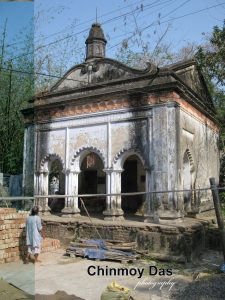
মন্দিরটি উঁচু প্রাচীর দিয়ে ঘেরা। যেনএটিকে গড়া হয়েছে দক্ষিণ ভারতের দুর্গ-মন্দিরের অনুসরণ করে। উঁচু বেদির উপর ইটের তৈরী পূর্বমুখী মন্দিরটি দালান-রীতিতে নির্মিত। অলিন্দ এবং গর্ভগৃহ-- দুটি অংশ এই মন্দিরের। সামনের অলিন্দে তিনটি দ্বারপথ। পিছনে তিনটি কক্ষ-- তার মাঝখানেটিতে দেবতার অধিষ্ঠান, সেটিই গর্ভগৃহ।
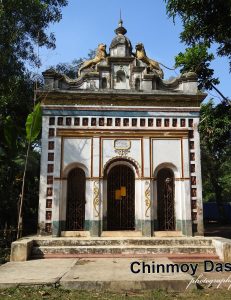
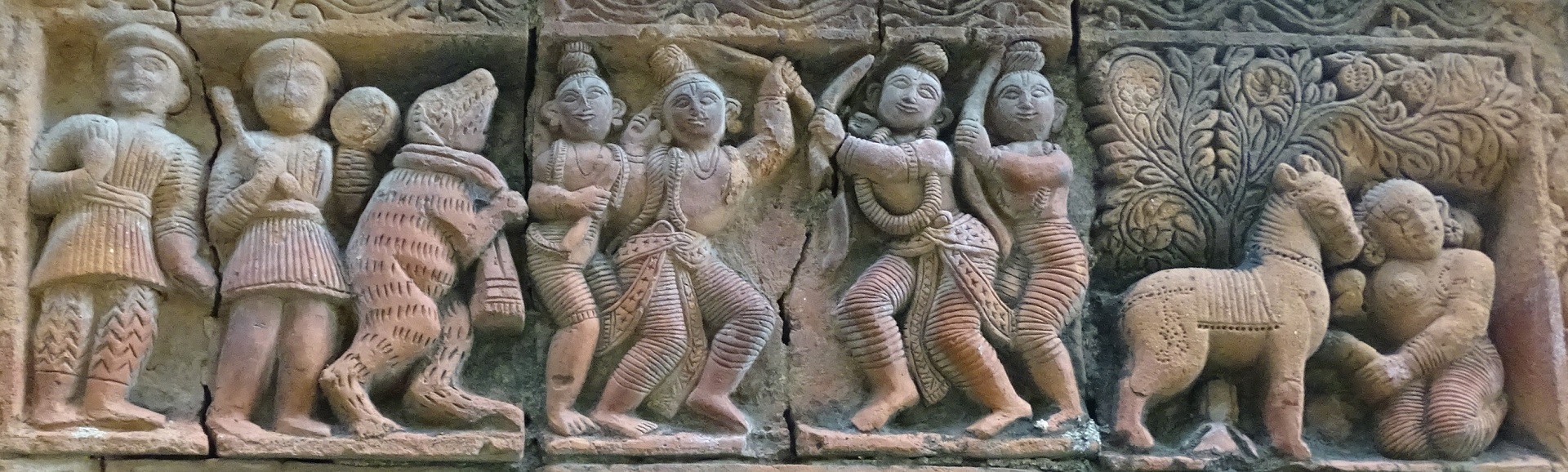
অলংকরণের কাজ হয়েছে টেরাকোটা ফলকে। কার্ণিশের নিচে এবং দুই প্রান্তের দুটি কোনাচ অংশ বরাবর ফলকগুলি সাজানো। এছাড়াও, সামনের দেওয়ালের মাথায় আলসে অংশেও একই রীতিতে ফলক দেখা যায়। বিষ্ণু মন্দিরের দ্যোতক একটি গরুড়-মূর্তি স্থাপিত আছে এই আলসের কেন্দ্রীয় ভাগে।
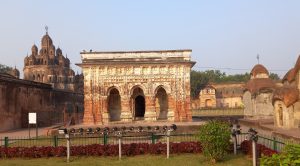
রাস উৎসবের জন্য বারো-দুয়ারী একটি রাসমঞ্চ আছে এখানে। একেবারে রাজকীয় নির্মাণ সৌধটির। বিস্ময়ে মুগধ হয়ে দাঁড়িয়ে দেখতে হয়।
Lakshmijanardan Temple, Palashi (Debra)
Chinmoy Das
There was a time when the village of Anandapur was larger in area than the town of Medinipur itself. Historical records mention this fact. The inhabitants of the village attained considerable prosperity through the silk trade. Silk producers, silk artisans, merchants, brokers, and traders all earned substantial wealth. As the economic condition of the residents improved, people engaged in various other occupations also began settling in Anandapur. Consequently, both the population and the inhabited area of the village expanded significantly. The prosperity of the villagers became so remarkable that the Bargis plundered the village on two separate occasions.
Apart from silk, another important occupation in Anandapur was the salt trade. A family bearing the surname Nandi became wealthy through this business. It is well known that later the British took control of the salt trade and halted indigenous salt production in India, which eventually led to the famous Salt Satyagraha (Civil Disobedience Movement against the Salt Laws).
However, that is another story. When the British began importing salt by ship and selling it in India, the Nandis left Anandapur and moved to the Debra area. The reason was the advantage of transportation. The ancient Jagannath Road, also known as the Cuttack Road, already existed, and later the Medinipur Canal was excavated with funds provided by a king of Calcutta. This waterway, which passed through Debra, extended all the way to Medinipur. In time, railway connections were added as well.
These three modes of communication brought great fortune to the Nandi family. Whenever a salt-laden ship arrived at the Calcutta port, the Nandis would purchase the entire cargo at auction. They then packed the salt into sacks and marketed it. Their business headquarters were located in Calcutta. The family accumulated immense wealth and, in order to secure their prosperity, established a zamindari estate.
In those days many rhymes circulated about the renowned zamindars of Medinipur district. The Nandis were mentioned in one such rhyme:
De Nandir Taka / Kuchal Ghorair Paka / Kashijorar Man / Moynarajar Dhan.
The De family of Ghoshpur and the Nandi family of Palashi both resided within Debra police station. In fact, both zamindar families possessed enormous wealth. The Nandis of Palashi built a magnificent two-storied palace as their residence. The temple they constructed as the abode of their deity was equally grand.
The temple was built within an enclosed courtyard adjoining their palace. At that time, the devotional movement propagated by Sri Chaitanyadeva was sweeping across Medinipur district. New forms of worship dedicated to Vishnu or Radha-Krishna had either already been introduced or were being established in royal and zamindar households throughout the district. The Nandis too embraced this religious current.
Instead of installing an idol, they established Shalagram stones as the sacred representation of the deity. Among the fifty-one recognized varieties of Shalagram stones, eighteen are considered principal forms. The second among these is Lakshmijanardan. This sacred stone was installed as the family deity and regular worship was instituted.
A genealogical record of eight generations of the Nandi family is available, though there is no scope here to discuss it in detail. It may be said, however, that the hereditary custodians have maintained the tradition of worship with great devotion. Daily rituals and annual festivals are still celebrated here with as much grandeur as their means permit. Even when faced with shortages of food or shelter, this family has never allowed such hardships to affect the maintenance of the temple or the worship of the deity.
The temple is enclosed by a high boundary wall, giving it an appearance reminiscent of the fortified temple complexes of South India. Built of brick on a high plinth and facing east, the temple follows the dalan style of architecture. It consists of two sections: a porch (olinda) and the sanctum (garbhagriha). The front porch contains three entrances. Behind it are three chambers, the central one housing the deity and serving as the sanctum.
The decorative work consists of terracotta plaques. These are arranged beneath the cornice and along the corner projections at both ends of the structure. Similar plaques also adorn the parapet-like upper portion of the front wall. At the center of this section stands a Garuda image, a characteristic symbol of a Vishnu temple.
For the annual Rasa Festival, there is a twelve-doored Rasmancha (festival pavilion) within the complex. The structure is truly regal in scale and design, leaving visitors awestruck with admiration.