শ্যামসুন্দর মন্দির, বালিপোতা (কোতওয়ালি থানা, মেদিনীপুর)
চিন্ময় দাশ
শাস্ত্রে নাকি বলেছে, নদী কোথাও উত্তরবাহিনী হলে, সেই স্থান অতি পবিত্র। সেখানে সমস্ত পূণ্যকর্ম সারা যায়। আনন্দিত মনে বসতবাড়ি বা দেবালয় গডে় তোলা যায় সেই পূণ্যভূমিতে।
মেদিনীপুর শহর লাগোয়া কংসাবতী নদী পূর্ববাহিনী। শহর ছাড়িয়ে খানিক পূর্বমুখী নিম্নস্রোতে পাথরা গ্রাম। আরও সামান্য পথ পাড়ি দিয়ে, উত্তরমুখে বয়েছে নদীর স্রোত। সেখানে নদীর পশ্চিমে বড় মাপের জাগুল গ্রাম। পবিত্রভূমি জেনে, জাগুলে নদীর গা-ঘেঁষা ৫২ বিঘা বালুজমির উপর গড়খাই কেটে বাস্তু তৈরি করেছিলেন এক জমিদার। নাড়াজোল রাজার কাছ থেকে পত্তনি নিয়ে জমিদারী প্রতিষ্ঠা করেছিলেন তিনি। একে একে বিভিন্ন জাতি এবং বিভিন্ন বৃত্তির মানুষজন এসে বসতি গডে়ছিল জমিদারকে ঘিরে। বালিভূমিতে বাস্তু (পোতা অর্থে বাস্তু বা ভিটেবাড়ি) গডে়, নতুন জনপদটির নাম হয়েছিল– বালিপোতা।
সেকালে কংসাবতীর অববাহিকায় নীল এবং রেশমের প্রভূত উৎপাদন হোত। পাথরার জমিদার মজুমদারবংশ ধনবান হয়েছিলেন তারই বাণিজ্য থেকে। প্রায় অর্ধ-শত দেবালয় প্রতিষ্ঠা করেছিলেন তাঁরা। অনুমান করা হয়, বালিপোতার জমিদারবংশও নীল আর রেশমের ব্যবসা থেকে উপার্জন করতেন। বিশাল মাপের অট্টালিকার সাথে, একেবারে রাজকীয় গড়নের একটি দেবালয়ও প্রতিষ্ঠা করেছিলেন তাঁরা।
জমিদারবংশের বর্তমান উত্তর পুরুষ কিংবা এলাকার প্রবীণদের কাছে বহু অনুসন্ধানেও জমিদারবংশের ঠিকুজি-কুলুজির কিছুই জানা যায়নি। জানা যায় কেবল এক জমিদারবাবুর কথা। কিংবদন্তির মত আজও তাঁরই নামটুকু কেবল প্রবীন মানুষদের মুখে মুখে ফেরে। তিনি রণজিৎ মহাপাত্র।
এই জমিদার সম্পর্কে একটি দুটি কথা বলা যেতে পারে, নিবন্ধের সীমাবদ্ধতা মাথায় রেখেও।
১. যেদিন জমিদারবাড়ির পুরনারীরা স্নানে যেতেন, সকাল না হতেই অট্টালিকার দেউড়ি থেকে নদীর বুক পর্যন্ত কাপডে়র কাণ্ডারী (সামিয়ানার মত, ঘেরাটোপ) পড়ত। কাড়া-নাকাড়া বাজত বাতাস কাঁপিয়ে, যাতে প্রজাবর্গ কেউ এসে না পডে়।
২. শ্রীকৃষ্ণের মন্দির। তাই জন্মাষ্টমী, রাধাষ্টমী, গিরি-গোবর্ধন পূজা, দোল উৎসব, রাস উৎসব, মকর সংক্রান্তি– বারো মাসে তেরো পার্বণের আয়োজন হোত। তার ভিতর এলাহি আয়োজন হোত রাস উৎসবে। বড় মাপের একটি রাসমঞ্চ ছিল মন্দিরের সামনের অঙ্গনে। বিশাল অনুষ্ঠানে যেমন হাজার হাজার ভক্ত সমাগম হোত, জমিদারবাবুও আসতেন রাজকীয় আয়োজনে। এমনই কেতাদূরস্ত ছিলেন রণজিৎ, অন্য পোষাক-পরিচ্ছদের কথা থাক, তাঁর নাকি কেবল মাথার পাগড়ি বেঁধে উঠতেই রাসযাত্রা শেষ হয়ে যেত।
সেই রাসমঞ্চটির অস্তিত্বটুকুও নাই আজ। মাটির সাথে প্রায় মিশে যাওয়া একটি ঢিবিই টিকে আছে কেবল। সেখানে এখন সবজির ক্ষেত। কোদাল-গাঁইতির কোপ পড়লে, মাটির তলায় চাপা পড়া রাসমন্দিরের চাতালটি তার অস্তিত্ত্বের জানান দেয় মাঝে মাঝে।
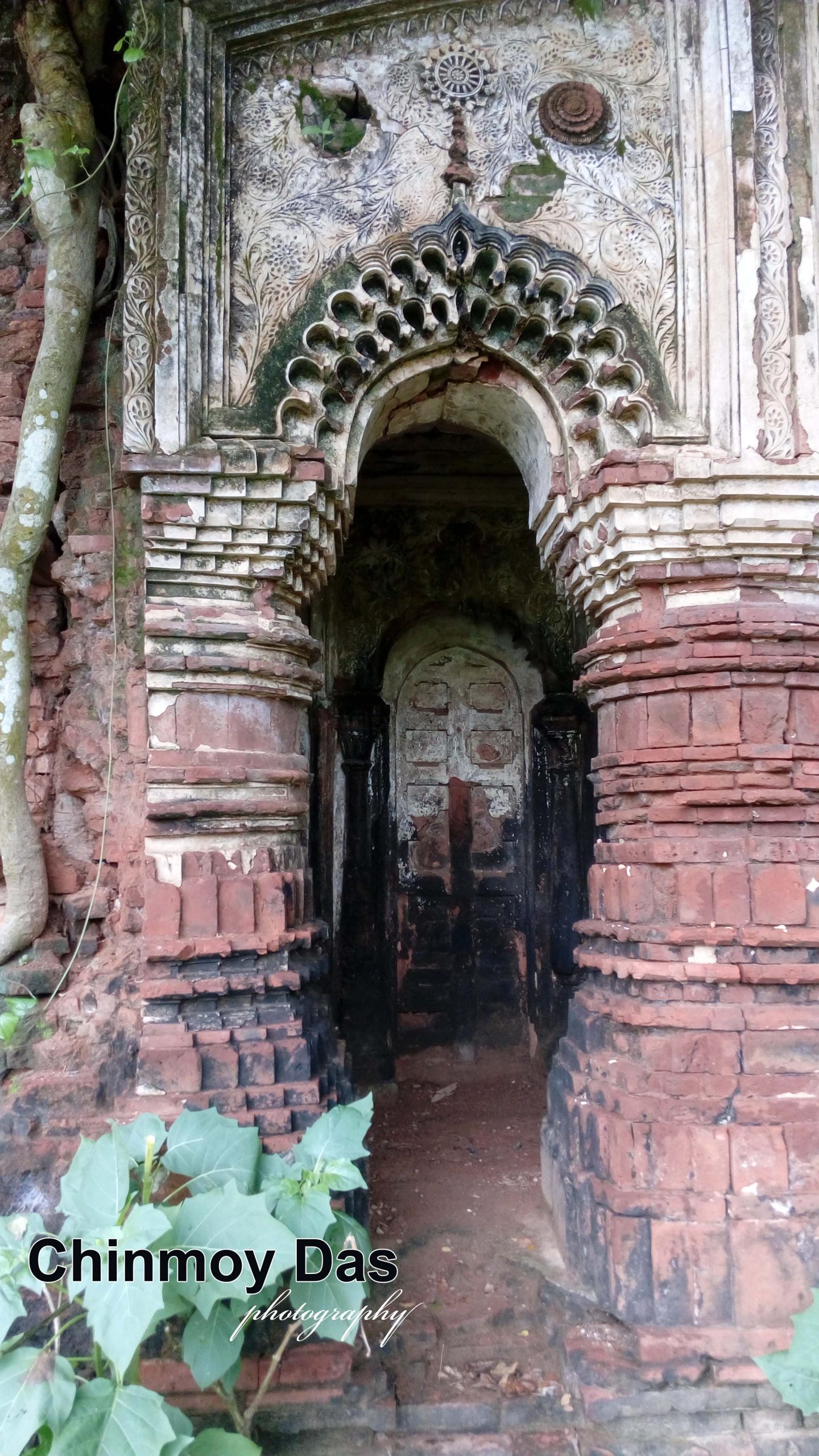
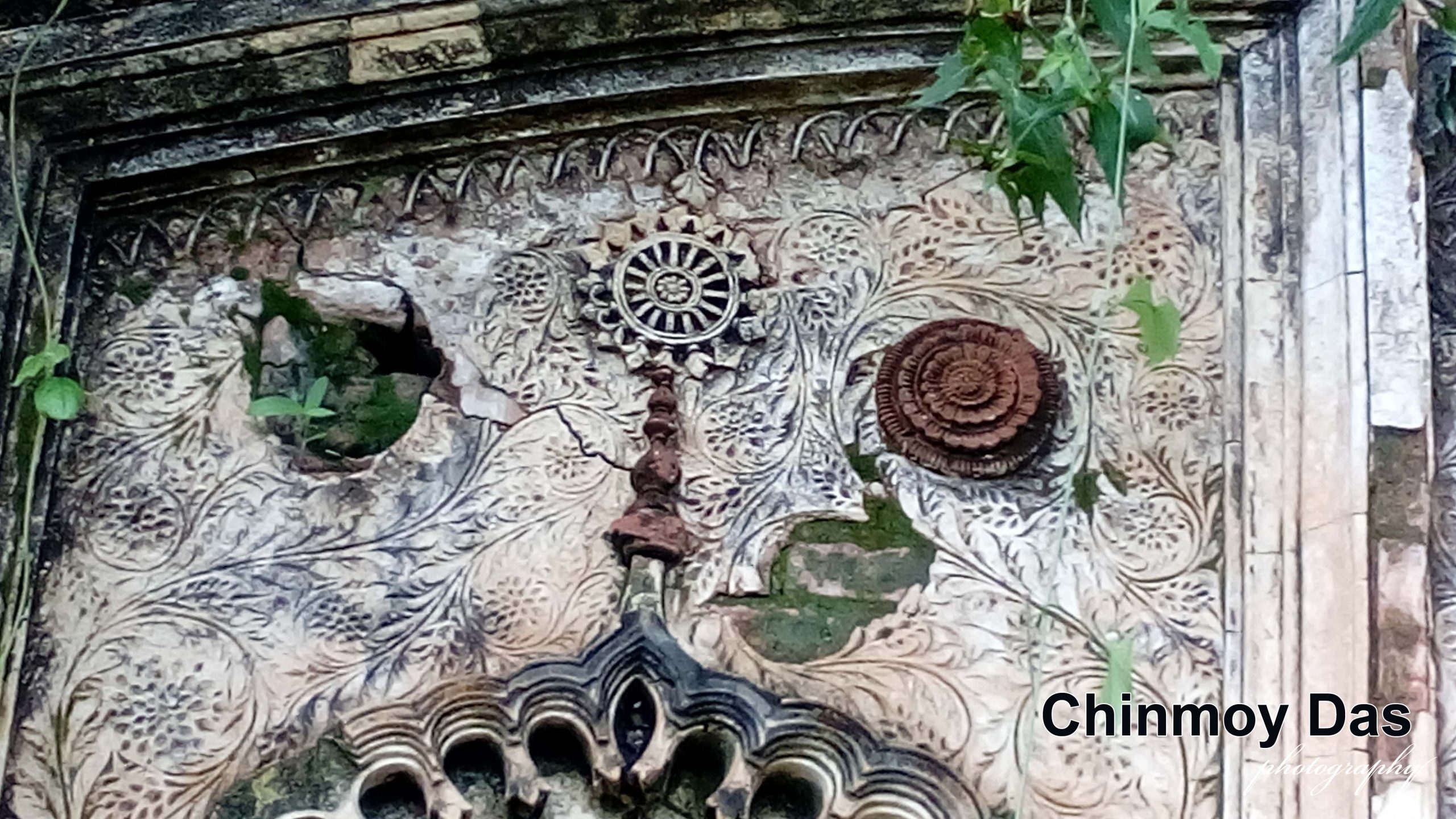
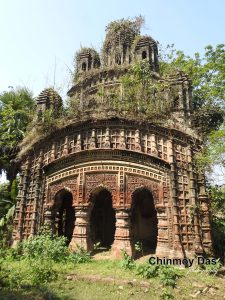
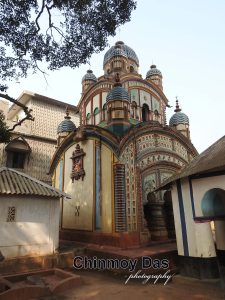
মন্দিরটি গড়া হয়ছিল একেবারে রাজকীয় আঙ্গিকে। উঁচু পাদপীঠের উপর পশ্চিমমুখী দেবালয়। দ্বিতলবিশিষ্ট নব-রত্ন রীতির সৌধ। নীচের বায়ু কোণ থেকে একটি সিঁড়ি রচিত আছে। উপর নীচ দুটি তলেই সামনে প্রশস্ত অলিন্দ। তাতে প্রবেশের জন্য ইমারতি-রীতির স্তম্ভ এবং দরুণ-রীতির খিলানের তিনটি করে দ্বারপথ। দ্বিতলের গর্ভগৃহের দু-পাশে দুটি পার্শ্ব-কক্ষ দেখা যায়।
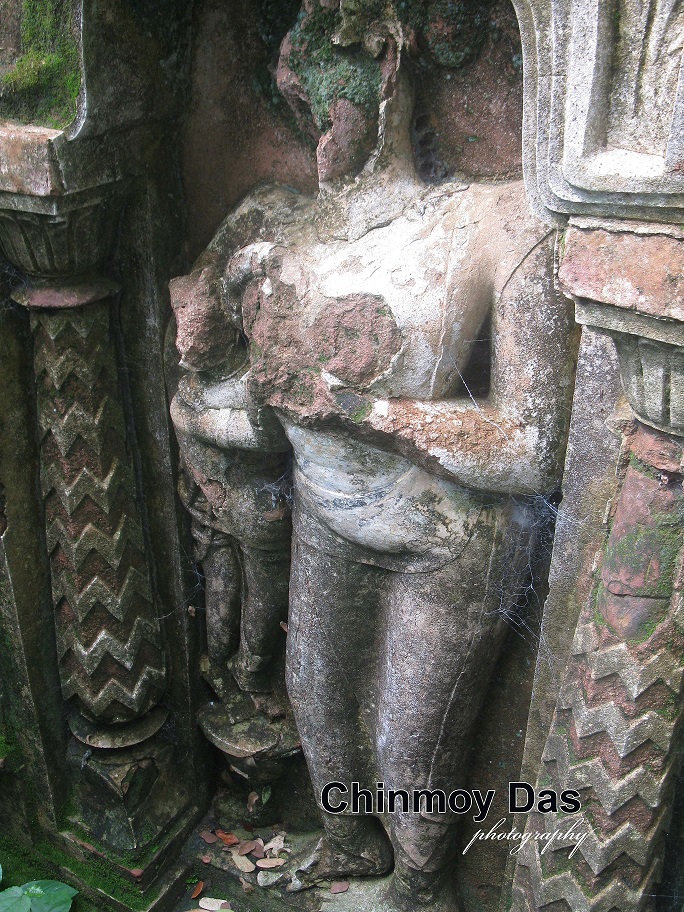
প্রথমতলের মূল গর্ভগৃহটি বেশ প্রশস্ত। তাতে প্রবেশের একটিই দ্বারপথ। তবে দু-পাশে দুটি প্রতিকৃতি-দ্বার রচিত আছে। মূল দ্বারপথের দুই প্রান্তে দুটি দ্বারপালিকা মূর্তি স্থাপিত। গর্ভগৃহের এক কোণে একটি সুড়ঙের বুজে আসা মুখ। সেই সুড়ঙ কোথায় গিয়েছিল, নদীর ঘাট, না কি, জমিদারের অট্টালিকার অন্তঃপুর পর্যন্ত– আজ আর জানা যায় না।
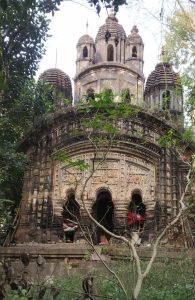
নব-রত্ন মন্দির। তবে, জীর্ণ মন্দিরে কেন্দ্রীয় রত্নটির অস্তিত্ত্ব বর্তমানে নাই বললেই চলে। কোণের রত্নও সবগুলি টিকে নাই। তবে রত্নগুলি রচিত হয়েছিল ভারি সুচারু ভঙ্গিমায়। প্রতিটির বাঢ় এবং গণ্ডী জুড়ে কলিঙ্গ প্রভাবে রথ-বিভাজন করা। কেন্দ্রীয় রত্নে পঞ্চ-রথ এবং অন্যগুলিতে ত্রি-রথ বিভাজন। রত্নের গণ্ডী অংশগুলি পীঢ়-রীতিতে নির্মিত। ভূমির সমান্তরালে কতকগুলি থাক ভাগ করা। কোনও রত্নেই শীর্ষক অংশ টিকে নাই। ফলে, বেঁকি, আমলক, খাপুরি, কলস, বিুষ্ণচক্র– কিছুই আর প্রত্যক্ষ হয় না, কিছুই।
দেবালয়টির ভিতরের ছাদ বা সিলিং রচনার দিকে দৃষ্টি দেওয়া যেতে পারে। সামনে উপর নীচের অলিন্দের সিলিং হয়েছে টানা-খিলান করে। উপর-নীচ দুটি গর্ভগৃহের সিলিং হয়েছে চার দিকে অর্ধ-গম্বুজের উপর বড় আকারের গম্বুজ স্থাপন করে। তবে, রত্নগুলির মাথার ছাউনির সিলিং হয়েছে একটু ভিন্ন রীতিতে। সেগুলিতে চতুষ্কোণ-লহরা রীতি প্রয়োগ করা হয়েছে, দেখা যায়।
বিগ্রহ নাই কেন মন্দিরে? দুটি কথা জেনেছি আমরা সমীক্ষা চালাবার সময়। একটি অভিমত হোল, বর্গী আক্রমণের সময় বিধর্মী সেনাদের অনাচারের কারণে মন্দিরের সেবাপূজা বন্ধ করে দেওয়া হয়েছিল। ভিন্ন একটি অভিমত হোল, জমিদারের দেওয়ান নিজেই মন্দিরের বিগ্রহ চুরি করে, অন্য এক জমিদারের হাতে তুলে দিয়েছিল। সেদিন থেকে বিগ্রহহীন মন্দিরে সেবাপূজা বন্ধ হয়ে, পরিত্যক্ত হয়ে পডে় দেবালয়টি।
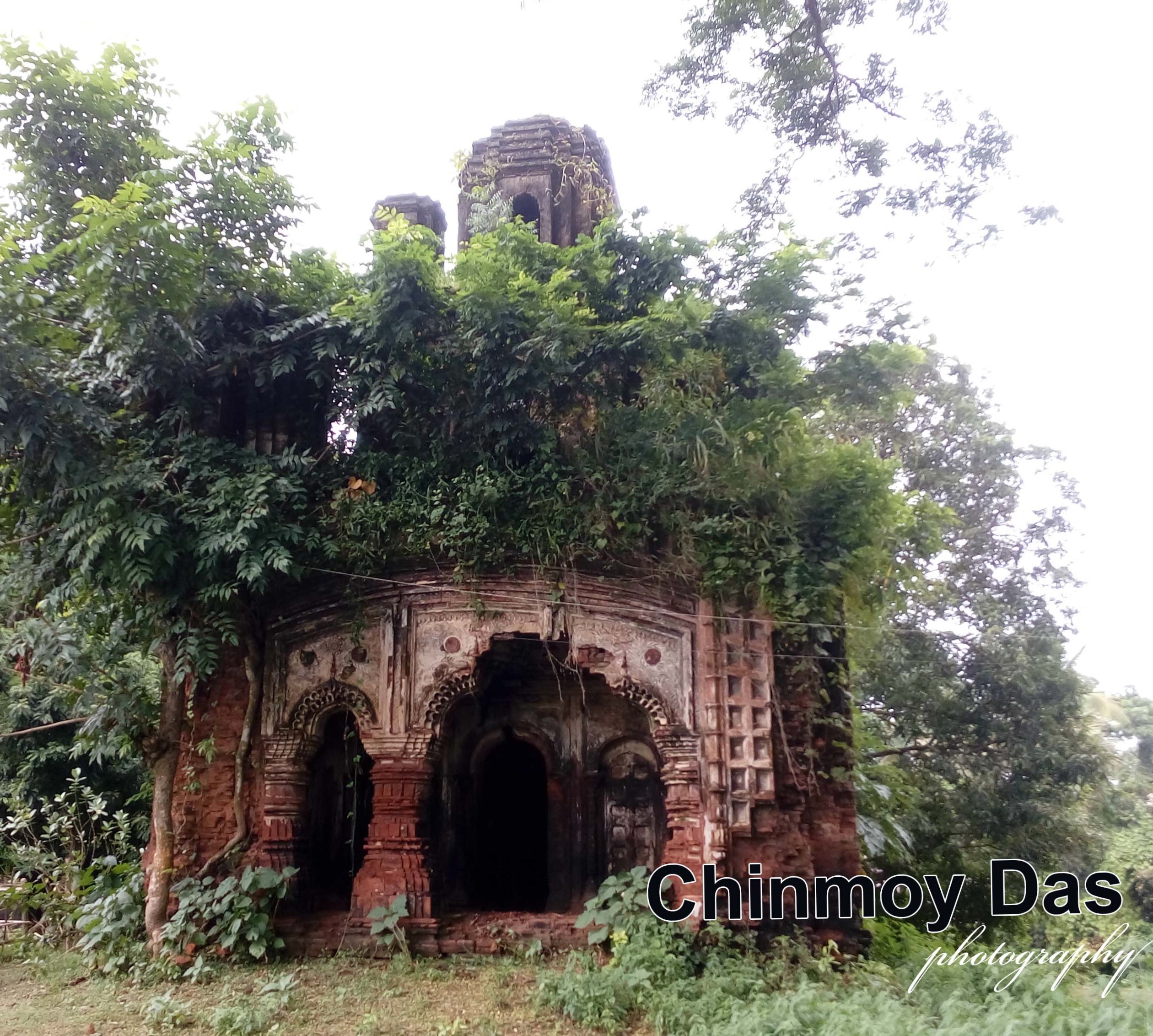
ঘণ ঝোপঝাডে় ঢাকা দেবালয়টি এখন সম্পূর্ণ ধ্বংসের পথিক, মৃত্যুপথযাত্রী। সরকারী বেসরকারি কোনও ব্যক্তি বা প্রতিষ্ঠানেরও উদ্বেগ বা উদ্যোগ কিছুই নাই জেলার এই প্রত্নসম্পদটি রক্ষা করবার। তবে সুখের কথা, স্থানীয় স্তরে উদ্যোগের সূচনা হয়েছে। সৌধটিক রক্ষা করবার ডাক দিয়ে সক্রিয় হয়েছেন ইতিহাসপ্রেমী এক মানুষ, রামানন্দ সাউ। ব্রহ্ম-বেকার মানুষটি পাশে পেয়েছেন স্থানীয় একদল উৎসাহী যুবক আর গ্রামবাসীদের। বিগ্রহ স্থাপন করে, সেবাপূজার প্রচলন করেছেন মন্দির চত্ত্বরে। একটি মেলারও প্রচলন করেছেন তাঁরা। পর্যটকের আনাগোণা বাড়লে, জীর্ণ পরিত্যক্ত সৌধটি একদিন পুণর্জীবন ফিরে পাবে– এমন আশাতে বুক বেঁধেই, কাজে নেমেছেন উৎসাহী মানুষগুলি।
সাক্ষাৎকার :
পথ-নির্দেশ : মেদিনীপুর শহর ছাড়িয়ে, পূর্বমুখে নদীবাঁধ বরাবর হাতিহলকা আর পাথরা গ্রাম পার হয়ে, জাগুল-বালিপোতা গ্রাম। মন্দিরটি পথের একেবারে কোল ঘেঁষা।
Shyamsundar Temple, Balipota (Kotwali Police Station, Midnapore)
Chinmoy Das
According to the scriptures, if a river flows northward at a particular location, that site is deemed exceptionally sacred. All virtuous deeds may be performed there; indeed, with a joyful heart, one may construct a residence or a temple upon that hallowed ground.
The Kangsabati River, skirting the town of Midnapore, flows eastward. A short distance downstream from the town, still following an easterly course, lies the village of Pathra. Traversing a little further, the river's current turns northward. Situated to the west of the river at this juncture is the sizable village of Jagul. Recognizing the site as sacred ground, a certain *Zamindar* established his estate in Jagul—constructing a residence fortified by a moat upon a 52-bigha tract of sandy land situated right alongside the riverbank. He had founded this *Zamindari* by securing a *Pattani* lease from the Raja of Narajole. Subsequently, people of diverse castes and various professions arrived one by one, gradually building a settlement centered around the *Zamindar*. Upon establishing a settlement—specifically a homestead or dwelling—on the sandy terrain, the new locality was named Balipota. In those days, the Kangsabati river basin was a hub for the prolific production of indigo and silk. The Majumdar family—the landlords of Pathra—amassed their wealth through trade in these commodities. They established nearly fifty temples. It is presumed that the landlord family of Balipota, too, derived their income from the trade of indigo and silk; alongside their sprawling mansion, they also founded a temple of truly regal architectural design.
Despite extensive inquiries directed at the current descendants of the Zamindar family—as well as the local elders—nothing could be ascertained regarding the family's precise genealogy or lineage. All that came to light was the story of a single Zamindar. Like a legend, his name alone still circulates on the lips of the elderly to this very day. He was Ranjit Mahapatra.
A word or two may be said about this *Zamindar*—even bearing in mind the limitations of this article.
1. On days when the ladies of the *Zamindar* household went to bathe, even before the morning had fully broken, a canopy of cloth—resembling a *shamiana* or enclosed tunnel—would be erected, stretching all the way from the mansion's entrance to the very edge of the river. Drums and kettledrums would thunder, shaking the very air, to ensure that no subjects would inadvertently stumble upon the scene.
- The Temple of Sri Krishna. Consequently—spanning Janmashtami, Radhashtami, Giri-Govardhan Puja, the Dol Festival, the Ras Festival, and Makar Sankranti—a calendar of "thirteen festivals in twelve months" was observed there. Among these, the Ras Festival was celebrated with truly lavish arrangements. A grand *Rasmancha* (festival pavilion) stood in the courtyard fronting the temple. Just as thousands of devotees would gather for this colossal event, the *Zamindar* himself would arrive amidst a display of regal pomp. So fastidious was Ranjit in his style—leaving aside the matter of his other attire—that it was said the entire duration of the *Ras Yatra* would elapse merely in the time it took him to tie his turban.
Today, not even a trace of that Rasmancha remains. Only a mound, nearly merged with the earth, has survived. The site is now a vegetable field. Occasionally—when struck by the blows of a spade or pickaxe—the platform of the buried Ras temple, lying hidden beneath the soil, reveals its existence.
The temple was constructed in a truly majestic style. Situated atop a high plinth, this west-facing shrine is a two-storied edifice built in the *Nava-ratna* architectural tradition. A staircase ascends from the northwestern corner of the lower level. Both the upper and lower floors feature a spacious veranda at the front, accessed through three doorways on each level—distinguished by architectural columns and *Darun*-style arches. On the upper floor, two side chambers are visible flanking the sanctum sanctorum.
The main sanctum on the first floor is quite spacious. It features a single entrance, though two ornamental doorways are constructed on either side. Flanking the main entrance stand two statues of female guardians. In one corner of the sanctum lies the silted-up mouth of a tunnel. Where that tunnel led—whether to the river ghat or to the inner quarters of the *Zamindar's* mansion—remains unknown today.
A Navaratna (Nine-Pinnacled) Temple. However, in this dilapidated structure, the central pinnacle is now virtually non-existent; nor have all the corner pinnacles survived. Nevertheless, these pinnacles were originally crafted with exquisite artistry. Influenced by the Kalinga architectural style, the *bāḍa* (vertical base) and *gaṇḍi* (spire) sections of each pinnacle feature distinct *ratha* (vertical offset) divisions. The central pinnacle exhibits a *Pancha-ratha* (five-offset) configuration, while the others feature a *Tri-ratha* (three-offset) division. The *gaṇḍi* sections of the pinnacles are constructed in the *Piḍha* style, characterized by a series of horizontal tiers arranged parallel to the ground. The crowning finials of none of the pinnacles have survived; consequently, the *beṅki*, *āmalaka*, *khāpuri*, *kalasa*, and *Vishnuchakra*—nothing remains visible anymore; absolutely nothing.
Attention may be drawn to the construction of the temple's interior ceilings. The ceilings of the upper and lower verandas at the front have been executed using a continuous-vault technique. The ceilings of both the upper and lower sanctums were created by surmounting four surrounding semi-domes with a large central dome. However, the ceilings beneath the canopies atop the *ratnas* (pinnacles) were constructed in a slightly different style; it appears that the *chatuskona-lahara* (four-cornered wave) technique was employed in these instances.
Why is there no idol in the temple? We learned two distinct accounts while conducting our survey. One opinion suggests that worship and rituals in the temple were suspended during the *Bargi* raids due to the desecration and atrocities committed by invading forces. A contrasting view posits that the Zamindar's *Diwan* himself stole the temple's idol and handed it over to another Zamindar. Since that day, worship ceased in the idol-less temple, and the shrine was left to fall into abandonment.
Now shrouded in dense thickets, this temple is on the brink of total ruin—teetering on the verge of extinction. Neither government agencies nor private entities—nor any individuals or institutions—have shown the slightest concern or initiative to preserve this archaeological treasure of the district. However, on a positive note, an initiative has been launched at the local level. Ramananda Sau—a history enthusiast—has stepped forward to rally support for the preservation of this monument. In this endeavor, the unemployed bachelor has found allies in a group of enthusiastic local youths and villagers.
They have installed deities and introduced regular worship services within the temple precincts. They have also initiated a fair. Buoyed by the hope that an increase in tourist footfall will one day breathe new life into the dilapidated, abandoned structure, these enthusiastic individuals have set to work