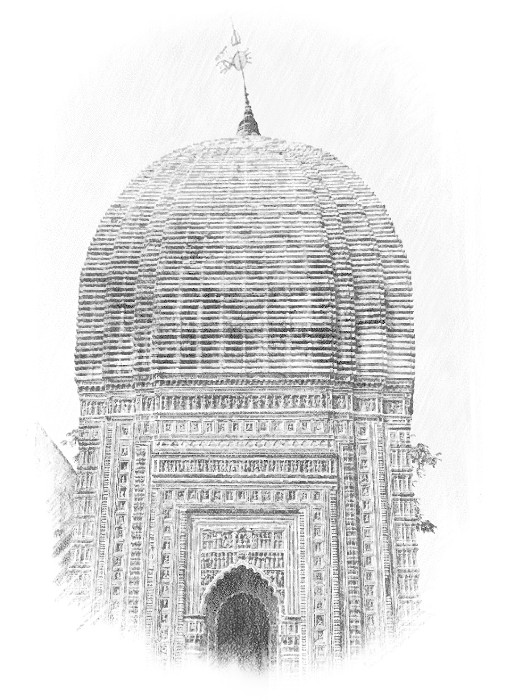
পিড়া রীতির দেউলে উড়িষ্যার প্রভাব সুস্পষ্ট। উড়িষ্যায় পীড়া দেউল মূল মন্দিরের পাশে অবস্থিত থাকে এবং এখানে মূল বিগ্রহ থাকে না। মনে করা হয় চৈতন্যদেব নীলাচলে অবস্থানকালে বাংলার মানুষ উড়িষ্যায় খুব বেশি পরিমাণে যাতায়াত করত তার ফলশ্রুতিতে এই রীতি বাংলায় গড়ে উঠেছিল যদিও ব্যাপক পরিমাণে এই রীতির মন্দির দেখতে পাওয়া যায় না।
এই রীতির মন্দিরগুলি প্রথাগত ভাবে তিনটি অংশে বিভক্ত ভিত্তিভূমি থেকে শীর্ষ দেশ পর্যন্ত এই অংশগুলি হল বার গণ্ডি এবং মস্তক। এই প্রত্যেকটা ভাগেরও আবার উপবিভাগ আছে । সাধারণত গণ্ডি অংশটিতে থাকে বিভিন্ন সুষমা মন্ডিত কারুকার্য।ক্রম হ্রাসমান কতগুলি চালা বা পীড়ায় গঠিত ধ্বজ কলস আমলক শোভিত এই পীড়া আচ্ছাদন।
এছাড়াও মাটির নিচে থাকে তল যার ওপর সমগ্র মন্দিরটি প্রতিষ্ঠিত হয়।
ডেভিড ম্যাককাচ্চন এই রীতির মন্দির গুলিকে যে ভাবে বর্গীকৃত করেছিলেন সেগুলি —
১) পরম্পরাগত
২) পরবর্তী বিকাশ
ক) নিচু পিরামিড-আকৃতির
খ) উচ্চ পিরামিড-আকৃতির
গ) পরবর্তী পর্যায়ের উচ্চ ও বক্ররেখাযুক্ত
The Pirha tradition in Bengal shows a clear influence from Orissa. In Orissa, the Pirha Deul is a smaller temple located beside the main temple, and it does not contain the main idol. This custom was adopted in Bengal during Chaitanyadev’s stay in Nilachal, when people from Bengal frequently visited Odisha. Although few temples of this style can be seen in Bengal, they typically consist of three main parts: Barh (base), Gondi (middle), and Mastaka (top). Each section has subsections, with the Gondi section often featuring intricate crafts. The Dhwaja Kalas, a series of Chalas or Pirhas in decreasing order, are also a notable feature. Additionally, the entire temple is built on a underground foundation called the Base.
David McCutchion classified these temples as –
- Traditional
- Later development (a) Low Pyramidal (b) Tall pyramidal (c) Latter tall curvilinear