রাধাকিশোরীমোহন মন্দির, নারমা (থানা-- নারায়ণগড়, মেদিনীপুর)
চিন্ময় দাশ
এ যেন একেবারে এক রূপকথার গল্প। ঘোড়া হাঁকিয়ে বেরিয়ে পড়েছিল দুই সহোদর রাজকুমার। অচেনা অজানা কোন এক অচিন দেশের পথে। যেমন যায় গল্পের কোনও রাজপুত্র। সাত সমুদ্র তেরো নদী পেরিয়ে অচিন দেশে পৌঁছে নতুন রাজ্য গড়ে নেয় নিজের জন্য। তেমনই ঘটিয়েছিল দুই সহোদর। তাদেরই একজনের কাহিনী নিয়ে আজকের জার্নাল।
ঢাকা নগরীর সামান্য পশ্চিমে বিক্রমপুরের অবস্থান। বহু অতীতকালে চন্দ্র, বর্মণ আর সেন রাজাদের রাজধানি ছিল বিক্রমপুর। সেই সুবাদে সেকালের বাংলার রাজনৈতিক এবং সাংস্কৃতিক কেন্দ্র হিসাবে গড়ে উঠছিল এই এলাকা। দশম থেকে ত্রয়োদশ শতাব্দী পর্যন্ত এর গৌরবকাল। ১২৮০ সালে রাজধানি সুবর্ণগ্রাম বা সোনারগাঁও উঠে গেলে, বিক্রমপুরের গৌরবরবি অস্তমিত হয়ে যায়। বাংলার 'বারো ভুইঁয়া'দের দু'জন চাঁদ রায় এবং কেদার রায়, মোগল আগ্রাসনের বিরুদ্ধে দাঁড়াবার চেষ্টা করেছিলেন। কিন্তু বিক্রমপুরের অস্তরবি আর উদিত হয়নি।
বিক্রমপুর যে সমৃদ্ধ নগরী হিসাবে গড়ে উঠেছিল, ভারতীয় যাদুঘর বা বাংলাদেশ জাতীয় যাদুঘরে সংরক্ষিত বিভিন্ন প্রত্নসামগ্ৰী, যা এই এলাকা থেকে পাওয়া গিয়েছিল, তার নিদর্শন। জানা যায়, সেসময় বহু ব্রাহ্মণ পন্ডিত এবং সম্ভ্রান্ত বনেদি পরিবারের বসবাস ছিল বিক্রমপুর এলাকায়।
তেমনই একটি বনেদি পরিবার ছিল জনৈক দামোদর গুহরায়-এর। দামোদরের দুই পুত্র বিশ্বম্ভর এবং নীলাম্বর ভাগ্যান্বেষণে বেরিয়ে এসেছিলেন বিক্রমপুর ছেড়ে। সাত সমুদ্র পার হননি এই দুই রাজকুমার। কিন্তু ছোট-বড় তেরো নদী পার হয়েছিলেন। বুড়িগঙ্গা আর ধলেশ্বরীর দেশ ছেড়ে এসে, থেমেছিলেন একেবারে গঙ্গা পার হয়ে, নদীর পশ্চিম তীরে। সেটা বর্তমানের হাওড়া জেলা।
কিন্তু গঙ্গাতীরে বসত করা তাঁদের কপালে লেখেননি বিধাতা। স্থানীয় বালি-কোতরংগ-এর জমিদারের সাথে বিবাদ শুরু হল। দক্ষিণ মুখে এগোবেন বলে স্থির করলেন। সেকালে দাক্ষিণাত্যের পথে এগোতে হাত গড়মান্দারণ হয়ে। সেপথে এগোতে এগোতে মান্দারণ দুর্গ, মেদিনীপুরের নাড়াজোল রাজ্য ছাড়িয়ে 'নন্দ কাপাসিয়ার জাঙ্গাল' ধরে খান্দার পরগণায় পৌঁছলেন।
এখান থেকে ভিন্ন মুখে ঘোড়া ঘুরিয়ে, দুই পথে যাত্রা করলেন দুই সহোদর। জ্যেষ্ঠ বিশ্বম্ভর গিয়ে থামলেন সাঁকোয়ায় (বর্তমান খড়্গপুর থানার। ... নং গ্রাম)। কনিষ্ঠ নীলাম্বর এসে থেমেছিলেন আলোচ্য এই নারমা (বর্তমান নারায়ণগড় থানার ... নং গ্রাম) গ্রামে। দুটিই খান্দার পরগণা, দুটিই নারায়ণগড় রাজাদের শাসনভুক্ত এলাকা। শোনা যায়, দুই অতিথি কুমারকে ঠাইঁ দিয়েছিলেন রাজারা। ছোট ছোট দুটি জমিদারি দিয়ে প্রতিষ্ঠা করেছিলেন দুজনকে।
নারমা গ্রামের অদূরেই জগন্নাথধাম পুরী যাওয়ার বিখ্যাত প্রাচীন সড়কটি অবস্থিত। এই পথ ধরেই নীলাচলে গিয়েছিলেন মহাপ্রভু চৈতন্যদেব। সেই প্রভাবে সমগ্র জেলা জুড়ে বিষ্ণু আরাধনার গভীর প্রভাব তখন। নীলাম্বরও সেই ধারায় শ্রীকৃষ্ণকে গ্রহণ করেছিলেন কুলদেবতা হিসাবে। রাধাকৃষ্ণের মূর্তিতে সেবাপূজার প্রচলন করেছিলেন বংশে। দেবতার নাম হয়েছিল-- শ্রীশ্রী রাধাকিশোরীমোহন জীউ।
কুলদেবতার জন্য একটি মন্দির নির্মাণ শুরু করা হয়েছিল। পরিতাপের কথা, নির্মাণ কাজ যখন প্রায় শেষ পর্যায়ে, একটি শকুনি এসে বসে পড়েছিল নির্মীয়মান মন্দিরের মাথায়। এই অশুভ ঘটনার কারণে, মন্দিরটি চিরকালের মত পরিত্যক্ত হয়ে যায়। একেবারে অনুরূপ দুর্ঘটনার দুটি নিদর্শন আছে মেদিনীপুর জেলাতেই-- ১. সদর কোতোয়ালি থানার পাথরা এবং ময়না থানার রামচন্দ্রপুর গ্রামে। সেখানে পরিত্যক্ত হয়ে ধ্বংসের দিন গুনছে বড় মাপের সেই দুটি মন্দিরও।
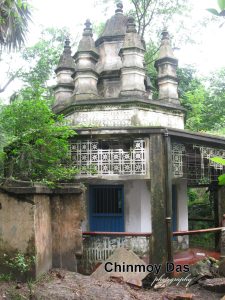
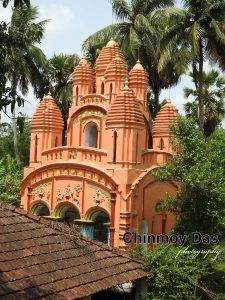
মন্দিরে আসন পাতা যায়নি দেবতার। রাধাকিশোরীমোহন গৃহেই পূজিত হতেন। পরবর্তীকালে নীলাম্বরের পৌত্র জয়কৃষ্ণ গুহরায় যখন জমিদার, কুলদেবতার জন্য বাস্তুর ভিতরেই দালান-রীতির একটি মন্দির গড়ে, বিগ্রহ স্থাপন করেছিলেন। তখন থেকে সেখানেই দেবতা অধিষ্ঠিত আছেন। সেই মন্দিরটিও আর নাই, বাংলা ১৩৮২ সনে সেটির সংস্কার করে নেওয়া হয়েছে। (মন্দিরের একটি ছবি দেওয়া হল।)
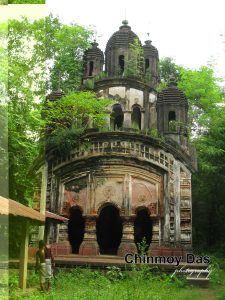
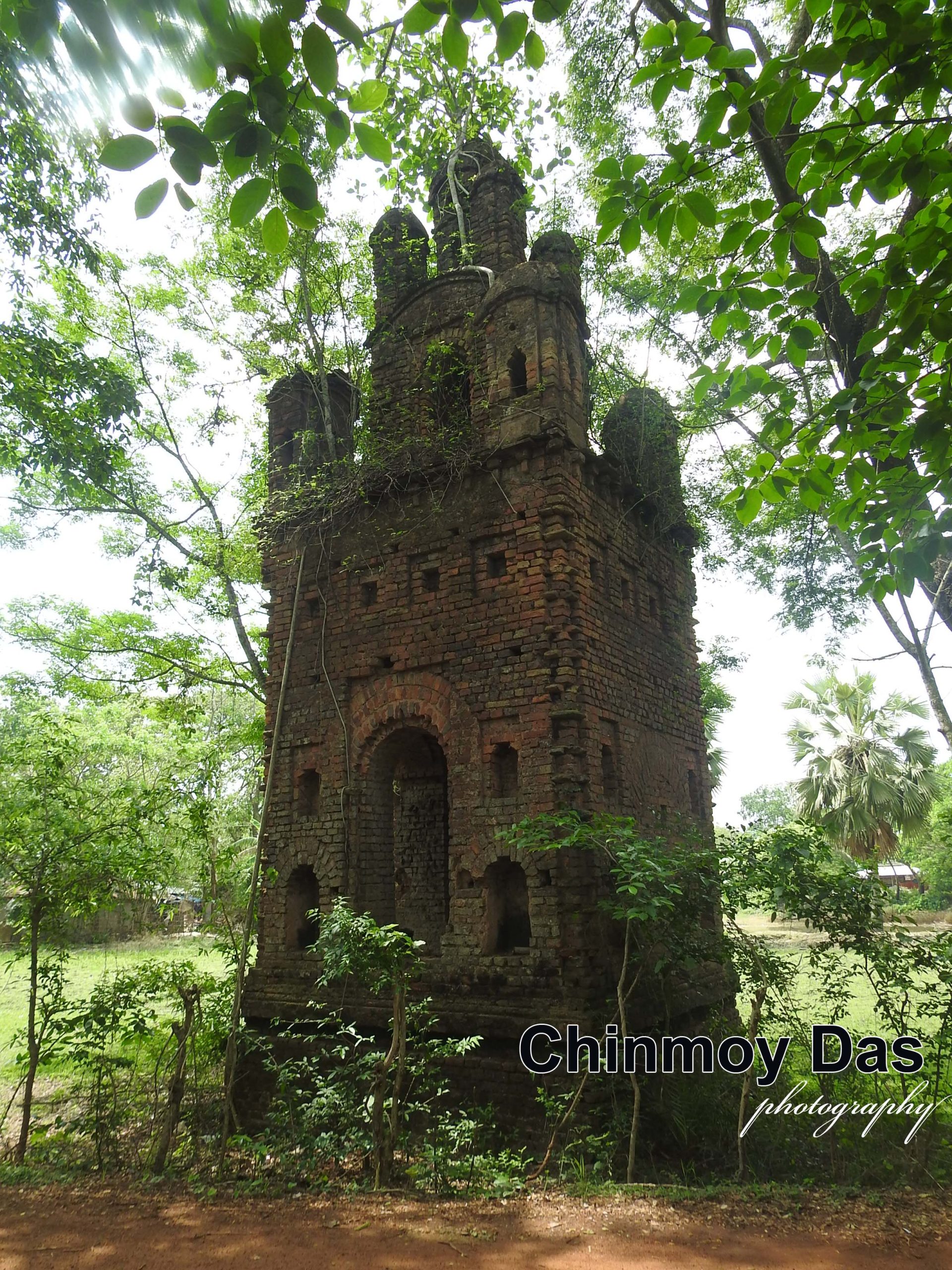
পূর্বের অসমাপ্ত মন্দিরটি অসহনীয় এক দুঃস্বপ্নের মত ঠায় দাঁড়িয়ে রয়ে গিয়েছে, অমোচনীয় ললাট-লিখন সম্বল করে। সেই জীর্ণ মন্দিরের কাঠামো নিয়ে দু-চার কথা বলে রাখছি আমরা এখানে। যেদিন সৌধটি একেবারেই নিশ্চিহ্ন হয়ে যাবে কালের গর্ভে, সেদিন তার অভিশপ্ত জীবনের কথা জেনে, একজনও যদি বিষাদগ্রস্ত হন, সেটুকুই হবে তার অনেক বড় প্রাপ্তি।
মন্দিরের পরিসর তেমন বড় নয়. ১২ ফুট দৈর্ঘ্য আর প্রস্থের বর্গাকার সৌধ। উচ্চতা আনুমানিক ৩৫ ফুট। তবে সৌধটির ঋজু ভঙ্গিমাটি প্রথমেই চোখ টেনে নেয়। নব-রত্ন রীতির মন্দির, অর্থাৎ দ্বিতল বিশিষ্ট। কিন্তু প্রথম তলের উচ্চতাই ২০ ফুট। এমনটা প্রায় চোখেই পড়ে না। তুলনায় দ্বিতীয় তলটি বেশ সংক্ষিপ্ত।
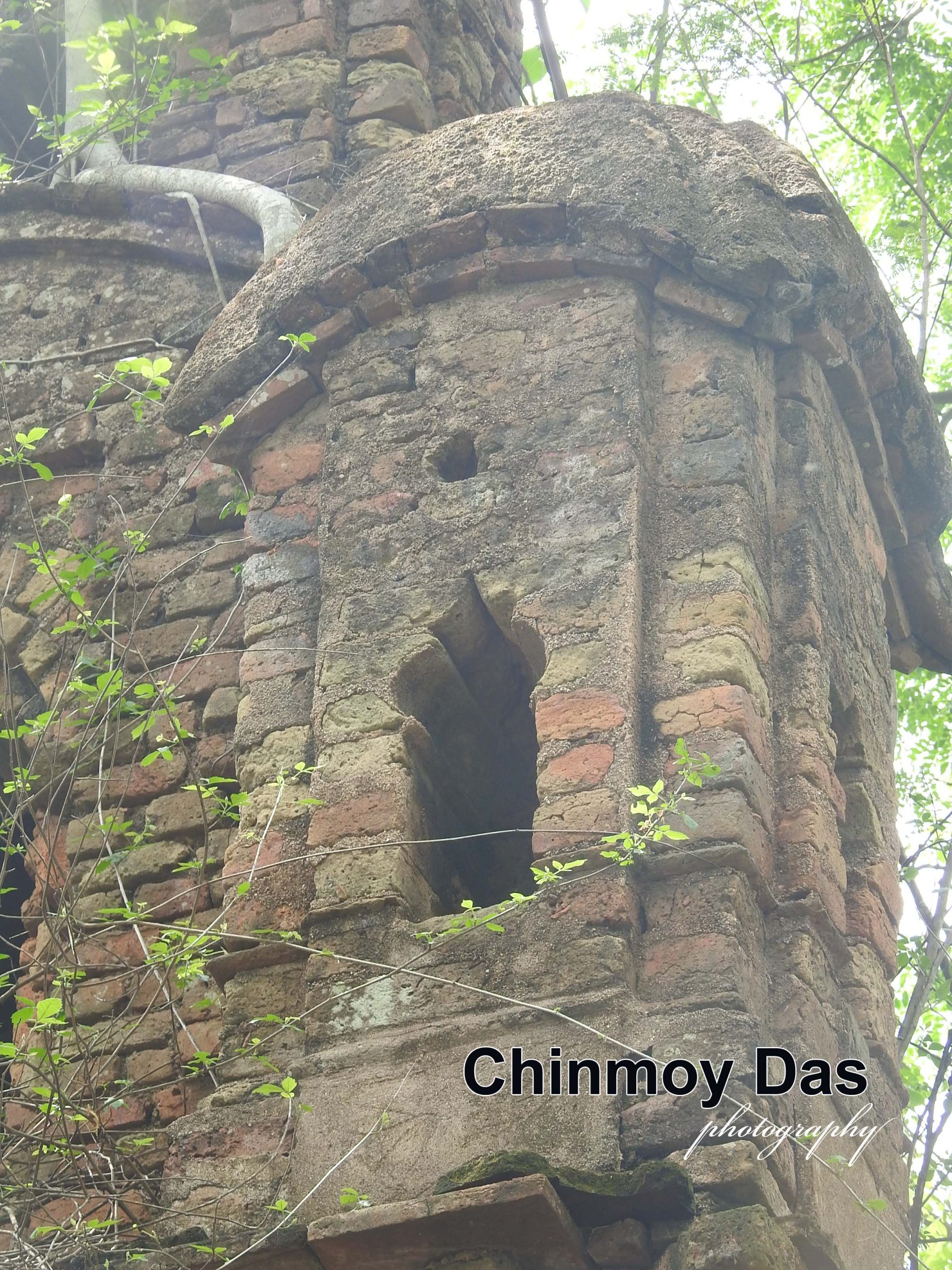
ইটের তৈরী পূর্বমুখী এই মন্দিরের বৈশিষ্ট দেখা যায় এর ছাউনি অংশগুলিতে। প্রথম তলের মাথায় সমতল ছাউনি, কার্নিশটি সরলরৈখিক। কিন্তু দ্বিতীয় তলের মাথায় এবং সবগুলি রত্নের মাথাতেই চালা-রীতির গড়ানো ছাউনি দেওয়া হয়েছে। সেকারণে, দ্বিতীয় তলের কার্নিশটিও বঙ্কিম হয়েছে। এবার দেখা যাক, এগুলির ভিতরের ছাদ বা সিলিংয়ের দিকে। ২০ ফুট উঁচু গর্ভগৃহ এবং ৯টি রত্ন-- সবগুলিরই সিলিং গড়া হয়েছে চতুস্কোণ লহরা-রীতিতে। দেখা সম্ভব হয়নি, কিন্তু অনুমান করা যায়, দ্বিতীয় তলের সিলিংও একই রীতিতেই হয়ে থাকবে।
৯টি রত্নের কোনোটিতেই শীর্ষক অংশটি নাই। তবে, টিকে থাকা নিশানদণ্ডগুলি দেখে অনুমান করা যায়, পলেস্তারা না হলেও, শীর্ষক বা চূড়াগুলি বোধকরি নির্মিত হয়েছিল। কালের আঘাতে সেগুলি মুছে গিয়ে থাকবে। বেঁকি, আমলক, ঘন্টা, কলস, সুদর্শন ইত্যাদির বিবরণ আজ আর দেওয়া সম্ভব নয়।
৯টি রত্নই কলিঙ্গ-ধারায় রথ-বিভাজন করা হয়েছিল। প্রতিটিতেই মাঝখানে প্রশস্ত একটি রাহাপাগ এবং দুই কোণে দুটি কনকপগ বা কোণাপাগ নিয়ে ত্রি-রথ বিন্যাস করা। মন্দিরের মূল কাঠামো কিংবা রত্নগুলির বেদীতে রথ বিন্যাস নাই।
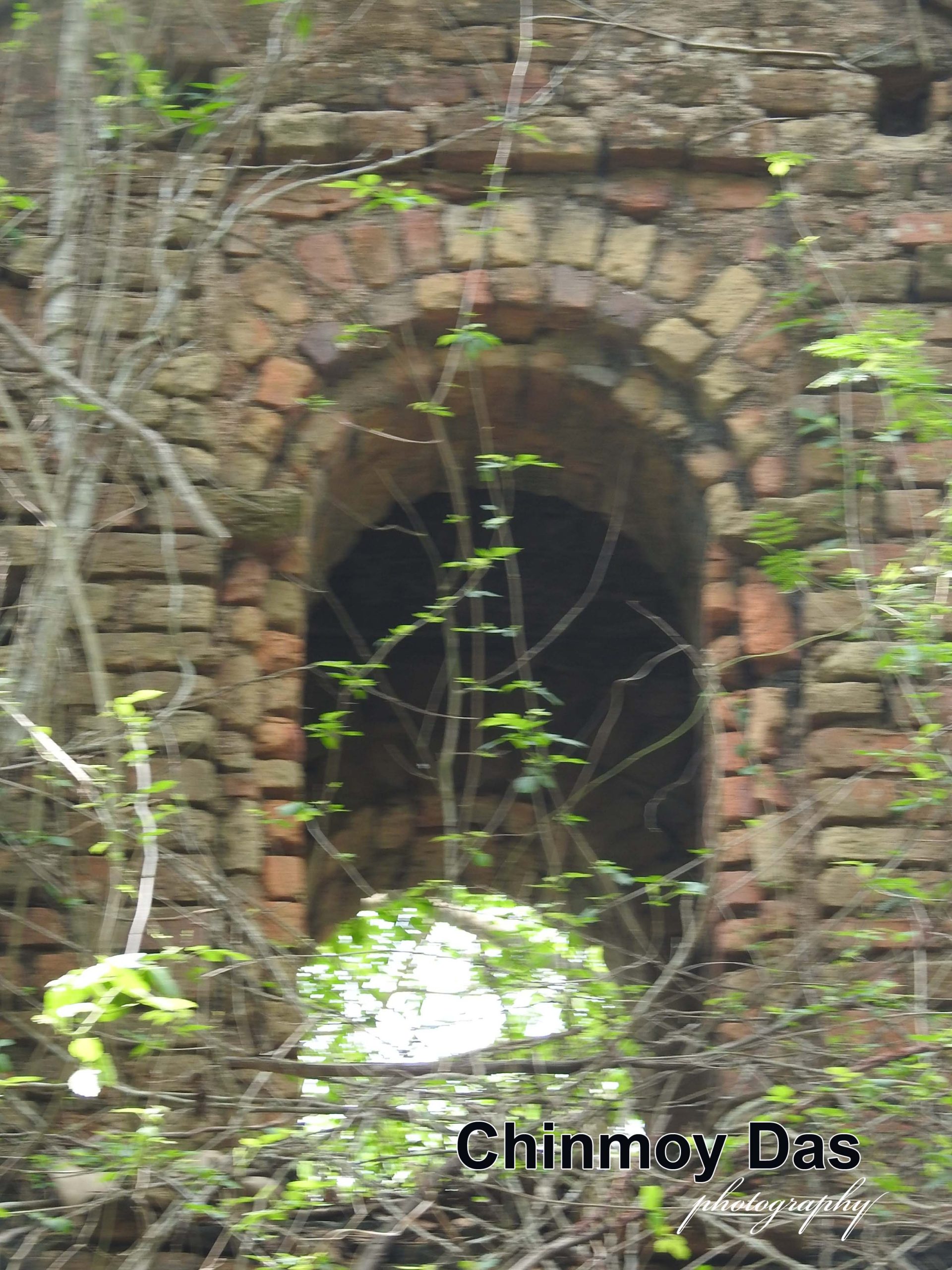
কোনও অলিন্দ নাই মন্দিরে, সরাসরি গর্ভগৃহে প্রবেশ। পূর্বদিক ছাড়াও, উত্তর এবং দক্ষিণেও দুটি দ্বারপথ আছে গর্ভগৃহে প্রবেশের জন্য। এই তিনটি, দ্বিতলের গর্ভগৃহের এবং ৯টি রত্নের সবগুলি দ্বারপথই খিলান-রীতিতে নির্মিত। পাদপীঠ বেশ উঁচু। কোনও প্রদক্ষিণ-পথ রচিত হয়নি মন্দিরকে বেষ্টন করে।
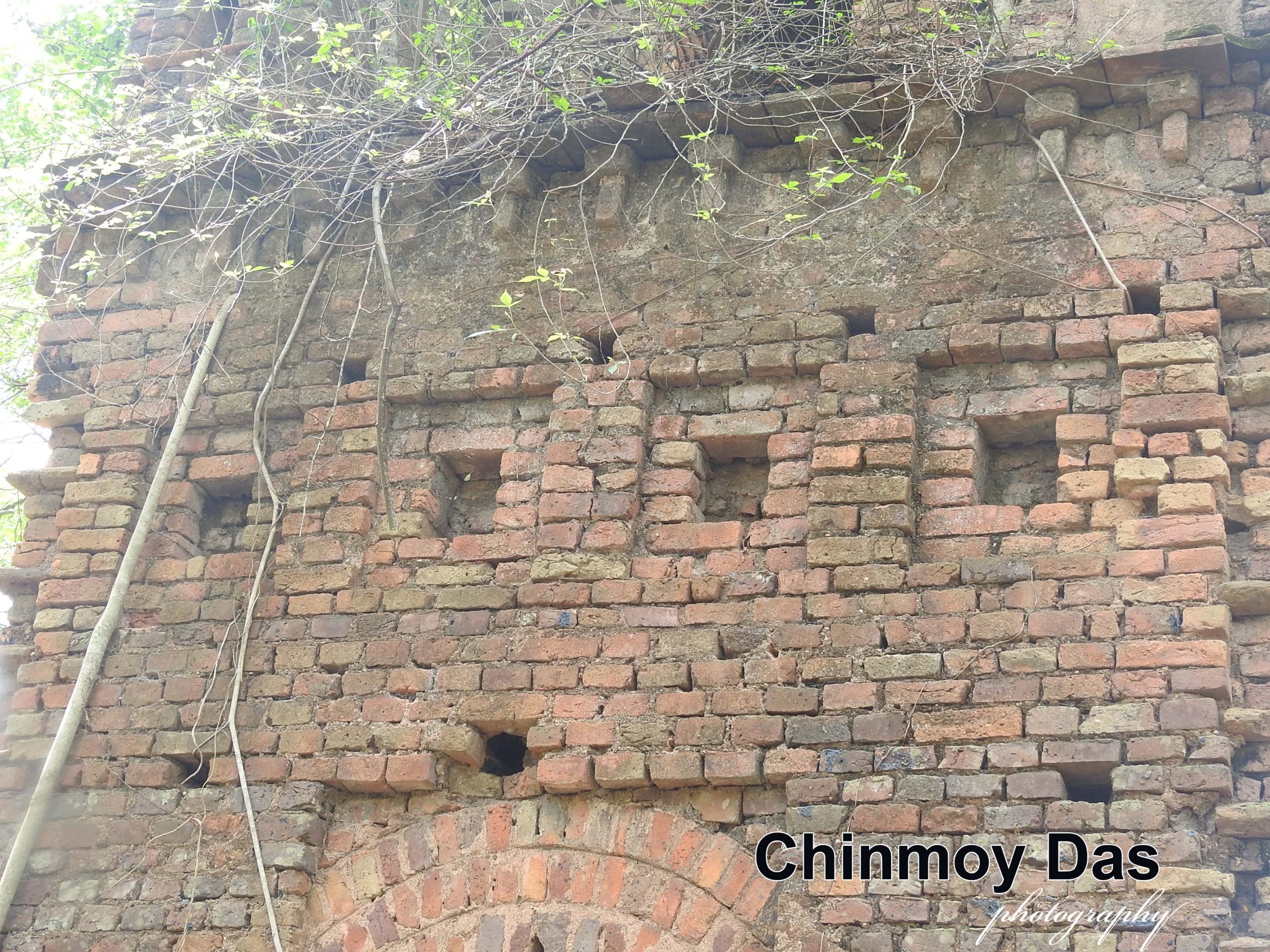
পলেস্তারা করা হয়নি মন্দিরে। তাই অলংকরণের প্রশ্নও ওঠে না। তবে, মন্দিরের বাইরের দেওয়ালের চার দিক জুড়ে অনেকগুলি শূন্য চারকোণা খোপ পড়ে থাকতে দেখা যায়। সেগুলি যে টেরাকোটা, কিংবা অন্য কোনও মাধ্যমের, ফলকের জন্য নির্দিষ্ট করা হয়েছিল, এমন অনুমান অমূলক নয়। গর্ভগৃহের চার দিকে কার্ণিশের নীচ বরাবর চারটি করে, এবং তিনটি দ্বারপথের দু'দিকে চারটি করে খোপ রচিত হয়েছিল। গর্ভগৃহের ভিতরে, পশ্চিমের দেওয়ালেও অনুরূপ একটি শূন্যস্থান আছে, সেটি নিশ্চয়ই দেবতার বিগ্রহের জন্য।
নীলাম্বরের জ্যেষ্ঠ পৌত্র ছিলেন জয়কৃষ্ণ। ১২-১৩ প্রজন্ম ধরে, তাঁর উত্তরপুরুষগণই মন্দিরের সেবাপূজার ধারাটি বহাল রেখে চলেছেন। নিত্যপূজা বা বিশেষ পূজাগুলি ছাড়াও, রথযাত্রা, ঝুলন পূর্ণিমা এবং রাস উৎসবটি হয় বিশেষ ঘটা করে। কাঁসর -ঘন্টার শব্দ আর ধুপ-ধুনোর গন্ধে আমোদিত হয়ে ওঠে চারদিক। দালান মন্দিরের প্রাঙ্গণ তখন আলোয় ঝলমলে হয়ে ওঠে। অন্ধকারে ডুবে থাকা আদি মন্দিরটির কথা প্রায়শই মনেই পড়ে না কারও।
Radhakishorimohan Temple, Narma (Narayangarh Police Station, Medinipur)
Chinmoy Das
This seems like a tale straight out of a fairy story. Two princely brothers mounted their horses and set out on a journey toward an unknown and distant land—just as princes do in legends. Crossing countless rivers and traversing unfamiliar territories, they sought to establish new realms for themselves. Such was the story of these two brothers. Today's journal recounts the life of one of them.
A little west of the city of Dhaka lies Bikrampur. In ancient times, it served as the capital of the Chandra, Varman, and Sena dynasties. As a result, it developed into one of Bengal's foremost political and cultural centers. Its golden age lasted from the 10th to the 13th century. When the capital was shifted to Subarnagram (Sonargaon) around 1280 CE, the glory of Bikrampur began to fade. Two of Bengal's famous Baro Bhuiyans, Chand Rai and Kedar Rai, attempted to resist Mughal expansion, but the sun of Bikrampur's fortune never rose again.
The prosperity of Bikrampur is evidenced by numerous archaeological artifacts discovered there and now preserved in the Indian Museum and the Bangladesh National Museum. Historical records indicate that many learned Brahmin scholars and aristocratic families resided in the region.
One such distinguished family belonged to Damodar Guha Ray. His two sons, Vishwambhar and Nilambar, left Bikrampur in search of fortune. They did not cross seven seas like the princes of legend, but they did cross many rivers. Leaving behind the lands of the Buriganga and Dhaleswari, they eventually crossed the Ganges and settled for a time on its western bank, in what is now Howrah district.
Fate, however, had not destined them to remain there. A dispute arose with the local zamindar of Bali-Kotrung, prompting them to move southward. In those days, the route to southern Bengal passed through Gar Mandaran. Following this road, they passed Mandaran Fort, the Narajole Raj Estate of Medinipur, and traveled along the famed "Nanda Kapasiya Jangal" before reaching Khandar Pargana.
From there, the two brothers parted ways. The elder brother, Vishwambhar, settled at Sankoa (now in Kharagpur police station area), while the younger, Nilambar, settled in Narma, the village discussed here (now under Narayangarh police station). Both villages belonged to Khandar Pargana and were under the rule of the Narayangarh kings. Tradition holds that the rulers welcomed the two noble guests and established them as landlords by granting them small zamindaris.
Not far from Narma ran the ancient highway leading to Jagannath Dham, Puri. It was along this very road that Sri Chaitanyadeva had journeyed to Nilachal. Consequently, Vaishnavism exerted a deep influence throughout the district. Nilambar too embraced Sri Krishna as the family deity and introduced the worship of Radha-Krishna in his lineage. The deity came to be known as Sri Sri Radhakishorimohan Jiu.
Construction of a temple for the family deity was begun. Unfortunately, when the structure was nearly complete, a vulture alighted upon the top of the unfinished temple. This was regarded as an ominous sign, and the temple was abandoned forever. Medinipur district preserves two other examples of similar incidents—at Pathra in Kotwali police station and Ramchandrapur in Moyna police station. Those large abandoned temples too continue to await their inevitable destruction.
The deity was never installed in the unfinished temple. Instead, Radhakishorimohan continued to be worshipped within the family residence. Later, when Nilambar's grandson Jayakrishna Guha Ray became the zamindar, he built a dalan-style temple within the homestead and installed the deity there. Since then, the deity has remained enshrined in that temple. That temple no longer survives in its original form either; it was renovated in Bengali year 1382. (A photograph of the temple was provided in the original article.)
The unfinished temple still stands like an unbearable nightmare, bearing the indelible mark of destiny upon its brow. A few words about this ruined structure deserve to be recorded here. If one day the monument disappears entirely into the abyss of time, and even a single person feels sorrow upon learning of its tragic history, that alone will be its greatest reward.
The temple is not particularly large. It is a square structure measuring approximately 12 feet by 12 feet, with a height of about 35 feet. Yet its upright and graceful proportions immediately attract attention. It is a Navaratna (nine-towered) temple with two storeys. Remarkably, the first storey alone rises nearly 20 feet, an unusually lofty height. The second storey is comparatively compact.
Built of brick and facing east, the temple's most distinctive feature lies in its roofing system. The first storey has a flat roof with a straight cornice. In contrast, the second storey and all nine towers possess curved chala-style roofs. Consequently, the cornice of the second storey is also curved. Examining the interior ceilings, one finds that the 20-foot-high sanctum and all nine towers are covered with chatuskona lahara-style vaulted ceilings. Although it could not be directly inspected, it is likely that the second-storey ceiling follows the same pattern.
None of the nine towers retains its crowning finial. However, the surviving flagstaffs suggest that the finials or spires were probably completed, even if they were not plastered. Over time they have disappeared. Today it is impossible to describe details such as the beki, amalaka, bell, kalasha, or Sudarshana elements that once adorned them.
All nine towers were designed in the Kalinga architectural tradition with ratha projections. Each consists of a broad central raha-paga flanked by two kanika-pagas (kona-pagas) at the corners, forming a tri-ratha arrangement. Neither the main temple body nor the bases of the towers display such projections.
The temple has no porch (olinda); entry is made directly into the sanctum. Besides the eastern entrance, there are doorways on the north and south sides. These three entrances, along with the openings of the upper sanctum and all nine towers, are built in the arch style. The plinth is quite high, and no circumambulatory path surrounds the temple.
The temple was never plastered, and therefore it bears no ornamental decoration. Nevertheless, numerous empty rectangular recesses can be seen on all four exterior walls. It is reasonable to assume that these were intended for terracotta or other decorative panels. Four such recesses were created beneath the cornice on each side of the sanctum, and four more flanked each of the three doorways. Inside the sanctum, a similar niche exists on the western wall, undoubtedly intended for the deity's image.
Jayakrishna, the eldest grandson of Nilambar, became the progenitor of the present custodians. For twelve or thirteen generations, his descendants have continued the worship of the deity. In addition to daily rituals and special observances, Rath Yatra, Jhulan Purnima, and the Rasa Festival are celebrated with great enthusiasm. The resonant sound of kansar and temple bells, together with the fragrance of incense, fills the surroundings. The courtyard of the dalan temple glitters with light, and in those festive moments, few people remember the ancient temple standing forgotten in darkness nearby.