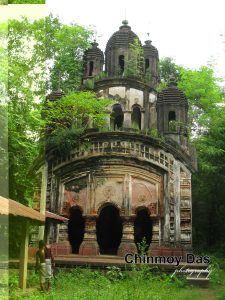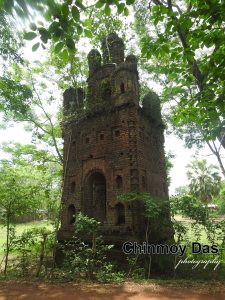
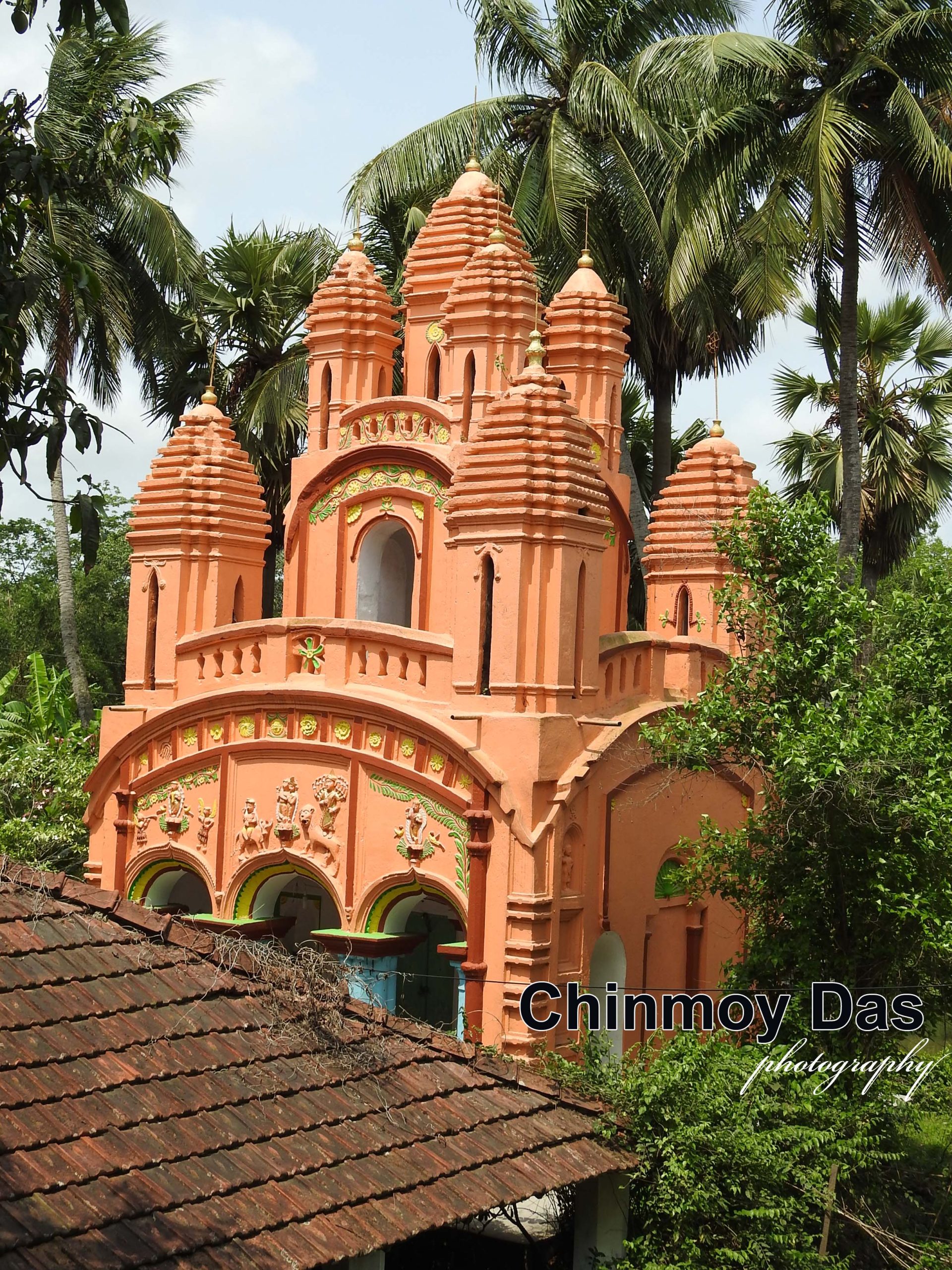
লক্ষ্মীনারায়ণ মন্দির, নরসিংহপুর (থানা-- নন্দীগ্রাম, মেদিনীপুর)
চিন্ময় দাশ
ইং ১৭৯৩ সাল। বাংলার সমাজ জীবনের এক ক্রান্তিকাল। যুগান্তকারী সামাজিক-রাজনৈতিক পরিবর্তন সূচনার বছর। ১৭৫৭ সালে পলাশী যুদ্ধের ৩ বছর পর, ১৭৬০ সালে মীর জাফরকে সরিয়ে, মীরকাসেমকে নবাবের আসন দেয় ইংরেজরা। ইনাম হিসাবে চাকলা বর্ধমান, চাকলা মেদিনীপুর এবং চট্টগ্রামের ইসলামাবাদ থানার অধিকার ইংরেজকে প্রদান করেন মীর কাসেম। পুনরায় মীর জাফরকে নবাব হিসাবে নিয়োগ করা হলে, ১৭৬৫ সালের জানুয়ারি মাসে তাঁর পুত্র নজম-উদ-দৌলা, নিজে ইংরেজের বৃত্তিভোগী হয়ে, সমগ্র বাংলার দায়ভার ইংরেজদের হাতে তুলে দেন। অধিক কী, সেই বছরের আগস্ট মাসে দিল্লির সম্রাটও বাংলা-বিহার-উড়িষ্যার দেওয়ানি ইংরেজের হাতে তুলে দিয়েছিলেন। তখন থেকেই ইংরেজরা বাংলা সুবার প্রকৃত শাসনকর্তা হয়ে ওঠে।
মন্দিরের প্রসঙ্গে পৌঁছতে হলে, ইতিহাসের পাতায় আরও এক ঝলক চোখ বুলিয়ে নিতে হবে আমাদের। সুবে বাংলার অধীশ্বর হয়ে, ইংরেজের চোখ যায় এদেশের ভূমি রাজস্বের দিকে। অর্থ শোষনের সেরা ক্ষেত্র সেটিই। ধীরে ধীরে ভূমি রাজস্ব ব্যবস্থায় পাঁচ-সালা, দশ-সালা বন্দোবস্ত চালুর পর, অবশেষে ১৭৯৩ সালে " চিরস্থায়ী বন্দোবস্ত প্রথা " প্রচলন করে তারা। এর হোতা ছিলেন সেসময়ে ভারতের বড়লাট লর্ড কর্নওয়ালিশ।
সেই সময়ে জেলায় ৩০টির মত প্রাচীন জমিদারবংশ এবং ৩০টির বেশি তালুকদারবংশ ছিল মেদিনীপুর জেলায়। চিরস্থায়ী বন্দোবস্তের সুবাদে বাংলার সমস্ত জমিদারী ব্যবস্থাটি বদল হয়ে যায়। প্রাচীন জমিদার-তালুকদারগণের অধিকাংশকেই জমিদারী হারাতে হয়। এক নতুন জমিদারশ্রেণীর অভ্যুদয় হয় জেলা তথা সারা বাংলা জুড়ে। বিভিন্নভাবে ধনী হয়ে ওঠা বহু অর্থবান পরিবার, চিরস্থায়ী বন্দোবস্ত প্রথার ধারা মান্য করে, নতুন নতুন জমিদারী প্রতিষ্ঠা করেছিল। ওই প্রথার বিধানেই যে কোনও জমিদার তাঁর অধীনে ইজারাদার, পত্তনীদার, দর-পত্তনিদার ইত্যাদি নিয়োগ করবার অধিকারী ছিলেন। সেই সুবাদে জেলায় জেলায় ছোট-বড় বহু সংখ্যক নতুন জমিদারের উদ্ভব হয়েছিল।
মেদিনীপুর জেলার একেবারে পূর্বপ্রান্তের এক থানা নন্দীগ্রাম। কাছেই গঙ্গার মোহনা। মোহনার সামান্য পশ্চিমে তাজপুর গ্রামের অধিবাসী নরহরি জানা ছিলেন 'মাহিষ্য সমাজ'-এর অন্যতম প্রতিষ্ঠাতা এবং অগ্রণী ব্যক্তিত্ব। মহিষাদলের রাজার কাছ থেকে মোহনার এপারে ওপারে ৮০০০ বিঘা সম্পত্তি ইজারা নিয়ে একটি জমিদারি প্রতিষ্ঠা করেছিলেন তিনি।
নরহরির জন্ম বাংলা ১২২৪ সন বা ইং ১৮১৭ সালে। 'মাহিষ্য কুলতিলক' নরহরি ছিলেন দূরদর্শী, উদ্যমী পুরুষ। মহিষাদল রাজার অনুরোধে নদীর চর ইজারা নিয়ে গ্রাম পত্তন করেছেন জঙ্গল হাসিল করে। পরে পরে ময়না, দোরো, কাশীজোড়া পরগণায় সম্পত্তি করেছেন। পূজার প্রচলন করেছেন বাসুলী দেবীর প্রতিষ্ঠা করে। জেলার পূর্বাঞ্চল জুড়ে প্রভূত সুনামের অধিকারী হয়েছিলেন এই মানুষটি।
নরহরির মধ্যম পুত্র বিশ্বনাথ (বাংলা ১২৬৫ - ১৩২৭)। নিজের পুরুষকারে স্বতন্ত্র একটি জমিদারি প্রতিষ্ঠা করেছিলেন তিনি। পৈতৃক সম্পত্তি এবং তাজপুরে পারিবারিক বাস্তুভিটা ছেড়ে, চলে এসেছিলেন পিছনে না তাকিয়ে। পাশের গ্রাম নরসিংহপুর। সেখানে ৩০ বিঘার বাস্তুতে তিন তলা অট্টালিকা, দীঘি, কুলদেবতা প্রতিষ্ঠা করে নতুন বসত গড়েছিলেন বিশ্বনাথ।
নির্ভিক, স্পষ্টবাদী, বিদ্যোৎসাহী বিশ্বনাথ বহু জনহিতকর কাজ করে গিয়েছেন। প্রজাদের পানীয় জল এবং সেচের জন্য জলাশয় খনন করেছেন। পুস্করিণী খনন করে দিয়েছেন সমুদ্রগামী জাহাজের নাবিকদের পানীয় জলের জন্য। ৫০ বিঘা জমি দান করেছেন আশদতলায় হাইস্কুল প্রতিষ্ঠায়।
বিশ্বনাথের এইসকল কাজ মাত্র সওয়া একশ' বছর আগের কথা। তবুও আজকের জার্নালে তাঁকে উপজীব্য করা হয়েছে, তাঁর প্রতিষ্ঠিত মন্দিরটির জন্য। নতুন বসত গড়ে, বিষ্ণুকে কুলদেবতা হিসাবে গ্রহণ করেছিলেন তিনি। সুদৃশ্য একটি মন্দির নির্মাণ করিয়েছিলেন দেবতার জন্য। অট্টালিকার একেবারে লাগোয়া করে।
ইটের তৈরী পূর্বমুখী মন্দিরটি নব-রত্ন রীতির। ফুট দেড়েক উঁচু পাদপীঠের উপর একটি প্রদক্ষিণ-পথ বেষ্টন করে আছে মন্দিরকে। উচ্চতায় ৩৫ ফুট হলেও, দ্বিতল এই মন্দিরের নীচের পরিসরটি বেশ প্রশস্ত। ২৩ ফুট দৈর্ঘ্য-প্রস্থের বর্গাকার সৌধ এটি।
নীচে গর্ভগৃহের সামনে খিলান-রীতির তিনটি দ্বারপথ যুক্ত একটি অলিন্দ। গর্ভগৃহের দ্বারপথ একটিই। দ্বিতলে শূন্য গর্ভগৃহের চারদিকে প্রশস্ত চারটি দ্বারপথ। ছাউনি বিহীন চারটি উন্মুক্ত অলিন্দও আছে সেই গর্ভগৃহকে বেষ্টন করে।
প্রথম এবং দ্বিতীয় দুটি তলেরই মাথায় চালা-রীতির গড়ানো ছাউনি। কার্নিশগুলি বেশ সুদর্শন হয়েছে তার কারণে। ন'টি রত্ন-- সবগুলিই নির্মিত হয়েছে শিখর-দেউল রীতিতে। সেগুলির বেদী, বাঢ় এবং গন্ডী অংশ জুড়ে ত্রি-রথ বিভাজন করা। মাথাতেও পীঢ়-রীতিতে সরলরেখায় থাক কাটা হয়েছে, ভূমির সমান্তরালে।
মাথায় টালির ছাউনি দেওয়া, কাঠের কাঠামোর বেশ বড় আকারের একটি নাটমন্দির রয়েছে মন্দিরের সামনে।
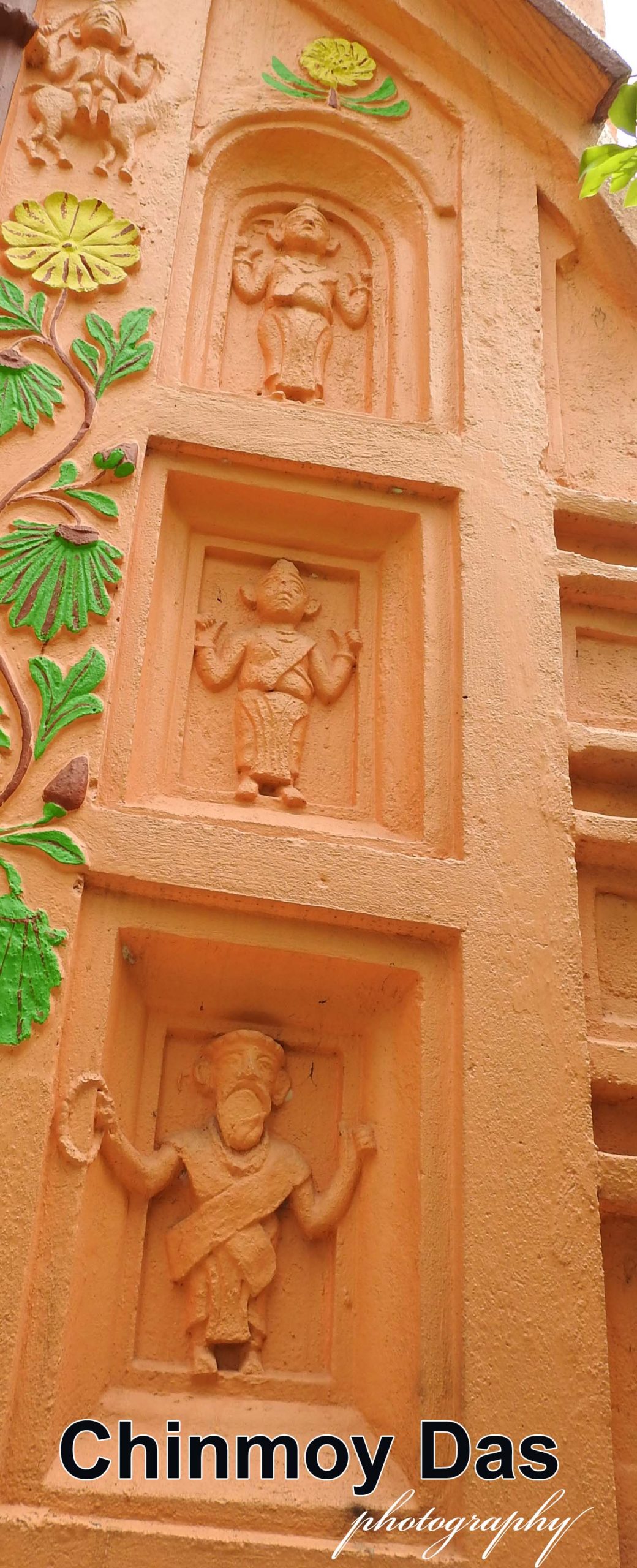
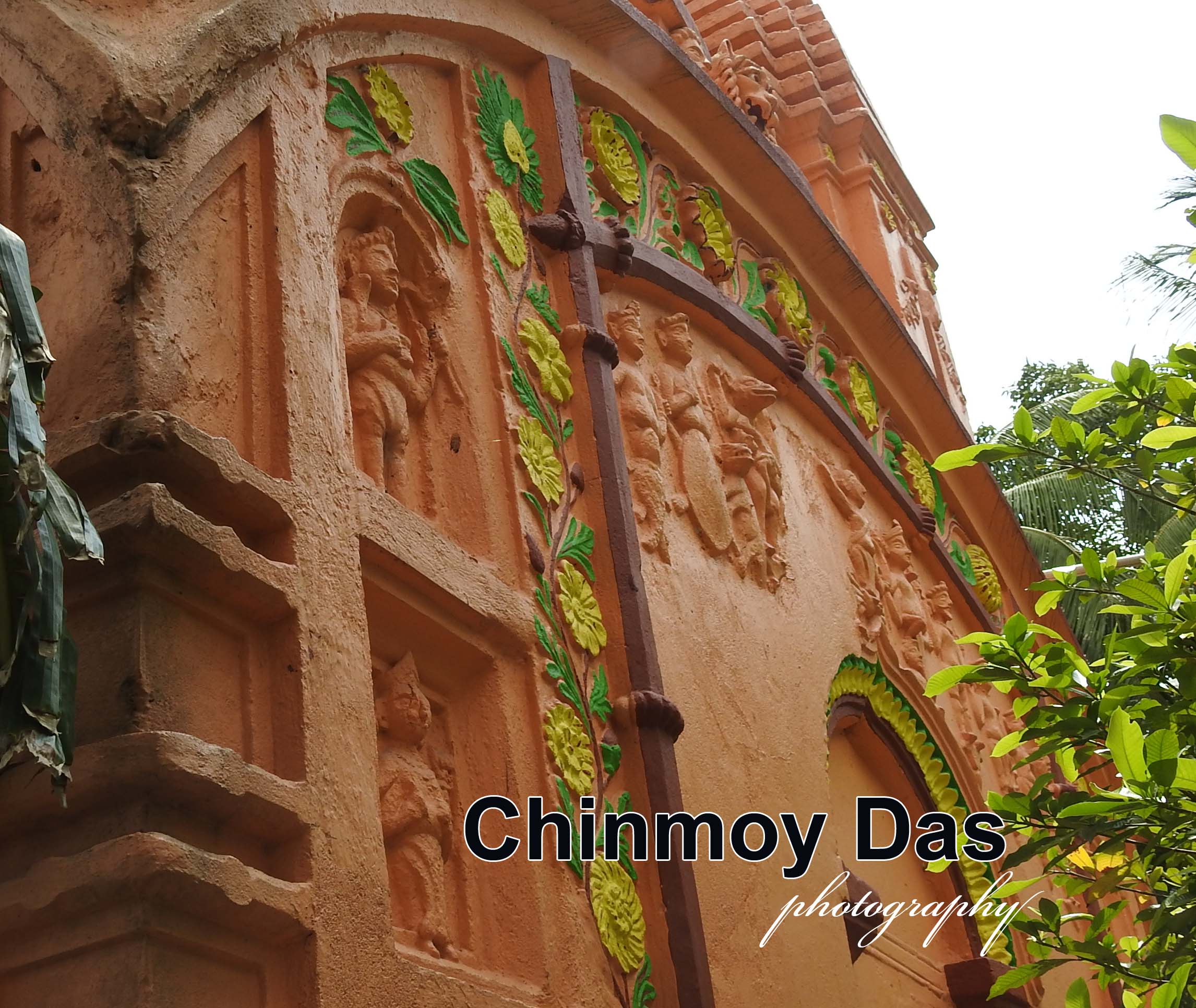
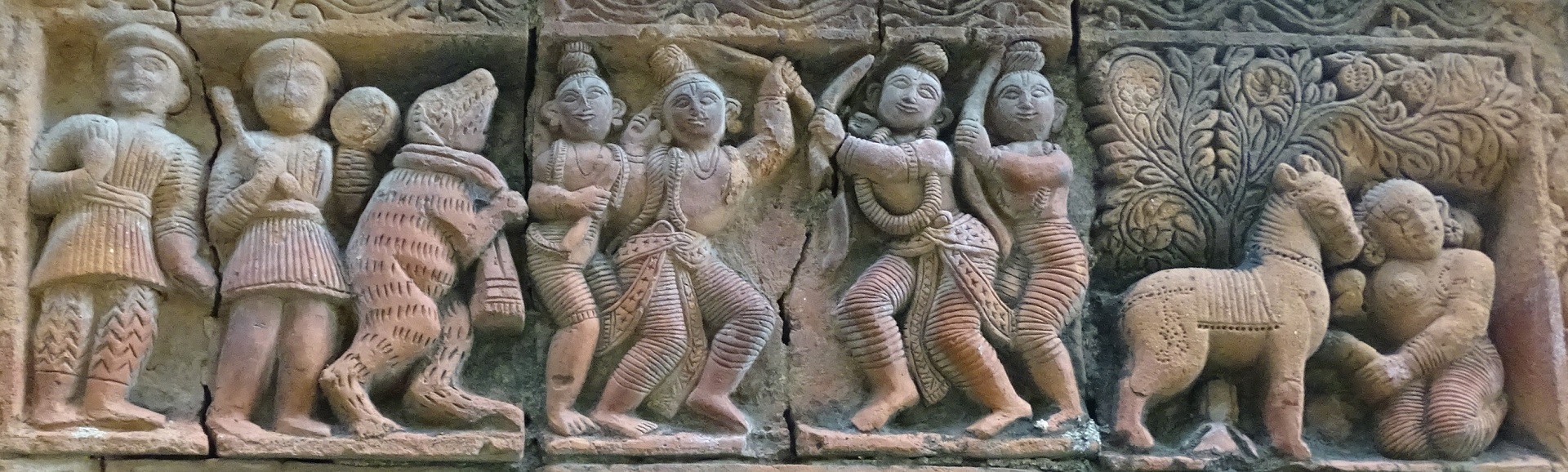
অলংকরণে বেশ কিছু মূর্তি দেখা যায় মন্দিরে। সবই স্টাকোর কাজ। অলিন্দের মুখ্য দ্বারপথের মাথায় রাধা-কৃষ্ণের যুগলমূর্তি, সিংহবাহিনী দশভূজা দূর্গা, গর্দভবাহিনী শীতলা মূর্তি রচিত হয়েছে। দ্বিতলে দক্ষিণের অলিন্দের আলসের উপরে দুদিকে দুটি ঋষি-মূর্তি, সেগুলির ঠিক উপরে দুদিকে ব্যাদিতবদন দুটি সিংহ-মূর্তি দেখা যায়। এছাড়া, দক্ষিণ এবং উত্তরের দেওয়ালে, কার্নিশের নীচ বরাবর সারি সারি মূর্তি সন্নিবেশ আছে। ছোট ছোট খোপেও কয়েকটি মূর্তি রচিত আছে, মন্দিরের কোনাচ অংশের গায়ে।
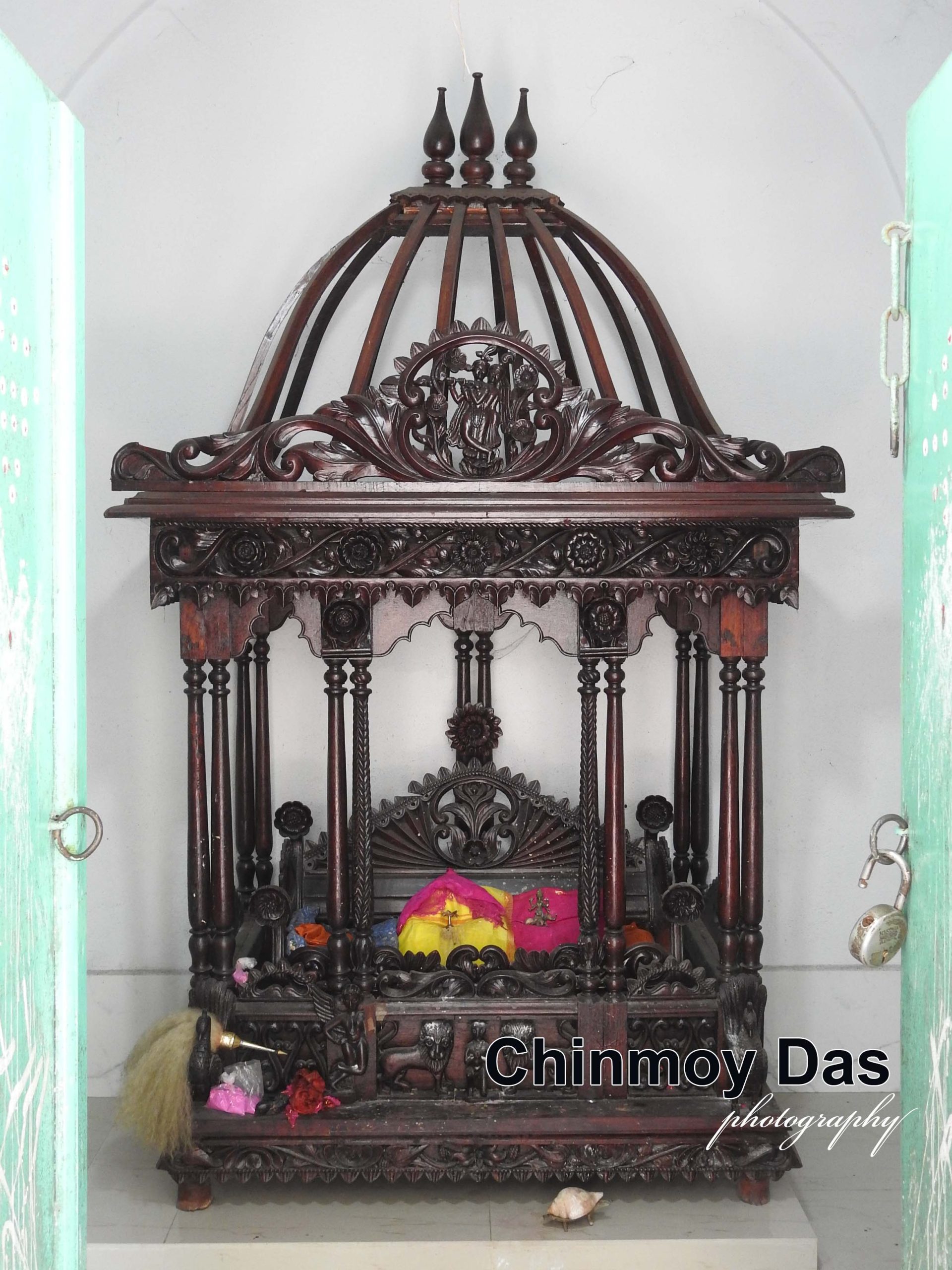
এছাড়াও, গর্ভগৃহে দেবতার সিংহাসন এবং অলিন্দের সামনে গরুড়-মূর্তি-- দুটি কাজই দারু-তক্ষণ কাজের উৎকৃষ্ট নিদর্শন।
ভারী সুদর্শন এই মন্দিরটি। তবে নিবিড় পর্যবেক্ষণ করলে দেখা যায়, জীর্ণতার প্রকোপ শুরু হয়েছে মন্দিরে। ক্ষয়ের সূচনা হয়েছে একেবারে উপর থেকে। খসে পড়তে শুরু করেছে রত্নগুলির শীর্ষক অংশ।
Lakshminarayan Temple, Narsinghapur (Nandigram Police Station, Medinipur)
Chinmoy Das
The year was 1793 CE—a critical turning point in the social life of Bengal and the beginning of far-reaching socio-political transformations. Three years after the Battle of Plassey (1757), the British removed Mir Jafar and installed Mir Qasim as the Nawab in 1760. As a reward, Mir Qasim granted the British control over the chaklas of Burdwan, Medinipur, and the Islamabad subdivision of Chittagong.
When Mir Jafar was reinstated as Nawab, his son Najm-ud-Daulah, having become a pensioner of the British, handed over the responsibility for governing Bengal to them in January 1765. Furthermore, in August of the same year, the Mughal Emperor of Delhi granted the British the Diwani rights (revenue collection authority) of Bengal, Bihar, and Orissa. From that point onward, the British became the actual rulers of the Bengal Subah.
To arrive at the subject of this temple, we must glance briefly at another page of history. Having become masters of Bengal, the British turned their attention to the land revenue system, seeing it as the most lucrative avenue for extracting wealth. After experimenting with five-year and ten-year revenue settlements, they finally introduced the Permanent Settlement in 1793. The architect of this system was the then Governor-General of India, Lord Cornwallis.
At that time, Medinipur district contained around thirty ancient zamindar families and more than thirty taluqdar lineages. The Permanent Settlement fundamentally altered the entire zamindari structure of Bengal. Most of the old zamindars and taluqdars lost their estates, while a new class of landlords emerged throughout the district and the province. Numerous wealthy families, enriched through various means, established new zamindaris under the provisions of the Permanent Settlement. The system also allowed zamindars to appoint leaseholders, pattanidars, sub-pattanidars, and other intermediaries, leading to the rise of numerous new landlords across the districts.
At the extreme eastern end of Medinipur district lies Nandigram, not far from the mouth of the Ganges. Slightly west of the estuary was the village of Tajpur, home to Narahari Jana, one of the founders and leading figures of the Mahishya community movement. He obtained a lease of 8,000 bighas of land on both sides of the estuary from the Raja of Mahishadal and established a zamindari.
Narahari was born in Bengali Era 1224 (1817 CE). Known as the "Mahishya Kula Tilak" (the pride of the Mahishya community), he was a farsighted and energetic man. At the request of the Raja of Mahishadal, he reclaimed riverine sandbanks and forests to establish new settlements. Later, he acquired properties in the parganas of Moyna, Doro, and Kashijora. He also introduced the worship of Goddess Basuli by establishing her shrine. Through these activities, he earned great renown throughout eastern Medinipur.
Narahari's middle son was Biswanath Jana (Bengali Era 1265–1327). Through his own efforts, he established an independent zamindari. Leaving behind his ancestral property and family homestead at Tajpur, he moved away and started anew. In the neighboring village of Narsinghapur, he built a new residence on thirty bighas of land, complete with a three-storied mansion, a large tank, and the shrine of the family's tutelary deity.
Fearless, outspoken, and devoted to education, Biswanath carried out many public welfare projects. He excavated reservoirs for drinking water and irrigation for his tenants. He also dug ponds to provide fresh water for sailors of seagoing vessels. Additionally, he donated 50 bighas of land for the establishment of a high school at Ashdatala.
These accomplishments of Biswanath date back only about one hundred and twenty-five years. Yet he is the focus of today's journal because of the temple he founded. After establishing his new residence, he adopted Vishnu as the family's tutelary deity and built a beautiful temple for him adjacent to his mansion.
The temple is a nine-towered (Nava-Ratna) east-facing brick structure. It stands on a plinth about one and a half feet high and is surrounded by a circumambulatory passage. Although only about 35 feet high, the two-storied temple has a spacious lower level. The square structure measures 23 feet by 23 feet.
On the ground floor, an arched verandah with three entrances stands before the sanctum. The sanctum itself has a single doorway. On the upper floor is an empty sanctum surrounded by four broad doorways, along with four open verandahs without roofs encircling it.
Both the first and second stories are covered with curved chala-style roofs, giving the cornices an especially graceful appearance. All nine towers are built in the Shikhara-Deul style. Their bases, walls, and superstructures are divided into tri-ratha projections. The upper portions are also marked by horizontal pidha-like tiers running parallel to the ground.
In front of the temple stands a large Natmandir (festival pavilion), constructed with a wooden framework and covered with a tiled roof.
The temple contains several sculptural decorations, all executed in stucco work. Above the main entrance of the verandah are images of Radha-Krishna, ten-armed Durga riding a lion, and Goddess Shitala riding a donkey. On the second floor, above the southern verandah, are two sage figures placed on either side, and directly above them are two lions with open mouths. In addition, rows of figures run beneath the cornices along the northern and southern walls. Several smaller sculptures are also set within niches on the corner projections of the temple.
The deity's throne inside the sanctum and the Garuda image before the verandah are both excellent examples of fine wood carving.
This is an exceptionally handsome temple. However, close observation reveals that signs of decay have begun to appear. Deterioration has started from the upper portions, and the crowning elements of the towers have begun to crumble and fall away.